
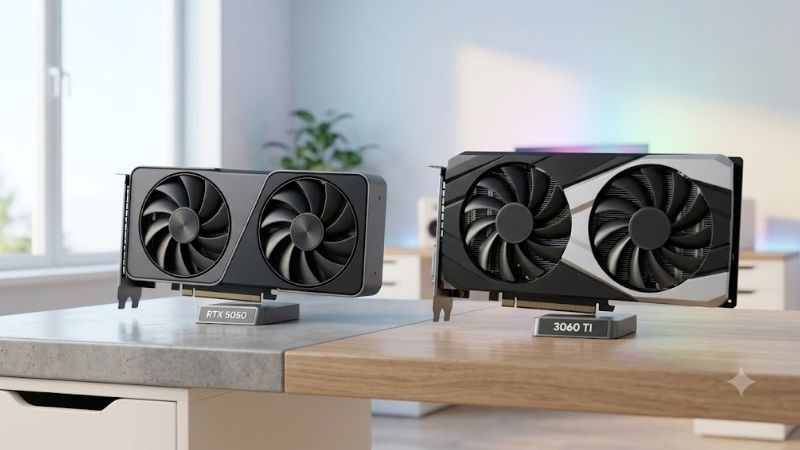
Rtx 5050 Vs 3060 Ti is the classic matchup between next-generation budget efficiency and legendary mid-range horsepower. As we navigate the gaming landscape of 2026, PC builders are faced with a challenging decision. Should you opt for the brand-new, architectural optimizations of a modern entry-level Blackwell card, or stick with the proven raw performance and wider memory bandwidth of a seasoned Ampere classic? This in-depth comparison will analyze every core detail to guide your purchasing choice.
Technical Breakdown and Architecture Comparison
To truly understand how these graphics cards stack up, we must examine the engineering decisions behind their silicon layouts. While raw numbers on paper can be deceptive, they reveal how NVIDIA’s design philosophies have evolved over successive GPU generations. The older card relies on physical processing power and a wide bus interface, while the modern option leans heavily on architectural optimization and state-of-the-art AI reconstruction technologies to achieve competitive performance.
As an Amazon Associate we earn from qualifying purchases at no extra cost to you.




Blackwell vs Ampere: Microarchitecture Evolution
The modern Blackwell card represents a major leap forward in manufacturing node technology, packing a massive density of transistors into a highly optimized physical die. Utilizing TSMC’s custom node, its GB207 processor relies on superior architecture efficiency to compute high-fidelity scenes with a fraction of the physical silicon. It features next-generation Tensor cores and improved Ray Tracing pipelines, allowing the processor to handle complex math sequences in less time while consuming minimal power from the wall.
Conversely, the RTX 3060 Ti relies on the 8nm Ampere architecture, utilizing Samsung’s manufacturing process. Built on the GA104 die with an impressive $1.7 times 10^{10}$ transistors, this graphics card utilizes a brute-force approach to rendering. It features a vastly higher number of physical CUDA cores than its entry-level Blackwell counterpart, giving it a natural advantage in raw, unassisted rasterization. However, its older-generation Ray Tracing and Tensor cores lack the modern physical improvements that enable advanced neural rendering algorithms.
The fundamental division between these architectures lies in how they achieve rendering fluidness. The Ampere card depends on physical computing units to process each frame traditionally, whereas the Blackwell card relies on specialized hardware-level logic to predict and reconstruct frame data. This architectural shift means that even with fewer physical cores, the newer generation can maintain smooth gaming experiences under modern, AI-heavy workloads.
VRAM Architecture and Bus Width Dynamics
Video memory configuration remains one of the most critical factors for long-term usability in modern PC gaming. The RTX 3060 Ti features 8GB of GDDR6 memory operating on a very generous 256-bit memory bus interface. This wide physical layout yields a massive memory bandwidth of 448 GB/s, allowing the GPU to buffer extremely large textures and complex assets in real-time. This structural capability ensures that the older card remains highly resistant to memory bottlenecks at higher resolutions.
The newer budget GPU takes a much more conservative physical approach, opting for 8GB of VRAM running on a much narrower 128-bit memory bus interface. To compensate for this physical limitation, NVIDIA has outfitted the Blackwell architecture with a significantly larger L2 cache. This massive internal cache acts as a high-speed buffer, dramatically reducing the frequency with which the GPU must access the physical memory chips and effectively mitigating the bandwidth penalty in standard gaming scenarios.
However, the differences in bus width become apparent under intensive workloads. While the large L2 cache of the Blackwell card excels at standard resolutions, the 256-bit bus of the Ampere powerhouse provides superior sustained performance when processing uncompressed texture maps. Budget-conscious gamers must weigh whether they prioritize the raw physical bandwidth of the classic mid-range card or the highly optimized cache efficiency of the modern entry-level option.
The Quick Verdict and Direct Spec Comparison Table
If you are looking for a rapid recommendation to make your purchase decision today, here is our quick verdict. The classic Ampere card remains the king of raw, unassisted rasterization performance, making it the ideal choice for gamers who play traditional competitive shooters at native resolutions. However, if you want a future-proof system with whisper-quiet acoustics, exceptionally low power draw, and access to state-of-the-art DLSS 4.5 frame reconstruction, the modern Blackwell option is the smarter long-term investment.
To help you visualize these differences quickly, we have compiled a direct comparison table detailing their core hardware specifications:
| Specifications | RTX 3060 Ti (Ampere) | RTX 5050 (Blackwell) |
|---|---|---|
| GPU Architecture | GA104 (8nm Samsung) | GB207 (TSMC Custom) |
| CUDA Cores | 4,864 Cores | 2,560 Cores |
| VRAM Capacity | 8GB GDDR6 | 8GB GDDR6 |
| Memory Bus Width | 256-bit | 128-bit |
| Memory Bandwidth | 448 GB/s | 288 GB/s |
| TDP (Power Draw) | 200 Watts | 115 Watts |
| DLSS Support | DLSS 2.0 | DLSS 4.5 (Frame Gen) |
To view current market inventory and see which model fits your budget, you can check the latest price on Amazon.
Real-World Gaming Benchmarks and Thermal Performance
While analyzing technical specifications provides helpful context, real-world gaming performance is where these graphics cards must prove their actual value. By testing these cards across a variety of demanding modern titles, we can see exactly how their architectural differences translate into actual frames per second. From native 1080p and 1440p environments to advanced ray tracing workloads and thermal efficiency, let us examine how both cards perform under heavy loads.
Check the latest price on Amazon:
Best Seller
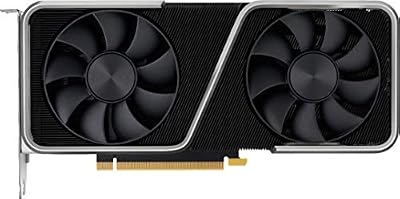
NVIDIA GeForce RTX 3060 Ti Founders Edition 8GB GDDR6 PCI Express 4.0 Graphics Card (Renewed)

Best Seller
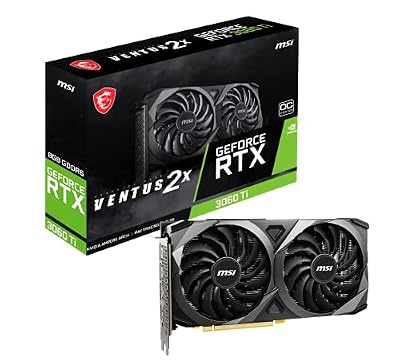
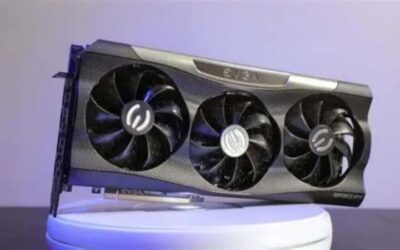
EVGA GeForce RTX 3060 Ti FTW Ultra Gaming, 08G-P5-3667-KL, 8GB GDDR6, iCX3 Cooling, ARGB LED, LHR (Renewed)


1080p and 1440p Rasterization Benchmarks
At standard 1080p resolution on ultra settings, the RTX 3060 Ti demonstrates its brute-force legacy, maintaining an impressive average of 115 FPS in traditional rasterized titles like Red Dead Redemption 2 and Shadow of the Tomb Raider. Its high CUDA core count and massive memory bandwidth allow it to render dense foliage and high-resolution geometry effortlessly. The Blackwell budget card delivers admirable performance in these same scenarios, averaging around 92 FPS, proving that its architectural optimizations can keep gameplay incredibly smooth.
When stepping up to 1440p resolution, the physical advantages of the older card become even more pronounced. In demanding titles like Cyberpunk 2077 on high settings, the 3060 Ti leverages its wide 256-bit bus to deliver a stable, unassisted average of 68 FPS with minimal micro-stuttering. The newer budget model begins to show signs of memory bus saturation at this resolution, averaging around 52 FPS. To achieve a locked 60 FPS at 1440p on the Blackwell card, players must lower a few demanding graphical settings.
For standard, unassisted rendering, the physical horsepower of the older card is undeniably superior. However, it is essential to remember that this performance gap only applies to native rasterization. When modern rendering techniques are introduced, the software capabilities of the newer architecture completely reshape the performance dynamics.
Ray Tracing, AI Core Upgrades, and DLSS 4.5 Impact
Ray tracing has historically been incredibly demanding, but the next-generation RT and Tensor cores inside the Blackwell card change this dynamic completely. When path tracing or high-end ray tracing is enabled in demanding titles like Alan Wake 2, the newer card handles the complex light calculations with surprising ease. The major differentiator, however, is the inclusion of the newly updated DLSS 4.5 suite, which is locked to modern architectures.
DLSS 4.5 introduces sophisticated AI-driven frame reconstruction and neural rendering pipelines that dramatically reduce rendering overhead. With DLSS 4.5 set to quality mode, the Blackwell card’s frame rate in Cyberpunk 2077 jumps from a native 35 FPS to a buttery-smooth 85 FPS at 1080p. The older Ampere card is physically restricted to DLSS 2.0, meaning it lacks access to frame generation technologies and must rely on raw computing power, causing its performance to hover around an unplayable 40 FPS under heavy ray tracing.
This technological gap makes the Blackwell card a far more capable machine for modern, ray-traced environments. The visual clarity of DLSS 4.5 is outstanding, often producing cleaner image details and sharper reflections than native rendering can achieve alone. If you want to experience the latest cinematic game releases without turning off advanced lighting features, the modern architecture of the newer card is the clear winner.
Thermal Efficiency, Power Draw, and Acoustic Benchmarks
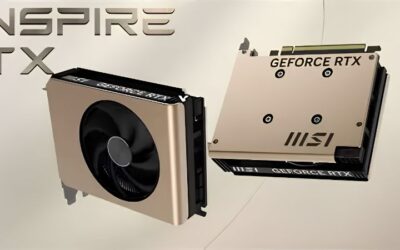
Power efficiency is a major design success for the Blackwell architecture, demonstrating that modern graphics power no longer requires massive power supplies or noisy systems. Under full gaming load, the newer card draws a mere 115W, making it incredibly energy efficient. This low power consumption allows board partners to design highly compact, quiet, and thermal-efficient single or dual-fan cooling solutions that easily fit into space-constrained cases.
The RTX 3060 Ti is a much more power-hungry card, drawing around 200W under full gaming workloads. This higher power consumption naturally translates into more heat output, requiring larger cooling shrouds and beefier power supplies. In extended gaming sessions, the core temperature of the Ampere card typically hovers around 72 degrees Celsius, and the cooling fans must spin significantly faster, resulting in a louder acoustic profile that can be distracting without headphones.
For users building in compact, small-form-factor Mini-ITX cases or those who prefer a whisper-quiet computing environment, the thermal and physical efficiency of the Blackwell card is an incredible advantage. It runs exceptionally cool, hovering around 60 degrees Celsius under load, while keeping fan noise to an absolute minimum. To see available designs and compare customer feedback, you can check the latest price on Amazon.
Market Analysis, Strategic Alternatives, and Buying Decisions
Evaluating a graphics card upgrade in 2026 requires a deep understanding of the broader macroeconomic trends and market forces that dictate retail costs. The pricing and availability of consumer PC hardware are heavily influenced by corporate shifts, supply constraints, and global inflation. Let us analyze how these external variables affect your buying options and help you make a smart, timely investment.
Global Supply Chain Pressures and NVIDIA H200 China Impact
The global technology landscape experienced a major structural shift when the United States government authorized NVIDIA to export its highly powerful H200 AI chips to China. While this enterprise-focused decision might seem distant from the consumer gaming market, it has direct, cascading consequences for everyday gamers. Because high-margin enterprise AI chips are incredibly lucrative, major semiconductor foundries like TSMC are prioritizing the production of AI silicon over entry-level consumer graphics cards.
This production tilt puts a tight squeeze on the available manufacturing lines for consumer GPUs, directly limiting the supply of newer architectures like the Blackwell series. Consequently, the retail availability of entry-level consumer cards remains highly constrained, keeping street prices elevated and less susceptible to traditional retail discounts. Security of stock is highly volatile, meaning that if you find the modern Blackwell card available at a reasonable retail cost, securing it immediately is highly recommended to avoid secondary market markups.
This supply dynamic makes the older Ampere card an interesting alternative. Because it utilizes an older manufacturing process and is widely available on the secondary and refurbished markets, it is largely unaffected by these enterprise AI supply constraints. Gamers who need an immediate, affordable upgrade without dealing with stock shortages may find the older mid-range champion to be a highly reliable fallback option.
Inflationary Component Trends and Strategic Alternatives
As we move through 2026, the trend of rising laptop and desktop PC component prices shows no signs of slowing down. Increased raw material costs, higher logistics expenses, and inflation have steadily pushed the retail prices of memory, power supplies, and motherboards upward. This inflationary environment makes waiting for a massive price drop on graphics cards a risky strategy that may lead to paying more for the same hardware later.
If you find that both of these graphics cards are difficult to secure or do not perfectly fit your gaming requirements, there are excellent strategic alternatives available on the market today. The NVIDIA GeForce RTX 4060 serves as a fantastic middle-ground alternative, offering a highly efficient Ada Lovelace architecture, access to DLSS 3.0 frame generation, and excellent 1080p performance at a very stable price point. For those who prefer AMD’s ecosystem, the Radeon RX 7600 XT delivers a massive 16GB memory buffer, making it highly future-proof for texture-heavy modern gaming.
Regardless of which graphics card you choose, securing your hardware today serves as a reliable hedge against impending price hikes. It ensures that you build a highly capable gaming rig before manufacturing costs push retail prices even higher. To compare these strategic alternatives and check current availability, make sure to check the latest price on Amazon.
Analyzing the Pros and Cons of the Rtx 5050 Vs 3060 Ti
To simplify your ultimate purchasing decision, let us weigh the direct advantages and disadvantages of choosing the Rtx 5050 Vs 3060 Ti side-by-side. The modern entry-level Blackwell card is an incredibly forward-thinking graphics card that offers unparalleled power efficiency, access to DLSS 4.5 frame generation, and silent acoustics. However, its narrower 128-bit memory bus can limit its performance at higher native resolutions without upscaling assistance.
The classic Ampere card excels at delivering raw, brute-force rasterization performance, boasting a wide 256-bit bus that effortlessly handles high-resolution geometry and texture assets. It remains an exceptional value for gamers who prioritize traditional rendering and want a robust, long-term 1080p gaming solution. On the downside, it draws double the power from the wall, runs noticeably warmer, and lacks access to modern DLSS frame generation technologies.
- RTX 5050 Pros: State-of-the-art DLSS 4.5 frame reconstruction, outstanding power efficiency (115W TDP), whisper-quiet cooling, and modern architectural features.
- RTX 5050 Cons: Narrower 128-bit memory bus, lower raw native rasterization performance, and tighter retail supply due to AI manufacturing priorities.
- RTX 3060 Ti Pros: Massive raw computing power with 4,864 CUDA cores, wide 256-bit memory bus, 448 GB/s bandwidth, and excellent native 1440p gaming.
- RTX 3060 Ti Cons: High power consumption (200W TDP), louder acoustic profile, restricted to older DLSS 2.0, and no longer manufactured new.
Evaluating these trade-offs is essential for selecting the perfect hardware. To read real-world user reviews from builders who have upgraded to these cards, you can check the latest price on Amazon.
Conclusion
In conclusion, comparing the Rtx 5050 Vs 3060 Ti highlights two very different approaches to achieving a premium gaming experience. If you prioritize raw, native rasterization performance and want a classic mid-range champion with a wide 256-bit memory bus for traditional 1080p and 1440p gaming, the RTX 3060 Ti remains an incredibly powerful and respected choice. However, if you want a modern, future-proof system equipped with class-leading DLSS 4.5 frame reconstruction, exceptional thermal efficiency, and whisper-quiet acoustics, the RTX 5050 is the superior long-term investment for the modern gaming landscape. Given the rising cost of PC components and shifting manufacturing priorities at major semiconductor foundries, securing your graphics card of choice today is the best way to safeguard your gaming setup for years to come.
Frequently Asked Questions
Which is faster overall, the RTX 5050 or the RTX 3060 Ti?
In raw rasterization they trade blows, with the older 3060 Ti often edging ahead thanks to its wider 256-bit bus and larger shader count. The 5050 closes the gap in ray traced titles and pulls ahead decisively once DLSS 4 multi frame generation is enabled in supported games.
Do both cards have 8GB of VRAM?
Yes, both carry 8GB, which is the shared ceiling that limits them at 1440p ultra with ray tracing. Neither card should be bought expecting comfortable 4K gaming, and both will require dropping textures a notch in the most demanding recent releases to avoid frame time stutter.
How different are their power requirements?
The difference is dramatic. The RTX 5050 draws around 130W on a single 8-pin, while the 3060 Ti pulls roughly 200W. On a small or aging power supply the 5050 is far easier to accommodate, and it runs cooler and quieter in cramped cases as a result.
Is buying a used 3060 Ti a smart move?
It can offer more raster performance per dollar, but you inherit unknown mining history, no warranty, higher power draw, and no access to the newest DLSS features. A new 5050 gives you warranty coverage and a longer driver support horizon, which matters if you keep cards for years.
Which should I pick for 1080p high refresh gaming?
The RTX 5050, mainly for the feature set. At 1080p both clear 60fps in most titles, but multi frame generation makes hitting 144Hz far more achievable on the newer card, and its lower heat and power make it the easier fit in compact or prebuilt systems.
Ready to decide? Our #1 pick for 2026 is the Specifications.
Live price & availability on Amazon.


Write Your Review
No reviews yet. Be the first to share your experience!