
An in-depth Nvidia Revenue Breakdown provides critical insights into how the world’s leading chipmaker balances high-end enterprise silicon with consumer hardware. Understanding these financial dynamics helps PC gamers and tech enthusiasts predict component availability and pricing trends. Let us review the modern distribution of Nvidia’s massive earnings.
Analysing the Core Segments of Nvidia Financial Dominance
To comprehend where the GPU giant is heading, we must first dissect the individual pillars supporting its financial foundation. The modern hardware ecosystem is no longer driven solely by consumer graphics cards, as enterprise demands have fundamentally reshaped corporate priorities. By evaluating the individual performance of each sector, tech consumers can gain a clearer picture of why certain products receive more manufacturing priority than others.
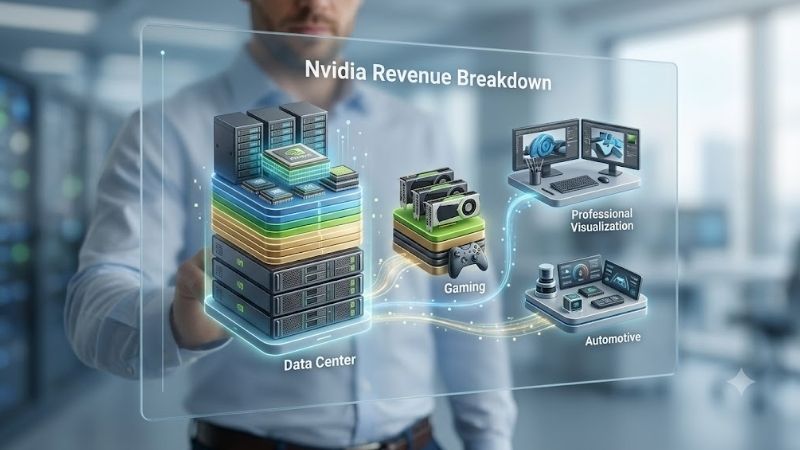
The Data Center Explosion and AI Supremacy
The enterprise data center sector represents the absolute engine of modern corporate growth. Driven by generative AI, large language models, and cloud computing infrastructure, this segment has completely overshadowed traditional computing divisions. Hyperscalers and global enterprise networks are constantly competing for the latest architecture to fuel their neural processing demands.
This massive influx of enterprise capital means that the research and development pipeline for architecture like Hopper and Blackwell directly influences consumer technology. The advanced packaging techniques and architecture innovations developed for massive data centers eventually trickle down to mainstream gaming setups. However, this also means manufacturing foundries must split their limited silicon wafer capacity between highly profitable enterprise accelerators and standard consumer graphics cards.
Check the latest price on Amazon:
Gaming Division Resilience and GeForce Market Share
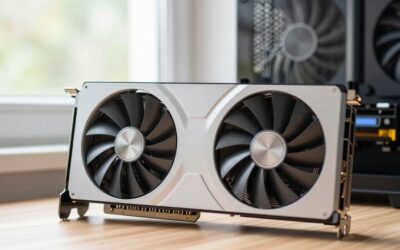
Despite the massive scale of the enterprise enterprise data center business, the gaming sector remains a highly resilient and strategically vital component of the corporate portfolio. The GeForce brand continues to hold a dominant majority of the desktop and laptop discrete graphics card market. Gamers across the globe rely on these units for specialized ray tracing, high frame rate rendering, and advanced deep learning super sampling systems.
The steady influx of consumer revenue ensures that mainstream software optimization remains excellent across modern PC titles. Developers actively optimize their engines for GeForce architectures due to the sheer size of the active user base. This strong consumer presence provides a stable financial safety net, keeping the brand deeply rooted in the gaming culture even as commercial enterprise sectors grow exponentially.
Automotive and Professional Visualization Metrics
The remaining segments of the corporate financial structure consist of specialized professional virtualization systems and autonomous automotive tech platforms. The professional visualization tier supports engineers, digital artists, and structural designers who require absolute stability and specialized drivers. These professional grade platforms ensure that high-end simulation software runs flawlessly without the threat of system crashes.
Meanwhile, the automotive sector focuses heavily on intelligent driving platforms, custom infotainment setups, and autonomous vehicles. As modern transportation relies increasingly on complex digital calculations and artificial intelligence routing, this segment shows consistent long-term growth potential. While smaller than the massive gaming or data center segments, these specialized fields diversify the corporate portfolio and foster innovations in low-latency processing.
Market Forces Altering the Tech Hardware Landscape in 2026
The global tech landscape in 2026 is defined by shifting geopolitical dynamics and evolving economic factors that directly influence supply chains. For hardware enthusiasts, understanding these macro-level shifts is crucial for identifying structural changes in retail component availability. These global developments play a major role in dictating the final retail pricing of individual PC components.
The US H200 Silicon Export Shifts to China and GPU Allocations
A pivotal development in the global market is the decision by US authorities to allow the sale of customized high-performance AI processors, specifically the H200 series variants, into the Chinese marketplace. This policy shift alters how production facilities allocate their advanced node manufacturing resources worldwide. With access to a massive and highly lucrative international market reopened for top-tier enterprise hardware, production lines are running at absolute maximum capacity.
For the everyday desktop customizer or competitive gamer, this shift means enterprise silicon demand will remain incredibly high for the foreseeable future. Foundries are dedicating massive amounts of production capacity to fulfill these substantial corporate orders. Consequently, consumer graphics card production must be calculated carefully to avoid retail shortages, making early purchasing decisions highly advantageous for builders looking to secure reliable components before corporate supply absorption peaks.
Inflationary Impact on Global Gaming Component Prices
Compounding the supply allocation dynamics is a distinct global trend showing a continuous increase in the manufacturing and retail costs of laptops and custom PC components. From high-grade power delivery components and multi-layered printed circuit boards to the advanced memory modules required for modern graphics processing, baseline material costs are rising. These incremental manufacturing increases inevitably pass down to the end consumer.
This inflationary trajectory means that waiting for drastic price drops on mid-range or high-end desktop hardware may not yield the expected savings. Instead, the persistent upward pricing pressure indicates that the current market baseline is likely the lowest point for the foreseeable future. Buyers looking to construct a new rig or replace an aging system are finding that securing hardware sooner rather than later protects them from sudden retail price corrections.
Pros and Cons of the Current Nvidia Revenue Breakdown Strategy
Evaluating the structural balance of the corporate financial portfolio reveals several distinct benefits and drawbacks for the broader consumer hardware community. On the positive side, the immense financial strength generated by the data center business provides unparalleled capital for architectural research. This financial security guarantees that future generations of consumer cards will benefit from highly sophisticated architectural engineering and advanced machine learning software suites.
Conversely, the overwhelming profitability of enterprise silicon means consumer gaming products face internal competition for factory production priority. When corporate clients are willing to pay premium rates for specialized computing clusters, consumer desktop components must fight to maintain their share of foundry allocation. This structural dynamic can occasionally lead to leaner retail inventory levels and rigid pricing structures in the consumer space, giving buyers fewer opportunities to find significant promotional discounts.
Consumer Buying Guide and Ecosystem Recommendations
Navigating the modern component marketplace requires a strategic understanding of how corporate financial priorities match up with available retail products. When planning a system upgrade, consumers must look at both the longevity of the architecture and the current pricing trends. Choosing the correct hardware path ensures long-term performance viability without overpaying for unnecessary features.
Why Upgrading to GeForce RTX 40 and 50 Series Now Makes Sense
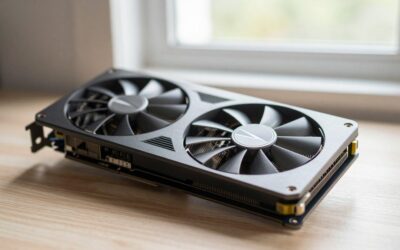
Investing in current generation graphics architecture is becoming increasingly logical when looking closely at the broader market landscape. The current lineup of consumer graphics processing units delivers exceptional computational efficiency, frame generation capabilities, and robust ray tracing performance. These features ensure that even demanding modern titles remain highly playable at elevated resolutions for years to come.
Given the ongoing global trends in component manufacturing costs and heavy enterprise silicon demands, waiting indefinitely for future hardware generations carries notable risks. Securing a capable consumer graphics processing unit today ensures you can enjoy high-fidelity gaming immediately without worrying about sudden supply chain anomalies. If you want to check out the current hardware market options and availability, check the latest price on Amazon.
Evaluating Desktop GPU vs Gaming Laptop Investments
Choosing between a dedicated desktop graphics card upgrade and a fully integrated modern gaming laptop depends heavily on your lifestyle requirements and structural space constraints. Dedicated desktop configurations provide unmatched thermal headroom, easy component upgradability, and superior raw computational throughput per dollar. This makes the desktop path ideal for enthusiasts who prioritize maximum performance scalability and long-term maintenance.
On the other hand, modern gaming laptops have made massive strides in overall power optimization and display technology. These portable systems offer an all-in-one solution that allows professionals and gamers to take their workstations anywhere without sacrificing significant rendering capabilities. Given that global pricing trends affect both form factors, selecting the device that matches your primary usage pattern early ensures the best return on investment before market shifts alter retail pricing. To browse highly rated mobile gaming systems, check the latest price on Amazon.
Final Strategic Assessment for PC Gamers and Tech Investors
For both the technology enthusiast and the retail investor, analyzing corporate financial structures provides a reliable roadmap for future market trends. The strong diversification across enterprise artificial intelligence platforms and traditional consumer gaming ensures long-term operational stability and continuous technological innovation. As software applications depend more heavily on machine learning algorithms, hardware featuring dedicated tensor architecture remains highly valuable.
For the end user, this structural reality means the ecosystem is highly stable, well-supported by global developers, and consistently innovative. Rather than trying to time the market perfectly during a period of rising global component costs, focusing on immediate utility and architectural efficiency is the most practical choice. Securing a reliable, high-performance graphics solution now safeguards your computing setup against potential future supply constraints and ongoing inflationary pressures.
Conclusion
Analyzing the comprehensive Nvidia Revenue Breakdown highlights a profound corporate evolution from a dedicated gaming hardware manufacturer to a global computing infrastructure powerhouse. While the massive expansion of the data center business dominates corporate earnings, the consumer gaming sector remains a crucial element of the brand identity and market presence. Navigating this landscape requires recognizing how enterprise demands and shifting international shipping policies influence local retail prices. By making well-timed purchasing decisions and selecting the appropriate hardware tier today, consumers can successfully insulate themselves from rising component costs and secure long-term system performance.
Frequently Asked Questions
Which segment generates most of NVIDIA’s revenue now?
Data center dominates by a wide margin, driven by AI accelerator demand from hyperscalers and enterprise customers. Gaming, once the company’s largest business, now represents a comparatively small slice of total revenue despite growing in absolute dollar terms, which reshapes how the company allocates fab capacity.
Does data center demand affect GeForce card availability?
Indirectly, yes. Wafer allocation at TSMC, advanced packaging capacity, and HBM or GDDR supply are shared constraints. When AI accelerator margins vastly exceed consumer GPU margins, the incentive to prioritize datacenter products is obvious, which historically correlates with tighter consumer supply and firmer street pricing.
What are NVIDIA’s other reported segments?
Beyond data center and gaming, the company reports professional visualization covering RTX workstation cards, automotive covering DRIVE platforms and infotainment, and OEM and other. Professional visualization and automotive are small relative to the two giants but are strategically important for long term diversification.
How does this affect what GPU I should buy?
Practically, it means consumer pricing is unlikely to see aggressive discounting while AI demand stays strong, and that mid range cards may keep shipping with conservative VRAM. Buy for the performance available today at a price you accept, rather than waiting for a price collapse that market conditions do not support.
Where can I verify these revenue figures myself?
NVIDIA publishes quarterly results and a CFO commentary document on its investor relations site, and files 10-Q and 10-K reports with the SEC. Those primary sources give exact segment breakdowns by quarter and are far more reliable than aggregated summaries or secondhand reporting.
As an Amazon Associate we earn from qualifying purchases at no extra cost to you.






Write Your Review
No reviews yet. Be the first to share your experience!