
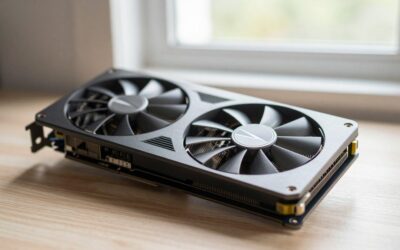
- Top Pick: MOUGOL AMD Radeon RX 580 8GB GDDR5 Gaming Graphics Card HDMI/DP/DVI – Black
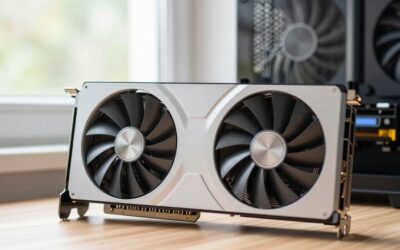
- Best Value: MOUGOL AMD Radeon RX 580 8GB GDDR5 Gaming Graphics Card HDMI/DP/DVI – White
- Premium Choice: XFX Radeon RX 580 GTS XXX Edition 1386MHz OC+, 8GB GDDR5, VR Ready, Dual BIOS, 3xDP HDMI DVI, AMD Graphics Card (RX-580P8DFD6)
Top Amd 580 Budget Legend Worth Picks for 2026
Here are our current top amd 580 budget legend worth picks, compared on real Amazon owner reviews, price, and features. Live prices update below.


Limited Time
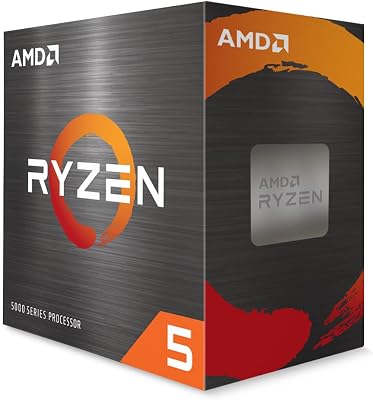
AMD Ryzen 5 5500 6-Core, 12-Thread Unlocked Desktop Processor with Wraith Stealth Cooler


As an Amazon Associate we earn from qualifying purchases at no extra cost to you.




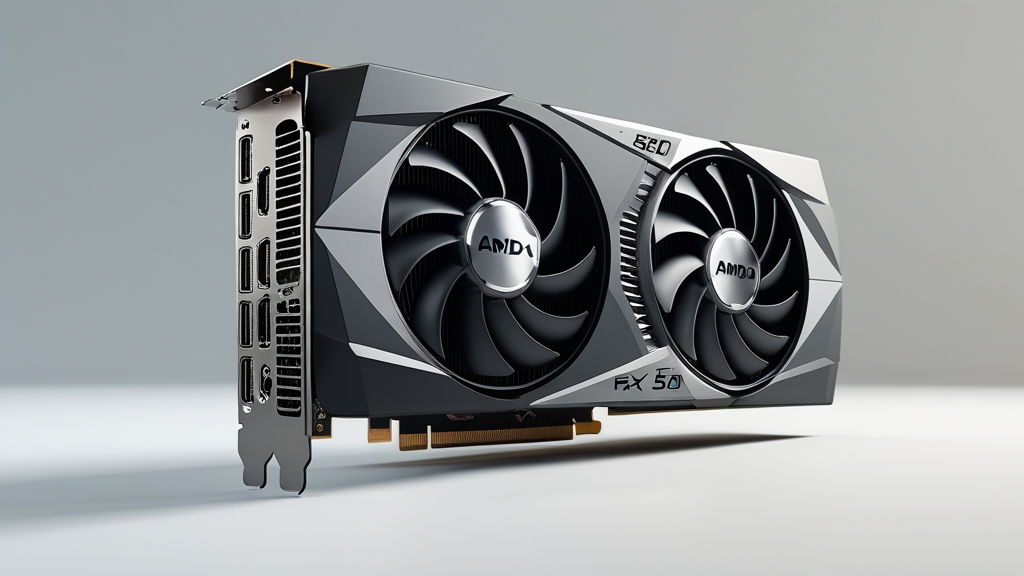
AMD RX 580 refuses to disappear, and in 2026 it is still one of the cheapest ways to get a real gaming GPU into a budget PC. Released back in 2017, this Polaris card now lives entirely on the used market, where it sells for the price of a few takeout meals. This review takes an objective, expert look at whether it still makes sense: the specifications behind its longevity, how it performs in today’s games, the rebadged variant that traps unwary buyers, what you should pay, and how 2026’s rising hardware prices affect the calculation. If you are building on a shoestring or need a stopgap card, this analysis explains exactly where the AMD RX 580 still earns its keep.
What the AMD RX 580 Still Offers
The RX 580’s staying power comes from a sensible specification and a generous memory buffer for its class. Knowing what the hardware delivers, and where it now falls short, sets fair expectations for a nine-year-old budget card. The numbers explain both its enduring appeal and its hard limits in modern titles.
The Specs Behind the Longevity
The RX 580 is built on AMD’s Polaris architecture with 2,304 stream processors, delivering roughly 6.2 teraflops of compute. The version worth owning carries 8GB of GDDR5 memory on a 256-bit bus, and it originally launched on April 18, 2017 at a $229 MSRP.
That 8GB frame buffer is the key to its longevity. While many budget cards of its era shipped with 4GB, the 8GB RX 580 has enough memory to load modern textures that choke smaller cards.
The trade-offs are generational. There is no hardware ray tracing, no AV1 decode, and the card draws around 185 watts, so it is neither efficient nor feature-rich by 2026 standards. It is a pure rasterization workhorse.
Real 1080p Performance Today
For its target use, the RX 580 still delivers. Popular esports titles such as CS2, Valorant, and Fortnite run at 1080p with 60-plus frames per second at sensible settings, covering most of what budget gamers actually play.
Modern AAA games are a different story. Demanding 2026 titles typically land around 35 to 40 frames per second at low settings, so this is a card for managing expectations and tuning settings rather than maxing them out.
The honest summary is that the RX 580 is a competent 1080p card for older and lighter games and a marginal one for the latest blockbusters. It rewards realistic settings and punishes anyone expecting modern performance.
The 2048SP Trap and Where It Fits
One warning matters more than any benchmark. Many cheap listings are actually RX 580 2048SP variants, which are rebadged RX 570 chips with disabled shaders that deliver roughly 15 to 20 percent less performance than the full 2,304-shader card.
Verifying the variant is essential. Ask for a GPU-Z screenshot or BIOS details, and confirm both the full shader count and the 8GB memory configuration before paying, because the listing title alone is not reliable.
Positioned correctly, the RX 580 is a bridge card. It is the GPU that gets you gaming cheaply today while you save for something modern, not a long-term centerpiece for a 2026 build.
Buying an AMD RX 580 in 2026: Value and Verdict
With performance understood, the decision comes down to price, software support, and overall balance. The RX 580 is cheap, but used hardware carries risks, and its frozen driver status shapes what it can realistically do. This section sets the value case and the verdict.
Used Pricing and Condition
On the used market the RX 580 8GB typically sells for between $50 and $100, with an average closer to $60. That makes it one of the last genuine sub-$60 cards capable of steady 1080p esports performance.
Condition is the real variable. These cards were widely used for cryptocurrency mining, so favor units with clear photos of clean fans and heatsinks, ask about prior use, and treat suspiciously cheap listings with caution.
As a target, paying around $50 to $60 for a verified 8GB card in good condition is a fair deal, while anything approaching $100 invites comparison with stronger used alternatives.
Drivers and FSR Support
Software support is a mixed picture. AMD moved the RX 580 to legacy driver status in 2024, so it no longer receives the regular game-ready optimizations that current cards enjoy.
Crucially, the card still supports FidelityFX Super Resolution in games that include it. Setting FSR to performance or quality mode can lift otherwise borderline titles into playable territory, which meaningfully extends the card’s usefulness.
That upscaling lifeline is the closest thing the RX 580 has to a modern feature. It cannot match newer AI upscalers, but in supported games FSR is the single most effective way to squeeze extra frames from aging Polaris silicon.
Pros and Cons of the AMD RX 580
On the positive side, the AMD RX 580 is extremely cheap, carries a generous 8GB of VRAM for its price, handles 1080p esports and older AAA games well, supports FSR upscaling, and runs on modest power supplies, making it an easy budget upgrade.
On the negative side, it has no ray tracing or AV1 decode, sits on frozen legacy drivers, struggles with modern AAA titles, draws a fairly high 185 watts for its performance, and carries used-market and 2048SP-variant risks.
The verdict is conditional but positive. The AMD RX 580 is a smart buy as a cheap bridge card for light gaming, and a poor one for anyone expecting modern features or longevity from a 2026 main build.
Market Context and Who Should Buy
Even a sub-$60 card is shaped by the wider 2026 market, which has pushed new hardware prices upward. Understanding that backdrop, and what it means for a budget buyer, clarifies why old cards like the RX 580 still attract demand. Compatibility then confirms whether it fits your system.
Why New GPU Prices Climbed in 2026
The 2026 market is gripped by a severe structural memory shortage. DRAM contract prices have risen more than 170 percent year over year, and because video memory can account for up to 80 percent of a graphics card’s bill of materials, new GPU prices have climbed sharply, with current-generation cards up an estimated 15 to 23 percent and some models jumping 16 to 17 percent almost overnight.
AI demand is the underlying cause. With the United States approving sales of NVIDIA’s powerful H200 accelerators to major Chinese firms, memory and fabrication capacity is being pulled toward data-center silicon, and reports indicate NVIDIA has trimmed mid-range consumer output by a significant margin. Memory suppliers have warned the shortage could persist into 2027.
The effect reaches even the budget tier. When new entry-level cards cost more and stock is uneven, the cheapest path to playable gaming increasingly runs through older, used hardware rather than new silicon. AMD raised prices around ten percent early in 2026 and NVIDIA followed, so the inflation spans both brands and every price bracket, leaving little relief at the bottom of the new-card market.
What This Means for a Budget Buyer
For someone shopping at the very bottom of the market, the squeeze makes the RX 580 more relevant, not less. While new budget cards carry 2026’s inflation, a $50 to $60 used RX 580 sidesteps that premium entirely and still plays the games most budget buyers care about.
The honest caveat is that newer used cards have also become attractive for the same reason. The RX 580 wins on absolute price, but a slightly higher budget can buy a more capable used GPU, so the decision depends on exactly how tight the budget is.
The strategy is clear-eyed. In a year of expensive new hardware, the RX 580 is the rational floor of the market, ideal when every dollar counts and the goal is simply to play today rather than to future-proof. As long as the shortage keeps new budget cards inflated, that floor stays attractive for the most price-sensitive buyers.
Compatibility and Who Should Buy
The RX 580 is undemanding to install. A quality 500-watt power supply with a single 8-pin connector is sufficient, and the card fits comfortably in most standard cases.
Pair it with a reasonable CPU and dual-channel RAM so the system is balanced, and confirm your PSU has the connector and headroom before buying. No special cooling is required.
The ideal buyer is a tight-budget gamer focused on esports and older titles, or someone needing a temporary bridge card. Anyone wanting ray tracing, modern efficiency, or a card to last several years should spend a little more on newer used hardware.
Frequently Asked Questions
A few questions come up repeatedly from buyers weighing the AMD RX 580 in 2026. The concise answers below cover gaming ability, pricing, and the variant trap.
Is the AMD RX 580 still good for gaming in 2026?
Yes for 1080p esports and older AAA titles at sensible settings. It manages around 35 to 40 fps at low settings in demanding 2026 games, so it suits light gaming rather than maxed-out modern titles.
How much should I pay for an RX 580?
Around $50 to $60 for a verified 8GB card in good condition is fair. The used average is about $60, and prices approaching $100 invite comparison with stronger alternatives.
What is the RX 580 2048SP version?
It is a rebadged RX 570 chip with fewer active shaders, delivering roughly 15 to 20 percent less performance. Verify the full 2,304-shader, 8GB card with a GPU-Z screenshot before buying.
See more:
Recommended Products

msi
MSI Gaming GeForce RTX 3080 Gaming Z Trio 10G LHR 10GB GDRR6X 320-Bit HDMI/DP Nvlink Torx Fan 4 RGB Ampere Architecture Computer Gaming Graphics Card, NVIDIA GPU Video Cards for Gaming PC (Renewed)

EVGA
EVGA GeForce RTX 3080 FTW3 Ultra Gaming, 10G-P5-3897-KL, 10GB GDDR6X, iCX3 Technology, ARGB LED, Metal Backplate, LHR

GIGABYTE
GIGABYTE GeForce RTX 3080 Gaming OC 10G (REV2.0) Graphics Card, 3X WINDFORCE Fans, LHR, 10GB 320-bit GDDR6X, GV-N3080GAMING OC-10GD REV2.0 Video Card (Renewed)
As an Amazon Associate we earn from qualifying purchases. Product prices and availability are accurate as of the date/time indicated.
Conclusion
The AMD RX 580 in 2026 is a budget legend that still has a narrow, sensible role to play. For 1080p esports and older games at the price of a couple of pizzas, its 8GB of VRAM and steady rasterization make it the cheapest realistic entry into PC gaming, especially when FSR is available to stretch performance further. The catches are real: frozen drivers, no modern features, used-market wear, and the 2048SP variant trap that demands verification before you buy. With 2026’s memory shortage pushing new cards higher, a $50 to $60 RX 580 remains a rational floor for the market. Buy it as a cheap bridge to better hardware, verify the card carefully, and the AMD RX 580 still delivers surprising value for the money.



Write Your Review
No reviews yet. Be the first to share your experience!