
- Top Pick: ASUS Prime GeForce RTX 5060 Ti 16GB GDDR7 Gaming Graphics Card
- Best Value: ASUS Dual GeForce RTX 5060 Ti 16GB GDDR7 OC Edition Gaming Graphics Card
- Premium Choice: ZOTAC Gaming GeForce RTX 5060 Ti 16GB Twin Edge OC White Edition DLSS 4 16GB GDDR7 128-bit 28 Gbps PCIE 5.0 Gaming Graphics Card, IceStorm 2.0 Cooling, SFF-Ready, ZT-B50620Q-10M
RTX 5060 Ti 16GB performance is the reason this card has become a mid-range favourite, because the extra memory transforms how it holds up in demanding games and creative work alike. The 16GB version pairs the same Blackwell core as the 8GB model with double the VRAM, removing the ceiling that holds cheaper cards back at 1440p. It also brings the full DLSS 4 feature set to the table. Drawing on aggregated owner reviews and independent testing, this breakdown covers exactly how the 16GB model performs, where its memory pays off, and who should buy it in 2026.


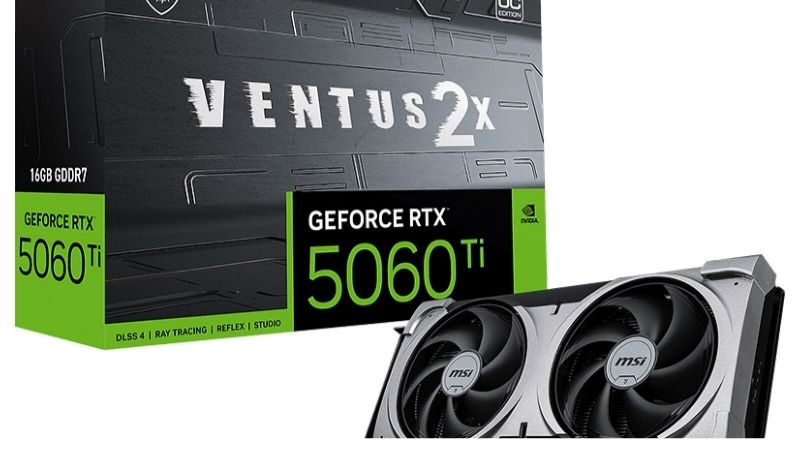
RTX 5060 Ti 16GB Performance Across Resolutions
Raw numbers only mean something in context, so this section frames the card against the resolutions and workloads its owners actually use. The headline is clear: at 1440p with DLSS 4 it is a genuinely capable card, and the 16GB buffer keeps that performance consistent where 8GB cards stumble. The detail underneath is where the buying decision really lives.
As an Amazon Associate we earn from qualifying purchases at no extra cost to you.



Because the 16GB and 8GB models share a core, this review focuses on the one thing that truly separates them in practice: how the larger memory buffer changes real-world performance and longevity across the workloads that matter to buyers.
1080p And 1440p Gaming Performance
At 1080p, the RTX 5060 Ti 16GB is comfortably overpowered for most titles, clearing high frame rates at high settings and pushing competitive shooters well beyond 200 FPS for high-refresh monitors.
The card’s real purpose is 1440p, and there it delivers smooth high-settings gameplay across the majority of current AAA games. DLSS 4 Super Resolution keeps demanding titles above the 60 FPS comfort line where native rendering would otherwise dip into the 40s.
Against the previous-generation RTX 4060 Ti, the 16GB model is meaningfully faster at 1440p, the resolution where the extra bandwidth and DLSS 4 support pay off most clearly. If 1440p is your target, this is where the card earns its keep.
On a high-refresh 1440p panel the card also scales well in lighter and competitive titles, comfortably driving fast monitors where the resolution bump from 1080p would otherwise cost you frames. That flexibility across game types is a big part of why the 16GB model appeals to mixed libraries.
Where The 16GB Buffer Changes Performance
This is the single most important thing about the 16GB model. It shares the same core as the 8GB card, so in games that stay under the memory limit their frame rates are nearly identical, and the benchmark charts look almost the same.
The gap appears the moment a game exceeds 8GB of VRAM, which is increasingly common at 1440p with high-resolution texture packs and ray tracing. There the 8GB card stutters or drops frames while the 16GB version holds steady, delivering consistent performance rather than sudden dips.
For a card you intend to keep for several years, that consistency is exactly what keeps its performance respectable as games grow hungrier. The 16GB buffer is future-proofing you can measure, not just a bigger number on the box.
In concrete terms, this shows up in games with optional high-resolution texture packs and in ray-traced titles, both of which can quietly push past 8GB at 1440p. On the 16GB card those situations simply keep running smoothly, while on the 8GB card they force a visible drop in texture quality to stay stable.
Creator And Productivity Performance
Gaming is only half the story for the 16GB model. That memory buffer makes a real difference in creative work, preventing stutter when scrubbing large timelines in video editors or working with heavy project files.
For 3D rendering, local AI tasks, and high-resolution photo editing, the extra VRAM lets the card handle bigger scenes and models than the 8GB version can manage. It turns a gaming card into a capable mixed-use machine on a mid-range budget.
Local AI workloads benefit especially clearly, since model size is often gated directly by available VRAM. The 16GB buffer lets the card load larger models and datasets than the 8GB version can hold, which is increasingly relevant for hobbyists experimenting with on-device AI tools alongside their gaming.
This dual capability is a recurring theme in owner reviews from creators, who value getting solid gaming and dependable productivity performance from a single affordable card rather than paying far more for a professional part.
Real-World Owner Feedback And Value
Benchmarks are lab data; owner reviews are the reality check on what living with the card is like. Pulling together the recurring themes from four- and five-star reviews alongside the honest two- and three-star complaints paints a clear picture that no single test run can.
What Owners Consistently Praise
The most common praise is smooth, consistent 1440p gameplay, especially once DLSS 4 is enabled. Owners upgrading from 60-class cards describe it as the moment 1440p finally felt effortless rather than a compromise they had to manage.
Efficiency and quiet operation come up repeatedly, with the card running cool, fitting compact cases, and slotting into a mid-range build without demanding a bigger power supply. That easy compatibility is a genuine practical benefit.
Creators single out the 16GB buffer specifically, praising how it prevents the stutter and out-of-memory errors that plague the 8GB model in editing and rendering. For a work-and-play machine, that headroom is the standout feature.
Reviewers who use the card for both gaming and content creation frequently describe it as the point where a single mid-range card stops forcing them to choose between the two. That combination of solid gaming and dependable creative headroom is what earns the 16GB model its loyal following.
The Common Complaints To Be Aware Of
The main complaint is price. The 16GB model costs more than the 8GB version and its rivals, and some owners feel the premium is steep, particularly when memory-market pressure pushes street prices above MSRP.
A smaller group notes that the raw core is unchanged from the 8GB model, so in games that fit within 8GB the extra memory brings no benefit. For strict 1080p players, that makes the 16GB premium harder to justify.
Others wish the card had a little more raw horsepower to fully exploit its memory at higher settings. These are fair points, but for the card’s intended 1440p and creator audience the 16GB buffer remains the right call.
It is also worth remembering that these complaints are almost entirely about price and value rather than the card’s actual behaviour. When owners judge the 16GB model purely on how it performs at 1440p and in creative apps, the feedback is overwhelmingly positive, which tells you the memory itself is doing its job.
Pros And Cons Of The 16GB Model
Weighing measured performance against owner sentiment gives a balanced verdict you can act on.
Pros: consistent 1440p gaming, a future-proof 16GB buffer, strong creator and productivity performance, excellent efficiency, and the full DLSS 4 feature set.
Cons: a higher price than the 8GB model and rivals, no benefit in games that stay under 8GB, and a core that some feel could be a touch more powerful.
On balance, the 16GB model is the version to buy for anyone serious about 1440p or creative work. The premium buys real, measurable consistency and longevity, which is exactly what most buyers at this tier are looking for.
Framed differently, the extra memory is cheap insurance against the fastest-moving variable in modern games, which is texture and asset size. Paying a little more once, up front, is almost always cheaper than discovering the limit later and upgrading sooner than planned.
Pricing Context And Buying Recommendation
A performance profile without a price is incomplete, and the 2026 market has made pricing a deciding factor. Here is how to read the landscape before you buy, and whether the 16GB model is right for you specifically.
The answer turns on whether you will actually use the extra memory, so read the recommendation below against your own resolution and workloads rather than a generic profile.
How 2026 Memory Prices Affect The 16GB Model
Component pricing in 2026 is driven by forces outside gaming. Through late 2025, AI datacenter demand pushed DDR5, SSD, and especially 16GB graphics-card prices up by roughly 20%, and high-VRAM cards feel that pressure most directly.
There is cautiously positive news: prices have stopped climbing as steeply as they did at the end of 2025, and some makers report relative stability while still warning of volatility. New supply is coming from DDR5 sources such as CXMT and two new Micron plants being built in Idaho.
The catch is timing, since those plants will not ramp until 2027–2028. Because the 16GB model is exactly the kind of high-VRAM part under the most pressure, buying while it is in stock at a fair price is safer than waiting for a discount the supply calendar does not promise.
Who The 16GB Model Is Really For
The 16GB RTX 5060 Ti is ideal for the 1440p gamer who wants consistent performance and plans to keep the card for years, as well as for creators who need memory headroom on a mid-range budget.
It is less suited to strict 1080p gamers on a tight budget, who may see no benefit from the extra memory and would be better served by the cheaper 8GB model or the standard RTX 5060 instead.
Being honest with yourself about which group you fall into is the whole decision here. If your games and workloads regularly reach past 8GB, the 16GB model is clearly worth it; if they never do, the extra memory is money spent on headroom you will not touch.
See More:
- RTX 4060 vs RTX 5060
- M4 GPU benchmark
- RTX 5060 Ti benchmark
- 5060 Ti 16GB vs 9070 XT
- RTX 5050 vs RTX 5060
Final Verdict On The 16GB Model
For 1440p gamers and creators, the 16GB RTX 5060 Ti is the clear pick, delivering consistent performance and genuine future-proofing that the 8GB model cannot match. Its performance profile justifies the premium for the right buyer.
Buy it if you game at 1440p, do creative work, or want a card that ages gracefully. If you only play at 1080p on a tight budget, save the money and choose a cheaper card instead.
In short, the RTX 5060 Ti 16GB performance story is a strong one for 1440p gamers and creators, with its memory buffer delivering measurable consistency and longevity that the 8GB model simply cannot match for demanding play. With high-VRAM cards under continued price pressure through 2026, securing one at a fair price sooner is the wise move. Check today’s price and stock through the link below before the best-value listings sell out.
Frequently Asked Questions
How much faster is the 16GB model than the 8GB model?
In games that stay within 8GB the two are essentially identical, because they use the same GPU and clocks. The difference appears when a title exceeds 8GB, where the smaller card suffers severe frame time spikes and texture loading problems while the 16GB version holds steady, sometimes by margins exceeding 40 percent in one percent lows.
What generational uplift does it offer over the RTX 4060 Ti?
Roughly 15 to 20 percent in rasterised games, driven by GDDR7 memory and Blackwell architectural improvements rather than a large increase in core count. The more meaningful upgrade is feature-level, since DLSS 4 multi frame generation and the newer NVENC encoder are exclusive to the Blackwell generation.
Does memory bandwidth limit this card?
The 128-bit bus is narrow for the performance class, but GDDR7 raises per-pin throughput substantially and the enlarged L2 cache reduces how often the GPU needs to reach main memory. Bandwidth still constrains scaling at 4K, which is one reason the card is best suited to 1080p and 1440p.
What are the real power draw and thermal figures?
Typical board power is around 180W, with partner cards measuring close to that under gaming load. Temperatures usually settle in the mid 60s Celsius on decent dual and triple-fan coolers, and noise levels are low. A quality 550W to 600W supply with one 8-pin connector is all you need.
How long should this card remain viable?
The 16GB buffer is the key longevity factor and should keep the card comfortable at 1080p and 1440p for several years, even as texture budgets grow. GPU compute will become the limiting factor before memory does, meaning you will lower settings gradually rather than hitting an abrupt VRAM wall.

Write Your Review
No reviews yet. Be the first to share your experience!