
Nvidia RTX 4080 remains one of the most capable 4K graphics cards ever made, but in 2026 the question is no longer whether it is fast; it is whether it still makes sense to buy now that the RTX 5080 has arrived. Built on the Ada Lovelace architecture with 9,728 CUDA cores and 16GB of GDDR6X memory, the RTX 4080 was a flagship-class 4K performer at launch. This review draws on aggregated owner feedback and independent testing to explain exactly how it holds up today, where it now sits against newer cards, and who should still consider it.


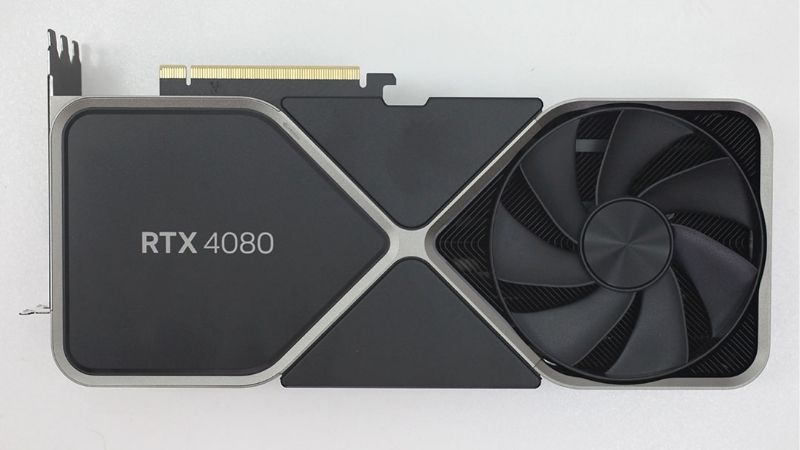
Nvidia RTX 4080 Performance In 2026
Raw performance is where the RTX 4080 still impresses, because a former high-end card does not suddenly become slow when a successor appears. This section frames its capabilities against the resolutions its owners actually target, so you can judge whether it still delivers the experience you want in today’s games.
As an Amazon Associate we earn from qualifying purchases at no extra cost to you.


4K Gaming Performance
At 4K, the RTX 4080 remains a genuine high-end performer, handling most modern AAA titles at high settings well above the 60 FPS comfort line. It was designed as a 4K card, and that design has aged gracefully as games have grown more demanding.
The card’s large 16GB frame buffer helps it hold steady at 4K, where memory pressure is highest and lesser cards begin to stutter. For 4K gamers, this combination of raw power and generous memory is exactly what keeps the experience smooth across a broad library.
In practical terms, a 4K gamer running the RTX 4080 today still enjoys an excellent experience with room to spare in most titles. Only the very heaviest ray-traced releases push it hard enough to require any meaningful compromise on settings.
Even in those heaviest titles, the card rarely drops to an uncomfortable level, and a small settings adjustment or a touch of DLSS restores a locked frame rate. For a former flagship, that resilience at 4K years after launch is precisely why so many owners have felt no urgency to upgrade to a newer card.
1440p And High-Refresh Performance
Drop to 1440p and the RTX 4080 becomes overpowered in the best possible way, driving high-refresh monitors with ease across nearly every game. Competitive players get extremely high, stable frame rates, while AAA titles run maxed out without difficulty.
This makes the card a strong choice for anyone pairing it with a fast 1440p panel who wants headroom for years. It rarely becomes the bottleneck at this resolution, leaving your CPU and monitor as the limiting factors instead.
For buyers who value future-proofing at 1440p, the RTX 4080 delivers performance that will stay comfortable well beyond the current generation of games. That longevity is a recurring theme in owner reviews.
It also makes the RTX 4080 a sensible pairing for a high-refresh 1440p monitor bought with the future in mind. Rather than being limited by the graphics card, such a setup will be held back by the rest of the system long before the RTX 4080 itself runs out of headroom, which is a comfortable position to be in.
Ray Tracing And DLSS Performance
Ray tracing is a strength for the RTX 4080, thanks to Nvidia’s mature dedicated hardware. It handles heavy ray-traced workloads at 4K far better than mid-range cards, delivering the kind of lighting and reflection effects these games are built to show off.
The card supports DLSS with Frame Generation, which lifts frame rates substantially in supported titles and keeps demanding ray-traced games smooth. It does not offer the RTX 50-series exclusive Multi Frame Generation, but its upscaling remains highly effective.
Together, strong ray-tracing hardware and effective DLSS let the RTX 4080 handle the most visually ambitious games with confidence. For buyers who prize eye-candy at high resolutions, it remains a very capable choice in 2026.
The one caveat is that the newest games leaning heavily on the RTX 50-series exclusive Multi Frame Generation will show the widest gap, since the RTX 4080 cannot access that specific feature. In the vast majority of current titles, however, its ray tracing and standard DLSS remain more than enough to deliver a premium visual experience.
Owner Feedback And Value In A Post-5080 World
Benchmarks tell you what a card can do; owner reviews tell you what living with it is like and whether it still represents good value. This section pulls together the recurring praise and complaints, viewed through the lens of a market that now includes the newer RTX 5080.
What Owners Consistently Praise
The most common praise is effortless 4K and 1440p performance, with owners describing the card as handling anything they throw at it. Even years after launch, that raw capability continues to satisfy demanding gamers who bought it to last.
Efficiency relative to its performance earns frequent mention, as the RTX 4080 delivers flagship-class frames without the extreme power draw of the very top cards. Owners appreciate the balance of high performance and comparatively manageable heat and noise.
The 16GB frame buffer is also praised for keeping the card relevant, since it comfortably handles modern high-resolution textures and creative workloads. For many owners, that memory is why the card still feels current rather than dated.
Reviewers who also create content single the card out for the same reason, using its 16GB buffer and strong compute for editing and rendering alongside gaming. That dual capability helps the RTX 4080 justify its cost over a longer ownership period than a pure gaming card would.
Common Complaints To Be Aware Of
The loudest complaint has always been price, as the RTX 4080 launched at a premium that many felt was steep. That criticism matters even more in 2026, when the newer RTX 5080 offers similar or better performance at a lower official price.
Physical size and power requirements are the other recurring issues, since the card is large and demands a substantial power supply and case. Buyers with compact builds sometimes struggle to fit it or need to upgrade other components to accommodate it.
A smaller group notes the lack of the newest RTX 50-series features, chiefly Multi Frame Generation. For those chasing the very latest technology, that gap is a genuine consideration when weighing an older flagship against a current one.
None of these complaints, though, are about the card being slow, because it plainly is not. They are almost entirely about value and timing, which is exactly why a well-judged purchase price transforms the RTX 4080 from an expensive relic into a genuinely smart buy in 2026.
Pros And Cons Of The RTX 4080
Weighing measured performance against owner sentiment and the current market gives a balanced verdict you can act on with confidence.
Pros: excellent 4K and high-refresh 1440p performance, strong ray tracing, a generous 16GB frame buffer, effective DLSS, and good efficiency for its class.
Cons: a high price unless heavily discounted, large physical size and power demands, and the absence of the newest RTX 50-series Multi Frame Generation feature.
On balance the RTX 4080 remains a superb performer whose only real weakness in 2026 is value, because the newer RTX 5080 has reset expectations. That single factor shapes the buying advice below more than anything about the card’s raw capability.
In other words, the case for or against the RTX 4080 in 2026 is almost entirely a pricing question rather than a performance one. Judge it on the deal in front of you, not on its age, and the decision becomes far simpler than the spec-sheet comparisons with newer cards might first suggest.
Pricing Context And Buying Recommendation
A performance verdict without a price is incomplete, and for an older flagship the price question is everything. Here is how to read the 2026 market before you buy, and whether the RTX 4080 still deserves your money against newer options.
New Versus Used And 2026 Memory Prices
New RTX 4080 stock has largely given way to the RTX 5080, so most purchases now happen on the used market, where price is the deciding factor. A well-priced used card can be a genuine bargain, but only if it undercuts the newer alternative meaningfully.
The wider market matters too. Through late 2025, AI datacenter demand pushed memory and high-VRAM graphics-card prices up by roughly 20%, and while prices have since stabilised somewhat, new supply from sources such as CXMT and Micron’s Idaho plants will not ramp until 2027–2028.
The practical upshot is that elevated prices across the board can make a fairly priced used RTX 4080 more attractive than it would otherwise be. Just weigh the lack of warranty and newest features against the saving before committing to older hardware.
A sensible rule of thumb is to treat a used RTX 4080 as worth buying only when it undercuts a new RTX 5080 by a clear, meaningful margin. If the two are close in price, the newer card’s warranty, features, and efficiency make it the better long-term purchase, so let the size of the discount make the call for you.
RTX 4080 Versus RTX 5080
The core decision in 2026 is whether to buy a used RTX 4080 or a new RTX 5080. The RTX 5080 generally matches or beats the older card, adds Multi Frame Generation, and often carries a lower official price, making it the default choice.
The RTX 4080 only wins when its used price is low enough to create a clear value gap. If you can find one substantially cheaper than a new RTX 5080 and do not mind missing the newest features, it becomes a smart buy rather than a compromise.
See More:
- RTX 4060 vs RTX 5060
- M4 GPU benchmark
- RTX 5060 Ti benchmark
- 5060 Ti 16GB vs 9070 XT
- RTX 5050 vs RTX 5060
Final Verdict And Who It Is For
The RTX 4080 is for the buyer who finds a genuinely well-priced used card and wants flagship-class 4K performance without paying new-flagship money. For that buyer, it remains an outstanding and capable choice in 2026.
If you are buying new or the price gap to an RTX 5080 is small, choose the newer card instead for its features and value. Let the used price, not nostalgia, decide whether the RTX 4080 belongs in your build.
In short, the Nvidia RTX 4080 is still a superb 4K and 1440p performer in 2026, and the only real question worth asking is its price relative to the newer RTX 5080. With component prices holding elevated through the year, a well-priced used card can still be a genuine bargain for the right buyer who shops carefully. Check current pricing and availability through the link below before deciding between an older flagship and a newer one.
Frequently Asked Questions
Is the RTX 4080 still a strong card in 2026?
Yes. It remains a capable 4K card, holding 60fps or better at native 4K in most titles and much higher with DLSS. In raster performance it sits close to the RTX 5070 Ti and RX 9070 XT, so it is still firmly in the upper mid to high-end bracket rather than being obsolete.
What does the 4080 lose compared with Blackwell cards?
The main omission is DLSS 4 multi frame generation, which is restricted to Blackwell hardware. The 4080 does support standard DLSS frame generation and the newer transformer-model super resolution, so image quality upgrades still reach it. It also lacks the ninth generation NVENC encoder and GDDR7 memory of newer cards.
Is 16GB of VRAM enough for 4K gaming?
For current 4K gaming, yes. Most titles stay within 16GB even at maximum textures, and the 256-bit GDDR6X bus provides ample bandwidth. Path traced games with high resolution texture mods can approach the limit, but that is an edge case rather than a routine problem for gamers.
What power supply and case space does it need?
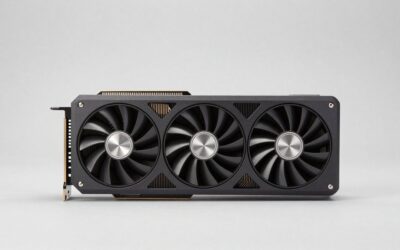
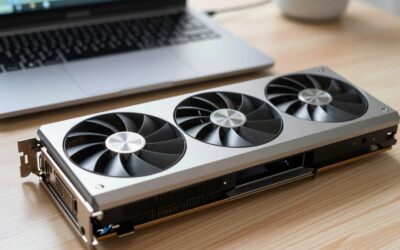
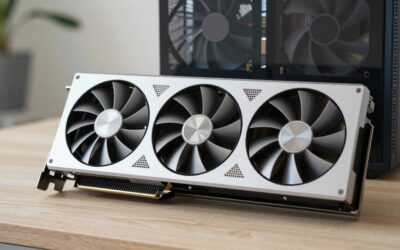
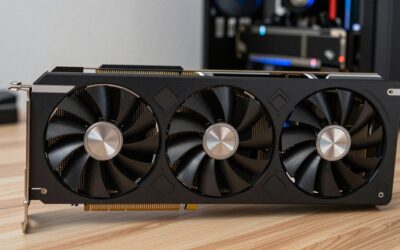
The RTX 4080 has a 320W board power and uses a 12VHPWR connector, usually supplied with a triple 8-pin adapter, with 750W recommended. Most partner cards are large triple-fan designs over 300mm long and three slots thick, so verify both length and width clearance before purchasing.
Should I buy a used RTX 4080 today?
A used 4080 at a genuine discount against a 5070 Ti can be a strong deal given similar performance and identical VRAM. Weigh the missing multi frame generation support, the absence of a manufacturer warranty, and the 12VHPWR connector history, which makes inspecting the plug for heat damage essential before buying.

Write Your Review
No reviews yet. Be the first to share your experience!