
- Top Pick: msi Gaming GeForce RTX 3060 Ventus 2X 12G OC V1 Graphics Card – 15 Gbps GDRR6 Boost Clock: 1807 MHz 192-Bit HDMI/DP PCIe 4 Torx Twin Fan Ampere
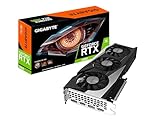
- Best Value: GIGABYTE GeForce RTX 3060 WINDFORCE OC 12G (rev. 2.0) Graphics Card, 2X WINDFORCE Fans, 12GB 192-bit GDDR6, GV-N3060WF2OC-12GD Rev2.0 Video Card
- Premium Choice: GIGABYTE GeForce RTX 3060 Gaming OC 12G (REV2.0) Graphics Card, 3X WINDFORCE Fans, 12GB 192-bit GDDR6, GV-N3060 Video Card
The NVIDIA GeForce RTX 3060 12GB remains a good fit for 1080p gamers and budget builders who want DLSS, ray tracing support and a generous memory pool, and it is best bought used or at a discount, because the current RTX 50-series entry cards are faster but several carry only 8GB. Buyers who play at 1440p with high settings, or who want the newest frame generation features, should look at newer cards instead.
- At a Glance: RTX 3060 Specs and Variants
- Performance Class: What Reviewers Report
- Features That Still Matter
- Is It Still Sold and Supported?
- Fit, Size and Compatibility Notes
- Trade-Offs by Budget Tier
- Pick the RTX 3060 12GB If…
- Alternatives Worth Considering
- Buying and Setup Checklist
- RTX 3060 Versus the Newer Entry Cards
- Frequently Asked Questions
As an Amazon Associate we earn from qualifying purchases at no extra cost to you.


At a Glance: RTX 3060 Specs and Variants
The desktop RTX 3060 launched on February 25, 2021 on NVIDIA’s Ampere architecture. NVIDIA’s product page lists the following for the main 12GB model, and notes that 8GB versions also exist.
| Item | RTX 3060 (12GB) |
|---|---|
| Architecture | Ampere (GA106) |
| CUDA cores | 3,584 |
| Boost clock | 1.78 GHz |
| Memory | 12GB GDDR6 |
| Memory bus | 192-bit |
| Graphics card power | 170W |
| Recommended system power | 550W |
| Ray tracing and AI | 2nd-generation RT cores, 3rd-generation Tensor cores, DLSS |
| Displays | HDMI and DisplayPort 1.4a outputs; up to four displays; up to 7680×4320 |
| Power connector | Supplemental power required; connector type varies by board partner, so read the specific model’s sheet |
| Status in 2026 | Previous generation; available used, refurbished or as leftover stock |
The 8GB variants
NVIDIA’s own page describes the RTX 3060 as available with 12GB of GDDR6 on a 192-bit bus or 8GB on a 128-bit bus. Wikipedia’s GeForce 30 series entry notes an 8GB model and a later GA104-based variant released in October 2022. The 8GB versions have a narrower memory bus and less capacity, so they behave differently from the 12GB card in memory-heavy games. Any listing that only says “RTX 3060” without stating the memory size deserves a question to the seller.
Performance Class: What Reviewers Report
Coverage in 2026 broadly agrees that the RTX 3060 12GB is a 1080p card that can manage 1440p with adjusted settings and upscaling. The GPU Hierarchy reports that 1440p ultra settings were too much for most of the cards in its comparison, with the 3060 averaging just under 30 FPS in its demanding suite and landing close to the RTX 5060 and Intel Arc B570 on minimum frame rates. Its suggestion is high settings with balanced upscaling at 1440p.
The more interesting point is memory. The RTX 5060 and RTX 5050 both list 8GB, so the 3060’s 12GB gives it a 50 percent larger pool than the 5060. Secondary reports citing TechSpot say that with very detailed textures the 3060 can come out ahead of an 8GB RTX 5060. On the other side, buying guides note that in games that stay within 8GB, an RTX 5050 averages around a fifth higher frame rate at 1080p and supports DLSS 4 with Multi Frame Generation. Numbers differ between outlets, which is a good reason to look at results for the specific games you play.
By resolution
- 1080p: strong. High refresh rates in esports titles and high settings in most recent games, with DLSS where supported.
- 1440p: workable at high rather than ultra settings, often with DLSS or FSR upscaling.
- 4K: not the target. The 192-bit bus and core count are the limits.
Features That Still Matter
- DLSS: the 3060 supports DLSS Super Resolution, which is the most useful feature for stretching its life. It does not support the frame generation that arrived with the RTX 40 and 50 series, a point reviewers raise in comparisons with the RTX 5060.
- Ray tracing: supported, though performance with heavy ray tracing is limited, as it is on most cards in this class.
- CUDA and local AI work: several reviewers point out that 12GB plus CUDA is attractive for hobby-level AI tasks, where memory capacity is often the deciding factor.
- Studio and creator use: NVIDIA lists Studio Drivers and NVIDIA Broadcast support for the 3060 family.
Is It Still Sold and Supported?
The RTX 3060 belongs to the previous generation, since the RTX 40 series arrived in 2022 and the RTX 50 series in 2025. New stock is limited, so most buyers meet it as a used card, a refurbished card or part of a prebuilt PC. On drivers, NVIDIA’s announced move to security-only updates applies to the Maxwell, Pascal and Volta architectures. Ampere is not in that group, so the RTX 3060 continues to be covered by regular Game Ready and Studio drivers at the time of writing. Future changes would come through NVIDIA’s release notes.
Fit, Size and Compatibility Notes
- Power supply: NVIDIA recommends a 550W system supply for the RTX 3060. Count the PCIe power connector on the card you buy and confirm the supply has a matching lead.
- Size: partner cards range from compact two-fan models to long triple-fan designs. Measure the case before ordering.
- PCIe slot: the card connects over PCIe x16 and is backward compatible with older boards.
- Used-card advice: ask for the exact memory size, look for fan noise, and prefer sellers who accept returns. A used card normally has no maker warranty.
Trade-Offs by Budget Tier
| Budget tier | Option | Why | Limit |
|---|---|---|---|
| Budget (used) | RTX 3060 12GB | 12GB memory, DLSS, CUDA | No frame generation; older design |
| Budget (new) | RTX 5050 | DLSS 4, newer architecture, 130W | 8GB GDDR6 on a 128-bit bus |
| Lower mid-range | RTX 5060 | 3,840 cores, GDDR7, DLSS 4 | 8GB of memory |
| Mid-range | RTX 5060 Ti (8GB or 16GB) | More cores, 16GB option | 180W and a larger power supply |
Pick the RTX 3060 12GB If…
| Situation | Verdict |
|---|---|
| You play at 1080p and care about texture headroom | Good fit |
| You want DLSS and CUDA at a budget level, including light AI work | Good fit |
| You can only buy used and want the most memory for the money | Good fit |
| You want DLSS 4 Multi Frame Generation | Skip; choose an RTX 50-series card |
| You aim for 1440p ultra in recent games | Skip; look higher in the range |
| You want a full maker warranty | Look at new current-generation cards |
Alternatives Worth Considering
NVIDIA GeForce RTX 5050
The maker lists 2,560 CUDA cores, 8GB of GDDR6, a 128-bit bus, 130W total graphics power, one 8-pin connector, PCIe Gen 5 and DLSS 4 support. It is the new-card answer for a buyer who wants a warranty and current features, with the caveat that memory is lower than on the 3060 12GB.
NVIDIA GeForce RTX 5060
The maker lists 3,840 CUDA cores, 8GB of GDDR7 on a 128-bit bus and 145W total graphics power. Reviewers describe it as the better new purchase for 1080p and some 1440p play, while pointing to its 8GB as the main limit.
Intel Arc B580
Reviewers cited in 2026 coverage describe the Arc B580 as a 12GB card that is faster than the 3060 for pure gaming. It is a reasonable alternative if the driver and feature differences from NVIDIA do not matter to you, though DLSS and CUDA are specific to NVIDIA.
Buying and Setup Checklist
- Confirm the memory size. The same product name covers 12GB and 8GB cards, and the 8GB version uses a narrower 128-bit bus.
- Match the power lead. The maker lists 170W for the card and 550W for the system, but partner boards differ on connector layout.
- Measure the case. Compact two-fan cards and long triple-fan cards fit very different cases.
- Update the driver. Install the current Game Ready or Studio driver from the maker, and enable DLSS in games that offer it.
- Keep settings sensible. At 1440p, high rather than ultra settings with upscaling is the approach reviewers suggest.
- Pair it with a suitable monitor. With HDMI and DisplayPort 1.4a outputs, a high-refresh 1080p or 1440p monitor is the usual pairing.
RTX 3060 Versus the Newer Entry Cards
The comparison most buyers face is the 3060 12GB against the RTX 5050 and RTX 5060. The newer cards use the Blackwell design, support DLSS 4 with Multi Frame Generation, use PCIe Gen 5 and carry GDDR6 or GDDR7 memory. Their weakness is capacity, since both list 8GB on a 128-bit bus. Reviewers therefore split the decision by game type: titles that stay inside 8GB favour the newer cards, while texture-heavy games and creative or AI workloads can favour the older 12GB card. The maker ratings for board power are close, at 170W for the 3060, 130W for the RTX 5050 and 145W for the RTX 5060, so power draw is rarely the deciding factor. A buyer should look at results for the games they actually play instead of relying on one average.
Frequently Asked Questions
Is the RTX 3060 12GB still worth buying in 2026?
For 1080p gaming and budget builds, yes, particularly used. Its 12GB of memory is its main strength. Newer RTX 50-series cards are faster but several carry 8GB.
What is the difference between the RTX 3060 12GB and 8GB versions?
NVIDIA’s page lists a 12GB model on a 192-bit bus and an 8GB model on a 128-bit bus. The 8GB version has less capacity and lower memory bandwidth, so it can fall behind in texture-heavy games. Confirm the memory size before buying.
Can the RTX 3060 run games at 1440p?
Yes, with adjusted settings. Reviewers suggest high rather than ultra settings and the use of DLSS or similar upscaling. Native 1440p ultra in demanding games is described as too heavy.
How much power does the RTX 3060 need?
NVIDIA lists 170W of graphics card power and recommends a 550W system supply. Consult the specific model’s sheet for its exact power connector.
Does the RTX 3060 support DLSS 4 and frame generation?
It supports DLSS Super Resolution as an Ampere card. The frame generation features introduced with later generations are not available on it, which is a leading reason some buyers choose an RTX 50-series card.
Is the RTX 3060 still getting driver updates?
Ampere is not among the architectures NVIDIA moved to security-only updates, so the card continues to receive regular drivers for now. NVIDIA’s release notes are the place to follow any future change.





Write Your Review
No reviews yet. Be the first to share your experience!