
- Top Pick: MySoil Soil Test Kit, Unlock Your Lawn & Garden Potential, Complete & Accurate Nutrient and pH Analysis with Recommendations Tailored to Your Soil and Plant Needs
- Best Value: Lamotte Model El – Turf and Garden Soil Test Kit – 5679-01
- Premium Choice: Rapitest Soil Test Kit for Gardens, Vegetables, Flowers and Lawns. USA designed and assembled soil tester completely, quickly and accurately measures/analyzes soil pH acidity and garden nutrients.
For a gardener who wants numbers that can guide real fertilizer decisions, a mail-in laboratory soil analysis such as Soil Savvy or a state university extension lab is the most dependable choice, while a Luster Leaf Rapitest kit suits a quick seasonal check and a digital probe such as the Hanna Instruments HI98331 or a Bluelab Soil pH Pen suits anyone who tests many spots often. “Professional” in this category really means two different things: lab-grade accuracy, or a field instrument built for repeat use. This guide separates the two so you can match the tool to the job.
As an Amazon Associate we earn from qualifying purchases at no extra cost to you.

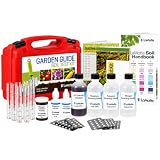


Soil Test Options at a Glance
| Option | Method | Best for | What the maker or lab states | Main limit |
|---|---|---|---|---|
| Soil Savvy | Mail-in lab report | Vegetable beds, lawns, long-term planning | Reports on a broad set of nutrients and organic matter with tailored guidance | Wait for results; premium tier |
| State university extension lab | Mail-in lab report | Region-specific recommendations | Methods are tuned to local soils and crops | Forms, sampling rules and turnaround vary by state |
| Luster Leaf Rapitest Soil Test Kit | Colour-matching capsules | Beginners, quick pH, N, P, K screening | Tests pH and the three main nutrients with colour charts | Colour reading is subjective; coarse ranges |
| Hanna Instruments HI98331 Soil Test | Direct-reading digital probe | Repeat checks of conductivity and temperature | Maker describes a direct soil probe with a digital display | Measures conductivity, not individual nutrients |
| Bluelab Soil pH Pen | Digital pH pen | Growers watching pH in beds and containers | Maker positions it for soil pH with calibration | pH only; needs calibration care |
| Budget 3-in-1 meters (for example Sonkir-style probes) | Analogue or simple probe | Casual moisture and light checks | Typically marketed for moisture, pH and light | Not a substitute for lab analysis |
What “Professional” Should Mean for a Soil Test
A professional-grade result has three traits: a repeatable method, a defined sampling process, and output that can be turned into an action such as how much lime or nitrogen to add. Laboratories meet all three because they dry, sieve and extract samples under controlled conditions. Handheld devices and colour kits meet the first only partly, which is why many agronomy and extension sources treat them as screening tools rather than final answers.
Before choosing, decide what decision the test must support. If you are about to amend a new bed with lime, sulfur or a large fertilizer program, a laboratory report is the sensible basis. If you only want to know whether a pot of blueberries has drifted off its preferred acidity, a pH pen is quicker and cheaper over time.
Mail-In Laboratory Reports
Soil Savvy
Soil Savvy is a consumer-focused mail-in service. You collect samples by following the instructions in the kit, send them in, and receive a report with nutrient levels and plant-specific guidance. Reviewers who cover garden testing generally highlight the readable report and the broad panel as the draw, and the main trade-off is the premium cost tier and the waiting period.
University extension laboratories
Many state land-grant universities run soil testing labs that accept samples from the public. Their strength is local calibration: recommendations are built around regional soils, climate and common crops. Their weaknesses are less polished reports in some states and varying turnaround, particularly in spring when volume peaks. Check your own state extension page for submission forms, accepted sample types and sampling depth guidance.
Who should choose a lab
- New gardens or lawns where you are setting the baseline for years of amendments.
- Anyone whose plants show persistent problems that a quick kit cannot explain.
- Growers selling produce or maintaining large plots, where guessing at fertilizer is wasteful.
- Gardeners who want organic matter and micronutrient information, which colour kits do not provide.
Field Kits and Digital Testers
Luster Leaf Rapitest
The Rapitest kit is a long-running consumer favourite. You mix soil with a capsule’s contents and water, then compare the colour to a chart for pH and the main nutrients. The maker presents it as a simple screening method. The weakness is interpretation: colour matching depends on lighting and eyesight, and the results come in broad bands rather than precise values. It suits beginners who want to learn what soil testing involves.
Hanna Instruments HI98331
Hanna Instruments is a measurement-instrument maker, and this model is described as a direct soil probe that reads electrical conductivity and temperature. Conductivity is an indirect indicator of soluble salts and available nutrient load, so it can show trends between lab tests or flag salt build-up in containers. It does not tell you which nutrient is low, so treat it as a companion to a lab report rather than a replacement.
Bluelab Soil pH Pen
Bluelab sells grower-oriented meters, and its soil pH pen is aimed at people who need frequent pH readings. A pH pen is only as good as its calibration, so plan on buffer solutions and regular cleaning of the probe. It is a strong choice for container growers and for anyone managing acid-loving plants.
Budget 3-in-1 probes
Inexpensive probes that claim to read moisture, pH and light are everywhere. Garden-testing reviewers frequently caution that many use simple electrode designs with limited accuracy, particularly for pH. They can show whether a pot is dry, which is useful, but they should not drive amendment decisions.
How to Choose
Match the tool to the decision
Large or expensive decisions deserve a lab. Everyday maintenance decisions can use a probe. Treat colour kits as a stepping stone while you learn.
Check what is measured
pH alone is not a nutrient test. Conductivity alone is not a pH test. A full lab panel typically combines pH, major nutrients, some micronutrients and organic matter, though exact panels differ by lab, so read the list before ordering.
Sampling matters more than the device
Take several small samples from across the bed at the depth recommended by your lab, mix them in a clean plastic bucket, and remove stones and roots. Avoid sampling just after fertilizing, and use clean tools because residue skews results. A perfect device cannot fix a poor sample.
Budget tiers
- Budget: colour kits and simple probes for screening and learning.
- Mid-range: a single-parameter digital pen or extension-lab submission for each major bed.
- Premium: comprehensive consumer lab reports or a dedicated conductivity and temperature instrument.
Pick X If…
| Pick this | If you |
|---|---|
| Soil Savvy | want one readable report with nutrient guidance and do not mind waiting |
| Extension lab | want recommendations tuned to local soils and crops |
| Luster Leaf Rapitest | are new to testing and want a quick colour-based screen |
| Hanna HI98331 | monitor conductivity and temperature across many spots |
| Bluelab Soil pH Pen | grow acid-loving plants or containers and need repeat pH readings |
| Budget 3-in-1 probe | only need a rough moisture indication |
Common Mistakes
- Testing one spot and treating the whole yard as identical.
- Trusting a cheap pH probe over a lab report when amending large areas.
- Skipping calibration on digital pens.
- Testing wet, freshly fertilized or freshly limed soil and expecting stable numbers.
- Adding lime or sulfur without reading the lab’s rate guidance, which depends on soil texture and buffering.
Alternatives Worth Considering
- Combined approach: a lab report every few years plus a pH pen for in-season checks gives both depth and convenience.
- Tissue testing: some labs analyze plant leaves, which shows what a plant actually takes up.
- Home jar tests: a settling jar estimates sand, silt and clay proportions, useful for understanding texture but not nutrient status.
Frequently Asked Questions
Are home soil test kits accurate?
Colour-matching kits give coarse ranges and are best treated as screening tools. Digital pens can be accurate for the one thing they measure if calibrated correctly. Laboratory analysis is generally the standard for nutrient decisions.
How often should I test garden soil?
Many extension services suggest testing every few years for established beds, and sooner when you start a new bed or see ongoing plant problems. Container growers may check pH more often because potting mixes change quickly.
When is the best time to sample?
Early spring or autumn is common, because it leaves time to apply amendments before planting. Avoid sampling right after fertilizer or lime applications so the reading reflects the soil itself.
Does a soil test tell me how much fertilizer to apply?
Laboratory reports usually include recommended rates for the crop you name. Colour kits and probes generally do not, so you would need to interpret the numbers using extension guidance.
Can I test soil for heavy metals with these kits?
Consumer colour kits and probes are not designed for contaminant analysis. If you are concerned about lead or other contaminants, particularly in urban lots or near older buildings, use a laboratory that offers a specific contaminant panel and follow its handling guidance.
Is a more expensive kit always better?
Not necessarily. A premium lab report earns its cost through method and interpretation, but a premium gadget that measures only one parameter will not answer every question. Choose by what you need to learn.


Write Your Review
No reviews yet. Be the first to share your experience!