
- Top Pick: Nikon NIKKOR Z 24-120mm f/4 S | Premium Constant Aperture All-in-one Zoom Lens for Z Series mirrorless Cameras (Wide Angle to telephoto) | Nikon USA Model
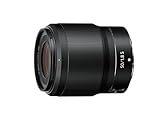
- Best Value: Nikon NIKKOR Z 50mm f/1.8 S | Premium Large Aperture Prime Lens (nifty Fifty) for Series mirrorless Cameras | USA Model, Black
- Premium Choice: Nikon NIKKOR Z 24-70mm f/2.8 S | Professional Large Aperture mid-Range Zoom Lens for Z Series mirrorless Cameras | Nikon USA Model
The best Nikon Z lens for most people is the NIKKOR Z 24-70mm f/2.8 S — it stays sharp wide open across the frame, focuses fast enough for events and moving subjects, and covers the range that handles environmental portraits, reportage and most video work. Everything after that is discipline-specific: the Z 85mm f/1.8 S for portraits, the Z 14-24mm f/2.8 S for landscapes, the Z 180-600mm f/5.6-6.3 VR for wildlife, the Z 24-120mm f/4 S for travel, and the Z 35mm f/1.8 S for video-first shooting.
- Quick comparison: the best Nikon Z lenses by shooting style
- Best overall: NIKKOR Z 24-70mm f/2.8 S
- Best for portraits: NIKKOR Z 85mm f/1.8 S
- Best for landscapes: NIKKOR Z 14-24mm f/2.8 S
- Best for wildlife: NIKKOR Z 180-600mm f/5.6-6.3 VR
- Best for travel: NIKKOR Z 24-120mm f/4 S
- Best for video: NIKKOR Z 35mm f/1.8 S
- Best budget pick: NIKKOR Z 40mm f/2
As an Amazon Associate we earn from qualifying purchases at no extra cost to you.



Quick comparison: the best Nikon Z lenses by shooting style
| Lens | Best for | Key specs (per Nikon’s published spec sheet) | Typical price |
|---|---|---|---|
| NIKKOR Z 24-70mm f/2.8 S | Best overall / events | 24–70mm, constant f/2.8, ~805 g, 82mm filter, no lens VR | usually $1,900–$2,400 |
| NIKKOR Z 24-120mm f/4 S | Travel / one-lens hiking | 24–120mm, constant f/4, ~630 g, 77mm filter, no lens VR | usually $900–$1,100 |
| NIKKOR Z 85mm f/1.8 S | Portraits | 85mm, f/1.8, ~470 g, 67mm filter | usually $700–$800 |
| NIKKOR Z 135mm f/1.8 S Plena | Bokeh-critical portraits | 135mm, f/1.8, ~995 g, 82mm filter | usually $2,300–$2,600 |
| NIKKOR Z 14-24mm f/2.8 S | Landscapes / night skies | 14–24mm, f/2.8, ~650 g, 112mm filter | usually $2,200–$2,500 |
| NIKKOR Z 14-30mm f/4 S | Lightweight landscape | 14–30mm, f/4, ~485 g, 82mm filter | usually $1,000–$1,300 |
| NIKKOR Z 180-600mm f/5.6-6.3 VR | Wildlife / birds | 180–600mm, f/5.6–6.3, ~1,955 g, 95mm filter, lens VR | usually $1,700–$2,000 |
| NIKKOR Z 400mm f/4.5 VR S | Handheld wildlife | 400mm, f/4.5, ~1,245 g with collar, 95mm filter, lens VR | usually $3,000–$3,400 |
| NIKKOR Z 35mm f/1.8 S | Video / hybrid | 35mm, f/1.8, ~370 g, 62mm filter | usually $700–$850 |
| NIKKOR Z 40mm f/2 | Budget / compact | 40mm, f/2, ~170 g, 52mm filter, no focus ring | usually $250–$300 |
Best overall: NIKKOR Z 24-70mm f/2.8 S
This is the lens that makes the fewest compromises. Constant f/2.8 across 24–70mm means you keep the same exposure when you zoom, which matters more than most spec sheets admit — you can set exposure for a face, zoom out for context, and not touch a dial. It uses Nikon’s multi-focus system with two stepping motors, so it acquires focus quickly and quietly, and the barrel does not extend while zooming, which keeps the balance stable on a gimbal or monopod.
Who it suits: event and wedding shooters, photojournalists, and hybrid shooters who want one lens for stills and 4K video. Main trade-off: no lens-based VR — it leans entirely on the body’s in-body stabilisation — plus ~805 g and an 82mm filter thread that makes polarisers expensive.
Best for portraits: NIKKOR Z 85mm f/1.8 S
The 85mm f/1.8 S is the value pick for head-and-shoulders work: ~470 g, a 67mm filter thread, and sharpness wide open that holds up on a 45MP sensor, so you are not forced to stop down for detail. The two upgrades are the 85mm f/1.2 S for maximum separation and the 135mm f/1.8 S Plena, which is widely regarded as the bokeh benchmark in the Z line — but it weighs ~995 g and costs roughly three times as much.
Who it suits: anyone shooting people at 85mm or longer who wants a light bag. Main trade-off: 85mm is tight indoors, and there is no VR, so budget for 1/160s or faster when hand-holding.
Best for landscapes: NIKKOR Z 14-24mm f/2.8 S
The 14-24mm f/2.8 S gives you an f/2.8 aperture that is genuinely usable for night skies and it stays crisp into the corners at 14mm, which is where cheaper ultrawides fall apart. It is also unusually light for its class at ~650 g.
The catch is filters: 112mm screw-in filters are large and costly, and many shooters use the rear gel holder instead. If that is a dealbreaker, the 14-30mm f/4 S takes common 82mm filters, weighs ~485 g, and relies heavily on in-camera correction for distortion and vignetting — a reasonable trade for a travel landscape kit. For astro specifically, the 20mm f/1.8 S is worth a look: f/1.8 gathers roughly 1.3 stops more light than f/2.8 at the same shutter speed.
Best for wildlife: NIKKOR Z 180-600mm f/5.6-6.3 VR
One lens covering 180–600mm at ~1,955 g is the reason this is the default wildlife answer. It has a 95mm filter thread, a tripod collar, and lens-based VR that Nikon rates at around 5.5 stops under CIPA-standard measurement. Note that it is not on Nikon’s published Synchro VR list — that cooperation between lens VR and sensor shift covers the 70-200mm f/2.8 VR S, 100-400mm VR S, 400mm f/4.5 VR S, 400mm f/2.8 TC VR S, 600mm f/4 TC VR S and 800mm f/6.3 VR S.
Who it suits: birders and mammal shooters who need zoom flexibility. Main trade-off: f/6.3 at the long end, which is roughly one stop darker than the 400mm f/4.5 VR S — and that is a real cost at dawn, as the next section shows.
Best for travel: NIKKOR Z 24-120mm f/4 S
A 5x zoom that weighs ~630 g and holds f/4 throughout is the sweet spot for carry-on-only trips. You get 24mm for interiors and 120mm for compression, and one 77mm polariser covers the whole range. The alternative, the 24-200mm f/4-6.3 VR, adds reach and true lens VR at ~570 g, but softens noticeably at 200mm and drops to f/6.3, which is a poor match for evening street shooting.
Best for video: NIKKOR Z 35mm f/1.8 S
For video, three things matter more than sharpness charts: quiet autofocus, controlled focus breathing, and a focus ring that responds linearly to rotation. The 35mm f/1.8 S (~370 g) delivers all three, and its field of view is the classic documentary framing. If you need a zoom, the 24-70mm f/2.8 S is the better video lens of the pair, with suppressed breathing and a constant aperture that keeps exposure locked as you zoom.
Avoid for video: the 40mm f/2 and 28mm f/2.8 have no dedicated focus ring, so manual pulls have to be done through the control ring or the body — workable, but not repeatable enough for scripted work.
Best budget pick: NIKKOR Z 40mm f/2
At ~170 g and usually $250–$300, the 40mm f/2 is the cheapest way to get a fast-ish prime on a Z body. It is not an S-line lens: expect softer corners wide open and busier bokeh. For DX bodies, the
Ready to decide? Our #1 pick for 2026 is the NIKKOR Z 24-70mm f/2.8 S.
Live price & availability on Amazon.






Write Your Review
No reviews yet. Be the first to share your experience!