
Our Short List of 3

- Best for: Daily cold-weather commuters who want one set covering torso and legs.
- Brand: Thermajohn
- Product type: Thermal underwear base layer set, top and bottom per listing data
- Material: 92 percent polyester and 8 percent spandex per listing data
- Lining: Fleece lined per listing title

- Best for: Touring riders who wear one base layer across consecutive days and prefer natural fiber.
- Brand: MERIWOOL
- Product type: Mens base layer thermal pants per listing title
- Material: 100 percent merino wool per listing title
- Coverage: Legs only, single piece per listing title
- Best for: Riders on long, fast winter routes where passive insulation alone leaves legs cold.
- Brand: Iooellix
- Product type: Heated underwear pants, thermal base layer pants per listing title
- Heating: 12 zones heating per listing title
- Stated uses: Motorcycle riding and hunting per listing title
All 3 Picks at a Glance
| Product | Specs | Action |
|---|---|---|
| Thermajohn Long Johns Thermal Underwear for Men |
| Check price on Amazon |
| MERIWOOL Mens Base Layer Thermal Pants |
| Check price on Amazon |
| Iooellix Heated Underwear Pants for Men |
| Check price on Amazon |
Thermals for motorcycle riding solve a different problem from thermals for walking or working outdoors. A rider sits nearly still in moving air, so wind strips heat continuously while the rider’s own muscles generate very little of it. At the same time, anything worn under riding trousers and a jacket has to stay flat at the knees, waist and seat, because a bunched seam becomes a pressure point within an hour and a loose layer twists every time a boot goes down at a stop. The real decision is fabric and coverage: a passive layer that manages sweat and insulation, or a heated layer that adds warmth the bike journey itself keeps taking away.
This guide is for commuters riding through cold months, touring riders covering long distances in changing temperatures, and anyone layering under armored textile or leather gear. Every product below is thermal clothing of the same family: base layer bottoms and heated thermal layers worn under riding kit. Each pick was chosen from the name and specifications on its Amazon product page, so fabric blends, size ranges and heating details here come from those listings rather than from general claims about winter clothing.
Quick Picks
As an Amazon Associate we earn from qualifying purchases.
| Product | Best for | Key spec from title |
|---|---|---|
| Thermajohn Long Johns Thermal Underwear for Men | Everyday cold commuting under riding trousers and jeans | Fleece lined base layer set, top and bottom |
| MERIWOOL Mens Base Layer Thermal Pants | Riders who prefer natural merino wool against the skin | 100 percent merino wool thermal pants |
| Iooellix Heated Underwear Pants for Men | The coldest rides, where passive layers are not enough | 12 zones heating, thermal base layer pants for motorcycle hunting |
The three picks divide by how the warmth is made. The fleece lined set is the generalist, covering torso and legs in one purchase. The merino pants concentrate on the legs with a natural fiber that handles sweat and odor on multi-day trips. The heated pants add battery-driven warmth in stated heating zones for riders whose routes are long, fast and cold enough that insulation alone loses the argument with the wind. The sections below help you decide which of those warmth strategies matches your riding.
How to Choose
Put Wind Chill, Not the Thermometer, in Charge
A still morning at a given temperature and the same morning at motorway speed are two different climates for your legs. Moving air pulls heat through every layer that is not windproof, and your outer riding trousers provide most of the wind blocking, which means the thermal layer’s job is insulation and sweat control in still air trapped under the shell. Judge a thermal by how it performs under your actual outer layer, not by how warm it feels standing in a shop. Riders who are warm enough in town and frozen after twenty fast minutes do not need a thicker wardrobe; they need to check that the outer layer seals at waist, ankle and seat, where wind enters.
Choose the Fabric for Your Sweat Pattern
The listings here offer three fabric stories. A polyester and spandex blend with a fleece lining, stated at 92 percent polyester and 8 percent spandex for the Thermajohn set, dries fast, stretches at the knee and hip, and feels soft from the first wear. Merino wool, in the MERIWOOL pants at 100 percent merino, regulates temperature across a wider swing and resists odor across repeated days, which touring riders value. Heated layers add a third variable: the warmth is adjustable, but the garment now includes wiring and a battery routine. Match the fabric to your ride pattern: short daily commutes forgive almost anything, while long days and multi-day trips punish the wrong choice repeatedly.
Demand a Fit That Survives the Riding Position
Base layers are sized like ordinary underwear, but riding tests them in a bent-knee, leaned-forward posture for hours. Look for four-way stretch, a waistband that does not fold, and legs long enough to stay inside boots when your knee is bent, because a thermal that rides up leaves a cold band of skin exactly where the wind hits. Size ranges in these listings run wide, in one case from XS to 4XL, so use the maker’s size chart with your waist and inseam rather than your usual jeans label. If you wear armored trousers with their own liner, account for that thickness too: the thermal goes under everything, and total bulk at the knee decides comfort.
Decide Between a Set, a Single Piece and a Heated Piece
Coverage is a genuine fork in this category. A top and bottom set warms the torso as well as the legs, which matters because a cold core makes cold legs feel worse and shortens a rider’s concentration. A pants-only purchase suits riders whose jacket and mid-layer already handle the torso, or who run warm above the waist. A heated pants layer targets the legs alone with active warmth, leaving the torso to other layers. None of these is the complete answer for every rider; the right question is where your body actually gets cold on your longest regular ride, and the honest answer to that question picks the product shape for you.
The 3 Best Options
Thermajohn Long Johns Thermal Underwear for Men
- Best for: Daily cold-weather commuters who want one set covering torso and legs.
- Brand: Thermajohn
- Product type: Thermal underwear base layer set, top and bottom per listing data
- Material: 92 percent polyester and 8 percent spandex per listing data
- Lining: Fleece lined per listing title
Daily cold-weather commuters who want one set covering torso and legs.
Check the maker’s size chart for your exact variant before ordering, since this long-running line is sold in many size and color variants under different listings.
The Thermajohn set is the straightforward cold-weather base: a fleece lined top and bottom sold together for men. Listing data describes a 92 percent polyester and 8 percent spandex blend, moisture-wicking behavior and a size range running from XS to 4XL, sold as top and bottom sets. For a commuter, that combination covers the whole body under a riding jacket and trousers with one purchase and one laundry routine, and the stretch in the blend suits the repeated knee and hip movement of getting on and off the bike all day. It is the least specialized option here, which for daily winter commuting is usually a compliment rather than a criticism.
MERIWOOL Mens Base Layer Thermal Pants
- Best for: Touring riders who wear one base layer across consecutive days and prefer natural fiber.
- Brand: MERIWOOL
- Product type: Mens base layer thermal pants per listing title
- Material: 100 percent merino wool per listing title
- Coverage: Legs only, single piece per listing title
Touring riders who wear one base layer across consecutive days and prefer natural fiber.
Confirm the size and weight variant on the product page, since this brand sells the same pants pattern in different fabric weights and colors under separate listings.
MERIWOOL’s pants take the natural fiber route: the listing names them as men’s base layer thermal pants in 100 percent merino wool. Merino’s appeal for riders is temperature regulation across a day that starts cold, warms in traffic and turns cold again, plus odor resistance that matters when the same layer is worn on consecutive touring days. As a pants-only piece, it pairs with whatever torso layers you already trust under your jacket. The trade is care and delicacy: a 100 percent merino garment asks for gentler washing than a synthetic set, and in return gives the most forgiving next-to-skin feel of the three options here.
Iooellix Heated Underwear Pants for Men
- Best for: Riders on long, fast winter routes where passive insulation alone leaves legs cold.
- Brand: Iooellix
- Product type: Heated underwear pants, thermal base layer pants per listing title
- Heating: 12 zones heating per listing title
- Stated uses: Motorcycle riding and hunting per listing title
Riders on long, fast winter routes where passive insulation alone leaves legs cold.
Read the product page for the battery arrangement, heat settings and runtime for this exact variant, and plan charging as part of your pre-ride routine.
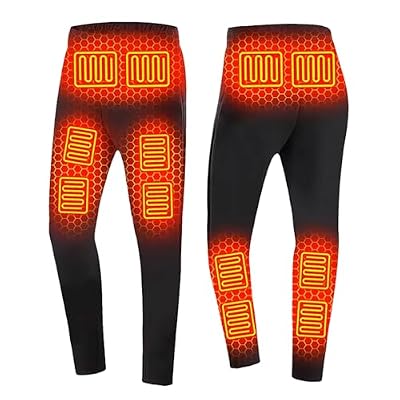
The Iooellix pants are the active answer: a thermal base layer bottom with 12 heating zones, named in the listing for motorcycle riding and hunting. Where the other two products only slow heat loss, this one replaces heat, which changes what a long, fast, cold ride feels like in the second hour. The listing presents them as heated underwear pants for men, in black, with the size in the title of this variant. Heated clothing brings homework the passive layers do not: charging the battery before the ride, placing it where it will not press against the seat or tank, and accepting that warmth ends when the charge does. For riders whose cold problem is severe, that homework is plainly worth it.
These three layers can also be read as a ladder. Most riders should start on the first rung, a passive set that fits properly, and climb only when experience proves the need: merino when trips lengthen and laundry thins out, heated when the cold is genuinely defeating good passive layers. Buying the top rung first often means maintaining batteries to solve a problem that a well-fitting set and a sealed outer layer would have solved for free.
Which One Fits Your Situation
You Commute Through Winter on Mixed Roads
Choose the Thermajohn set. Full coverage in one purchase handles the torso heat loss that makes legs feel colder than they are, the fleece lining suits daily wear, and the wide size range makes a correct fit likely. Commuting also means daily laundering rotation, so consider two sets from the start rather than one premium piece worn five days straight, because a clean, dry base layer every morning is itself a warmth feature.
You Tour for Several Days With Minimal Luggage
Choose the MERIWOOL pants, and pair them with the best torso layer you already own. Merino’s odor resistance stretches a single base layer across days that would defeat a synthetic, and pants are where touring riders feel wind and cold most. The gentler washing merino asks for is a fair trade on the road, where a sink wash and an overnight dry are usually all the laundry a trip allows anyway.
Your Legs Go Numb on Long, Fast Winter Rides
Choose the Iooellix heated pants. Numbness at speed is the signature of heat loss outrunning insulation, and adding heating zones to the legs answers it directly rather than by piling on bulk that binds at the knee. Build the battery check into the same routine as fuel and tire checks, and carry your passive layer underneath or in the luggage as the backup for the day a charge runs out far from home.
You Are New to Cold Riding and Unsure Where You Get Cold
Start with the Thermajohn set and one honest test ride at your normal speed and duration. Note where the cold arrives first: legs, core, or at the gaps around waist and ankle. That single observation tells you whether a future purchase should be a merino upgrade, a heated piece, or simply better sealing on the outer gear you already own. Guessing before that ride spends money on the average rider’s problem instead of yours.
Common Mistakes
- Buying thermals for the temperature at the doorstep instead of the wind chill at riding speed.
- Sizing by a jeans label instead of the maker’s chart, then fighting a waistband or short legs for a whole season.
- Adding bulk under armored trousers without checking knee bend, so the armor shifts and seams press.
- Treating a heated layer as fit and forget, then starting a ride with an uncharged battery.
- Wearing a cotton layer under or over the thermal, which holds sweat against the skin and undoes the base layer’s work.
Frequently Asked Questions
Are thermals worn under or over other layers on a motorcycle?
Thermals are the base layer, worn directly against the skin under everything else. That position lets the fabric manage sweat at its source and keeps the insulating layer flat and still while riding trousers and armor move over it. The listings here describe these products as base layers and thermal underwear, which is that same next-to-skin role. Anything cotton worn underneath defeats the arrangement, so the thermal itself should be the first thing on in the morning.
Do I need a set, or are thermal pants enough?
It depends where you lose heat. Many riders are well served by thermal pants alone because a riding jacket with its own lining covers the torso, while legs sit exposed to the wind with only trousers over them. A set earns its place when your jacket is unlined, your commute is long, or your core cools quickly. The practical test is your last cold ride: if your chest and back felt fine while your legs suffered, buy pants; if everything faded together, buy the set.
How do heated thermal pants work on a ride?
The Iooellix listing describes heated underwear pants with 12 heating zones built into a thermal base layer. In use, a rechargeable battery powers those zones and the rider selects warmth rather than merely trapping it. The details that decide satisfaction, battery size, heat settings and runtime, are stated on the product page for the exact variant, so read them there and plan charging into your routine. Heated layers supplement good outer gear; they do not replace a windproof shell.
How should I wash merino and synthetic thermals?
Follow the care label on the specific garment, because the two fibers ask for different handling. The synthetic fleece lined set is generally the low-maintenance option in this guide, while a 100 percent merino garment typically asks for a gentler wash and more care in drying to protect the wool. What both share is that fabric softener and high heat are common enemies of performance fabrics, so when in doubt, wash cool, skip the softener, and let the maker’s label overrule any general advice, including this.




Write Your Review
No reviews yet. Be the first to share your experience!