
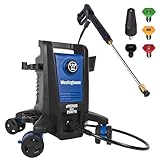
- Top Pick: Westinghouse ePX3100 Electric Pressure Washer, 2300 Max PSI 1.76 Max GPM with Anti-Tipping Technology, Onboard Soap Tank, Pro-Style Steel Wand, 5-Nozzle Set, for Cars/Fences/Driveways/Home/Patios
- Best Value: Pressure Washer, Power Washer with 4 Quick Connect Nozzles 1 Foam Cannon, High Pressure Cleaning Machine for Cars/Fences/Driveways/Patios/Farms/Home Cleaning(Bright Green)
- Premium Choice: Westinghouse ePX3500 Electric Pressure Washer, 2500 Max PSI 1.76 Max GPM with Anti-Tipping Technology, Onboard Soap Tank, Pro-Style Steel Wand, 5-Nozzle Set, for Cars/Fences/Driveways/Home/Patios
For most homes, an electric pressure washer rated around 1,500 to 2,300 PSI with 1.2 to 1.8 GPM handles cars, patio furniture, siding and small decks, a mid-range 2,000 to 2,300 PSI corded unit from brands such as Sun Joe, Greenworks, Ryobi or Kärcher suits the widest range of buyers, and only people with large driveways or heavy stains need to look at gas or higher-output models. Electric washers are quieter, lighter and easier to start than gas, which is why they dominate the residential category. This guide explains the specs that matter and who each type fits.
As an Amazon Associate we earn from qualifying purchases at no extra cost to you.



Reading the Specs: PSI, GPM and Cleaning Units
PSI measures the pressure at the nozzle, while GPM measures water flow. Cleaning power depends on both, and some makers publish a combined cleaning-unit figure by multiplying them. A washer with high PSI and low GPM can strip paint spots but clean wide areas slowly. One with balanced numbers cleans faster. Be aware that the numbers on the box are the maker’s own, measured under specific conditions, so compare them within one brand’s explanation rather than as a perfect cross-brand score.
| Power class | Typical maker-listed PSI | Best for | Limits |
|---|---|---|---|
| Light-duty | About 1,200 to 1,700 | Cars, grills, outdoor furniture, small patios | Slow on concrete and heavy mildew |
| Medium-duty | About 1,800 to 2,300 | Siding, fences, decks, driveways, general chores | Larger driveways take longer than with gas units |
| Heavy-duty electric | About 2,400 to 3,000 | Large patios, stubborn stains, frequent use | Needs a strong circuit, heavier, higher budget tier |
Corded Versus Battery Models
Corded washers run continuously and deliver the best output for the cost, but you need an outdoor-rated power supply and a water hose. Battery-powered washers from makers such as Ryobi, Greenworks and Dewalt offer freedom from outlets and are excellent for cars and light jobs, but their listed PSI and runtime are limited, and they are slower for driveways. Choose a corded unit for yard cleaning and a battery unit as a convenience tool.
Features That Separate Good From Average
- Induction motor versus universal motor: Some makers, including Kärcher, highlight induction motors as quieter and longer lasting than standard universal motors, usually in higher budget tiers.
- Quick-connect nozzles: Swapping between 0-degree, 15-degree, 25-degree, 40-degree and soap tips takes seconds.
- Onboard detergent tank: Handy for car and siding cleaning; look for a dedicated soap nozzle.
- Hose length and material: A long, flexible hose gives reach; reinforced hose lasts longer.
- Total Stop System: Many electric units shut off the pump when you release the trigger, reducing noise and wear.
- GFCI plug: Required safety feature on electric washers; follow the manual and use a properly rated outdoor extension cord if needed.
- Wheels and storage: A stable base, cord wrap and nozzle storage make a real difference over time.
Product Families to Compare
| Brand family | Stated focus | Pick if |
|---|---|---|
| Sun Joe (e.g. SPX3000 line) | Popular corded washers; the maker lists roughly 2,000 PSI-class output on its flagship SPX3000 | You want a mainstream, proven design at a mid-range tier |
| Greenworks | Corded and battery washers, many with quick-connect tips | You like to share batteries across tools |
| Ryobi | Corded and ONE+ battery options, wide accessory support | You already own Ryobi batteries |
| Kärcher | Compact designs, K-series with induction motors in upper models | You want a quieter, longer-lasting motor and are willing to move up a tier |
| Westinghouse and Simpson electric | Higher-output corded electric lines | You need more power without moving to gas |
Specific models change each season. Match the PSI, GPM and amp draw listed by the maker to your needs and to your outlet capacity rather than relying on model names alone.
Pick X If You Need This: Decision Table
| You mainly clean | Choose | Why |
|---|---|---|
| Cars, bikes and outdoor furniture | Light-duty or battery washer | Gentle pressure, easy handling |
| Vinyl siding and fences | Medium-duty corded unit with soap tip | Balanced pressure and wide fan tips |
| Concrete patio and driveway | Medium to heavy-duty corded unit with surface cleaner attachment | Faster coverage and even results |
| A wooden deck | Medium-duty with a wide fan nozzle used at distance | Reduces risk of gouging soft wood |
| Everything, occasionally | Medium-duty from a well-known brand | Best all-round value |
| Frequent heavy jobs | Heavy-duty electric, or consider gas | More output and durability |
Budget Tiers Without Prices
Budget models in the light-duty class usually include a plastic housing, a couple of nozzles and a basic hose. They are fine for cars and patios. Mid-range models add better pumps, soap tanks, faster hose connections and stronger hoses. Premium electric units often use induction motors and offer longer warranties, easier storage and replaceable parts, which matters if you wash often.
Electrical and Safety Notes
- Plug only into a GFCI-protected outdoor outlet; never bypass the safety plug on the cord.
- Use an extension cord only if the manual allows it and rated for the washer’s amp draw; many makers advise short, heavy-gauge cords.
- If you are unsure about your circuit, consult a licensed electrician.
- Never aim a stream at people, pets, outlets or electrical panels.
- Do not use a washer on delicate surfaces such as old mortar, roofing shingles or windows without maker guidance.
- Release trigger pressure before changing nozzles, and purge air from the hose before starting.
Common Mistakes
The biggest error is buying on PSI alone and ignoring GPM. Another is using a 0-degree nozzle on wood or siding, which can cut or dent the surface. Running the pump with no water supply can damage it, and leaving water in the pump over winter can crack it. Many also underestimate how much hose length and wand reach affect fatigue.
Alternatives
- Gas pressure washers: More output for large driveways, but louder and heavier.
- Battery power cleaners: Portable, suited to car washing and light jobs.
- Garden hose nozzles and foam cannons: Cheap and gentle for vehicles.
- Surface cleaner attachments: Add-on discs that speed up flat-area cleaning with an electric washer.
Frequently Asked Questions
How much PSI do I need to clean a driveway?
Makers typically recommend a medium-duty electric washer around 2,000 PSI or more, ideally with a surface cleaner attachment for even results. Lower-pressure models still work, but take longer. For heavy oil stains, a degreaser helps more than raw pressure.
Is an electric pressure washer strong enough for a deck?
Yes, a medium-duty model is generally enough when used with a wide fan tip held at a distance. Too much pressure or a narrow tip can splinter softwood, so test on a hidden area and follow the maker’s manual.
Can I use an extension cord?
Some manuals permit it with a short, outdoor-rated, heavy-gauge cord, while others advise plugging directly into the outlet. Read your manual, and consult an electrician if you are unsure.
What is the difference between a universal and an induction motor?
Universal motors are common, light and cheaper, but louder. Induction motors, found in some Kärcher and other upper-tier models according to the makers, are described as quieter and longer lasting. They also usually sit higher in the budget range.
How do I store a washer over winter?
Drain all water, disconnect hoses and follow the maker’s instructions on pump protection, since freezing water can crack the pump. Store it indoors where temperatures stay above freezing.
Should I choose corded or battery?
Corded suits larger cleaning tasks and longer sessions, while battery models are better for light, quick jobs without finding an outlet. If you want one washer for the whole property, corded is usually the better choice.





Write Your Review
No reviews yet. Be the first to share your experience!