
- Top Pick: PURPLE LEAF Cantilever Patio Umbrella 10' X 13' Extra Large, Navy Blue | 35MPH Wind-Resistant Frame, 3-Yr Fade-Resistant 240GSM Canopy, Max Shade Area, 30-Minute Setup, For Long Yard Table & Garden
- Best Value: PURPLE LEAF Patio Umbrella 11.5' X 15' Wind Resistant Outdoor Umbrella Grey | Oversized Wide Shade Canopy, Reinforced 4" Diameter Pole, Superior Wind Resistance, Effortlessly 360° Rotation
- Premium Choice: 10 ft Patio Umbrellas 3 Tier Vented for Outdoor Garden Backyard, Beige | Sophia & William Auto-tilt Table Umbrellas for Outside, Wind Resistant & Crank for Market Lawn Poolside, 1.5" Pole, No Base
The best patio umbrella for high wind is a heavy-duty commercial-style model with a thick aluminium or fiberglass frame, a vented canopy, and a base weighted to the maker’s guidance, and even then it must be closed when gusts arrive. Cantilever designs suit people who want shade without a centre pole, while a classic market umbrella with fiberglass ribs is the sturdier value option.
As an Amazon Associate we earn from qualifying purchases at no extra cost to you.


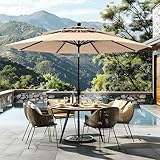
What makes an umbrella handle wind
Wind loads grow quickly with canopy size, so a smaller canopy is naturally steadier. Beyond size, four features matter: the rib material, the pole thickness, the canopy venting, and the base weight. Makers such as Tuuci, Treasure Garden and California Umbrella list these details on their product pages, and some market lines as built for coastal or windy sites. None of them promise an umbrella can stay open in a storm. Their own care guides say to close and secure the umbrella in strong wind.
At a glance
| Type | Example makers and lines | Best for | Key stated traits | Limits |
|---|---|---|---|---|
| Commercial market umbrella | California Umbrella Venture and Sunbrella lines | Dining tables, open yards | Fiberglass or aluminium ribs, vented options, pulley lift | Needs a heavy base; fabric must be closed in gusts |
| Coastal-grade pole umbrella | Tuuci Ocean Master line | Pool decks, seaside homes | Maker markets heavy-duty frames and a wind-tolerant design | Premium tier; large and heavy |
| Cantilever (offset) | Treasure Garden cantilever range, other maker lines | Loungers and seating without a centre pole | Base with large weight capacity, rotating canopy | Catches wind like a sail; needs a very heavy base |
| Budget market umbrella | Generic steel or light aluminium models | Sheltered patios | Lower weight, simple crank | Ribs can bend or snap in gusts |
| Vented tilt umbrella | Models with a double-tier vent top | Breezy spots | A vent lets air pass through the canopy | Slightly less shade at the edges |
Model lines change by season. Confirm the exact model, size and any wind guidance on the maker page when buying.
Frame and ribs
Fiberglass ribs flex under load and spring back, which is why many high-wind umbrellas use them instead of thin steel, which can bend permanently. Thick aluminium poles with a powder-coat finish also resist corrosion. When a maker lists pole diameter and rib thickness, treat it as a rough guide to strength. Many product pages list pole diameter in inches or millimetres, and thicker is generally sturdier.
Canopy and venting
Vents let wind move through the top rather than lifting the canopy like a parachute. Solution-dyed acrylic fabric from Sunbrella is widely used and the maker describes it as fade-resistant and breathable. Tighter weave gives better shade but can catch more wind. Octagonal and square canopies behave differently, and round ones usually shed wind a bit more smoothly.
The base is half the answer
An umbrella that tips is usually a base problem. Many makers advise a minimum base weight depending on canopy size and whether the umbrella sits through a table. Common materials include concrete, resin shells filled with sand or water, and steel plates. Water-filled bases are lighter to carry but weigh less when partly filled, and sand gives a heavier result. Cantilever models need a particularly heavy base, and some are sold with cross bases that you fill with weights or pavers. Anchoring into a deck or ground sleeve is stronger than a free-standing base.
Pick X if…
| You want… | Pick | Why |
|---|---|---|
| Best long-term durability in an exposed spot | Coastal-grade commercial umbrella | Heavier frame, quality hardware |
| Good value for a dining set | Fiberglass-rib market umbrella with a vented top | Flexes without bending |
| Shade over loungers, no pole in the way | Cantilever with a heavy base | Offset layout; needs strict closing habits |
| Fixed outdoor kitchen shade | Anchored pole in a ground sleeve | Strongest mount |
| Occasional use on a sheltered patio | Budget market umbrella | Cheaper, lighter |
Size choice
Pick the smallest canopy that gives the shade you need. A nine-foot umbrella handles gusts better than an eleven-foot one on the same pole. If you need wide coverage, two smaller umbrellas often behave better than one large canopy. Check that the pole fits the table hole and that the base supports the pole diameter.
Common mistakes
- Choosing by canopy colour and ignoring the base weight.
- Leaving the umbrella open overnight or when you are away.
- Putting the umbrella next to a building corner where wind funnels.
- Using a table with a thin umbrella hole and no support collar.
- Treating a wind-tolerant label as storm-proof.
Care that helps in windy areas
Close and tie the canopy when not in use, and put a cover on it. Check bolts and cables twice a season, and replace bent ribs. Store a cantilever or lay it down before a forecast storm. Follow the manufacturer’s manual on any listed wind limit, and treat the figure as the point at which you must close the umbrella, not a promise of safety. A tipping umbrella can injure people, so keep chairs and children away from it in gusts.
Alternatives
- Sail shades anchored to posts, which can handle wind better when tensioned, though they need solid anchor points.
- A pergola with a retractable or louvered roof.
- Wall-mounted umbrella arms for balconies where a base will not fit.
Buying checklist for exposed sites
Measure the table hole and the distance from walls before choosing a model. Look for a maker page that lists pole diameter, rib material, canopy size and recommended base weight, because a listing that omits all four tells you little. Consider a model with a tilt or crank that is simple to close quickly, since an umbrella that is awkward to fold tends to stay open when it should not. Warranty terms on frames and fabric are another useful signal of how confident the maker is in the build. Finally, think about where you will store the canopy cover and the base, since a heavy base that is hard to move discourages people from taking the umbrella down before bad weather arrives.
Seasonal handling
In regions with storm seasons, many owners remove the canopy and keep the frame folded in a shed. Even a strong coastal-grade umbrella benefits from a cover and from being lowered when a forecast calls for gusts. Wipe salt residue from metal parts near the sea, and lubricate moving parts as the manual describes.
Frequently Asked Questions
Can any patio umbrella stay open in high wind?
No. Makers’ care guides tell owners to close the umbrella when winds rise, even for heavy models. Stronger builds simply tolerate more breezy conditions.
Are cantilever umbrellas bad in wind?
They catch wind like a sail because the load sits to one side. They need a very heavy base and should be closed early.
How heavy should the base be?
Follow the maker’s guidance for your canopy size. As a rule, bigger canopies and cantilevers need much heavier bases than small table umbrellas.
What canopy fabric is best for wind?
A vented canopy in solution-dyed acrylic or similar outdoor fabric is common in windy areas. Venting matters more than the fabric brand.
Is fiberglass better than aluminium ribs?
Fiberglass flexes and returns to shape, while thin metal can kink. Strong aluminium frames are also used by premium makers, so check the whole build.
Where should I put the umbrella?
Away from corners where wind accelerates, and on a flat, solid surface. A sheltered spot beside a wall is steadier than the middle of an open lawn.





Write Your Review
No reviews yet. Be the first to share your experience!