
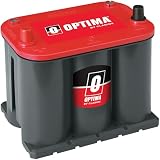
- Top Pick: OPTIMA® Batteries High Performance 25 REDTOP® Sealed AGM Battery | Car, Truck, and SUV Starting Battery, 720 CCA, SAE Terminal, Maintenance Free, Versatile Mounting
- Best Value: OPTIMA® Batteries High Performance 75/25 REDTOP® Sealed AGM Battery | Car, Truck, and SUV Starting Battery, 720 CCA, Dual SAE and GM Terminals, Maintenance Free, Versatile Mounting
- Premium Choice: OlarHike 12000mAh Heavy Duty Tire Inflator Portable Air Compressor | Powerful, 7X Faster, 150PSI, Dual Power 12V&Cordless, For Car Tires, Pickup Trucks, Jeeps, SUVs & RVs, Digital Pressure Gauge
The best battery for a pickup truck is the one that matches your truck’s group size and cold cranking amp requirement, and for most modern trucks with start-stop systems, big infotainment screens or aftermarket accessories, an AGM battery from a known maker is the safer choice over a basic flooded one. Always start with what the owner’s manual or the label on your current battery says, then choose among brands such as Optima, Odyssey, DieHard, Interstate, Duracell, Bosch, ACDelco and Deka.
As an Amazon Associate we earn from qualifying purchases at no extra cost to you.


Check these three numbers first
Group size
Group size is a standard from BCI that defines the physical case size and terminal layout. Common pickup truck sizes include Group 65, Group 78, Group 34/78 and Group 27F, depending on the make and engine. A wrong size may not fit the tray or may have reversed terminals, so match the size in your manual.
Cold cranking amps
CCA is the amount of current a battery can deliver in the cold for a short time. Diesel trucks usually need higher CCA than gas models, and drivers in cold climates should meet or exceed the maker’s minimum. More CCA than needed does no harm, but it is not a substitute for the right size.
Reserve capacity and Ah
Reserve capacity shows how long a battery can run essentials if the alternator fails. It matters for trucks with winches, light bars, toolboxes with power or frequent idling. AGM batteries often list amp-hours too.
Battery types
| Type | Best for | Strengths | Limits |
|---|---|---|---|
| Flooded lead-acid | Older trucks with few electronics, budget tier | Lowest cost tier, widely available | Shorter life in heat and vibration, may need maintenance |
| Enhanced flooded (EFB) | Some start-stop trucks | Better cycling than standard flooded | Not as tough as AGM |
| AGM | Modern trucks, accessories, start-stop | Spill-resistant, vibration tolerant, handles deep cycles better | Higher cost tier |
| Dual-purpose AGM (such as Optima YellowTop) | Winches, audio, camping trucks | Deep-cycle capability plus starting power | Check size and charging compatibility |
| Lithium starter | Specialty or performance use | Light weight | Not a drop-in for all trucks, check vehicle compatibility |
Brands and lines people shortlist
Optima
Optima’s SpiralCell design is its known feature. The maker offers RedTop for starting, YellowTop for combined starting and deep cycling, and BlueTop for marine and similar use. Reviewers often mention YellowTop for trucks with winches or heavy accessories.
Odyssey
Odyssey’s Extreme series uses thin plate pure lead construction according to the maker, and outlets note strong cranking and a long service life. It sits in a premium tier.
DieHard, Interstate, Duracell and ACDelco
These are widely available retail and dealer lines, offering flooded and AGM options in multiple groups sizes. Warranty length and free replacement period differ by line, so compare those terms.
Bosch and Deka
Bosch supplies AGM options often fitted in European and other vehicles. Deka is a long-time maker with truck and commercial-oriented lines. Both are frequently listed in comparison articles.
Pick X if you
| If you… | Pick |
|---|---|
| Drive a newer truck with start-stop | The AGM or EFB type the maker specifies |
| Run a winch, lights or a stereo | Dual-purpose AGM |
| Live where winters are severe | Higher CCA at or above the maker minimum |
| Drive a diesel | Battery with diesel-appropriate CCA, often paired batteries |
| Have an older, simple truck on a tight budget | Quality flooded battery with a solid warranty |
Fit and compatibility notes
- Check terminal position, since positive on the wrong side can leave cables too short.
- Confirm the hold-down fits the new case.
- Some modern trucks have a battery monitoring sensor and need the new battery registered; consult the manual or a dealer.
- Diesel trucks often use two batteries, which should be replaced together.
- Do not swap AGM for flooded in a truck designed for AGM, as the charging system may be calibrated for it.
Life and care
Battery life is commonly three to five years, though heat shortens it. Keep terminals clean and tight, avoid repeated short trips, and use a maintenance charger if the truck sits. If the truck is slow to crank, headlights dim at idle or the battery warning light appears, have the battery and alternator tested at a shop or parts store.
Safety
Car batteries contain acid and can release hydrogen gas. Wear eye protection and gloves, disconnect the negative terminal first, and keep sparks away. Recycle old batteries at a retailer or recycling center. If you are unsure about replacing a battery in a modern truck, ask a technician, since electronics can need resetting.
Common mistakes
- Buying on brand alone without checking group size.
- Choosing too low CCA for a cold climate.
- Ignoring a weak alternator that kills new batteries.
- Mixing old and new batteries in a dual battery diesel.
- Skipping a warranty comparison.
Reading the label and warranty
Each battery label lists the group size, CCA, reserve capacity and a date code that shows when it was made. Choose a recently made unit, since batteries lose charge on a shelf. Warranty terms usually split into a free replacement period and a prorated period, and the free portion is the one that matters most in practice. Check whether the retailer or the maker handles claims and whether you need to keep the receipt. A brand-new battery in a truck with a weak alternator or parasitic drain will still die early, so ask for a charging system test during installation. Many parts stores run this test at no extra charge, and it protects the investment in a premium AGM unit.
Frequently Asked Questions
What group size do most pickup trucks use?
Common sizes are Group 65, 78, 27F and 34/78, though it depends on make, engine and year. The owner’s manual or the current battery label lists it. A parts store can look it up by vehicle.
Is an AGM battery worth it in a truck?
For trucks with start-stop, heavy electronics or accessories, AGM is often specified by the maker and handles vibration and cycling better. For simple older trucks, a good flooded battery can be enough. Follow what the vehicle maker lists.
How many CCA do I need?
Meet or exceed the manufacturer’s minimum, and lean higher in cold regions. Diesel engines generally need more than gas engines. Extra CCA is fine, but size and type matter first.
Can I install a truck battery myself?
Many owners do, using basic tools and safety gear. Disconnect the negative terminal first and reconnect it last. Trucks with battery sensors or complex electronics may need a dealer or shop to register the new battery.
How long do truck batteries last?
Typical life is around three to five years, shorter in hot climates and with heavy accessory loads. Testing before winter helps catch weak ones. Warranty terms vary by brand and line.
Do I need two batteries for a diesel truck?
Many diesel pickups are built with two batteries to supply cranking power. Replace them as a pair, using matching units, so they age together. Check the manual for the correct arrangement.





Write Your Review
No reviews yet. Be the first to share your experience!