
- Top Pick: Boxiki Travel RFID Blocking Sleeves, Set with Color Coding | Identity Theft Prevention RFID Blocking Envelopes Set of 12 Credit Card Sleeves (Navy Blue)
- Best Value: Luumxai 16 RFID Blocking Sleeves Set (10 Credit Card Holders & 4 Passport Protectors) Identity Theft Protection Secure Sleeves Set.Waterproof aluminum foil slim Design easily into your Wallet
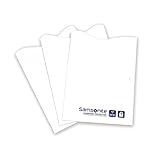
- Premium Choice: Samsonite 3-Pack Credit Card RFID Sleeves, White, One Size
The best RFID sleeve is a snug, card-sized shield made from a layered metallic material that covers the contactless card on both faces, and the right one for you depends on whether you want a cheap paper-thin sleeve, a rigid metal card protector, or a full wallet insert. A sleeve only helps if it fully encloses the card, so fit and construction matter more than the label.
As an Amazon Associate we earn from qualifying purchases at no extra cost to you.



What an RFID Sleeve Actually Does
Contactless payment cards, many passports, building access fobs and some ID cards use short-range radio. Cards in common bank use operate at 13.56 MHz, and a reader powers the card through electromagnetic induction. An RFID-blocking sleeve contains conductive material, such as aluminum foil laminates, metal-coated fabric or a metal alloy, that blocks or weakens the field around the card so it cannot respond to a reader. Security researchers and consumer outlets have long noted that real-world contactless skimming is rare, and modern payment cards use dynamic codes that limit what a thief can reuse. Some buyers still want the added reassurance, particularly for access badges and passports. If you are worried about fraud, also look at your bank’s alerts and card controls.
Quick Comparison of Sleeve Types
| Type | Best for | Key traits | Limits |
|---|---|---|---|
| Paper or laminate sleeve | Occasional travel, spare cards | Thin, flexible, usually sold in multi-packs | Can tear or fold; edges may leave gaps |
| Metal card protector (rigid) | Everyday carry, minimalists | Aluminum or alloy case that slides a stack of cards | Bulk; holds a limited number of cards |
| Fabric pouch with metal weave | Passports, key fobs | Larger opening, closure flap | Must be closed fully |
| RFID-lined wallet or card holder | People wanting one product | Shielding built into the lining | Quality varies; shielded area may not cover all slots |
| Signal-blocking pouch for fobs | Car keys, access badges | Multi-layer pouch | Different purpose from card sleeves |
Products and Makers Reviewers Mention
Makers named in accessory roundups include Secrid, which sells aluminum Cardprotector cases; Silent Pocket, known for signal-blocking pouches and sleeves; Ridge, which makes metal wallets; Ekster, which makes card holders with built-in shielding; and Bellroy, whose wallets include RFID-protected lines. Budget multi-packs of foil sleeves are sold by many generic brands. Because product lines and materials change, read the maker’s page for what each model claims to block and which card types it covers, and treat third-party reviews as opinion.
How to Choose
- Match the use. A thin sleeve is fine for one card in a bag. For daily carry, a rigid case or lined wallet protects several cards at once.
- Check the frequency. Most bank cards and passports use 13.56 MHz. Low-frequency fobs, such as some older access badges at 125 kHz, may need a different shield. Look for a maker statement covering your type.
- Check coverage. The sleeve should cover the full card with no gaps at the edges. Fold-over designs should overlap.
- Consider durability. Foil laminates crease after repeated insertion; metal and woven fabric tolerate more use.
- Think about access. If you tap your card daily, constantly pulling it out of a sleeve becomes annoying; a lined wallet with a pull tab may be easier.
Pick This If…
| You want… | Choose | Reason |
|---|---|---|
| Cheapest option for a few cards | Multi-pack of laminate sleeves | Low cost, easy to replace |
| A slim everyday case | Metal card protector | Rigid, protects cards from bending |
| Passport protection while traveling | Passport sleeve with shielding | Sized for the document |
| One product for cards and cash | Wallet with RFID lining | Built-in shielding |
| Protection for a car key fob | Faraday-style pouch | Fob signals differ from card signals |
Budget Tiers
Budget: paper and foil sleeves in packs, enough for a few cards and a passport. Expect creases and wear. Mid-range: rigid aluminum cases and decent lined wallets, which keep cards flat and last for years. Premium: signal-blocking pouches and leather wallets from established makers with shielded construction and warranty terms; the added cost buys materials and build quality more than shielding strength.
Common Mistakes
- Assuming a wallet label means full coverage. Some wallets shield only part of the lining.
- Using the wrong shield for key fobs. Car fobs use different radio systems than payment cards.
- Stacking too many cards in a thin sleeve. Gaps appear and the shield is less effective.
- Ignoring edge gaps. A sleeve that is too loose can leave the card exposed at the side.
- Believing it stops all fraud. Online and card-not-present fraud are unaffected.
Is It Worth Buying One?
Many security writers say the threat of contactless skimming is small, and bank fraud protections apply to most unauthorized charges. That does not make a sleeve useless: some buyers want privacy for passports, others want physical protection for cards, and a few work in buildings where badge cloning is a concern. If you value simplicity, a sleeve is inexpensive and harmless. If you want real protection, set up account alerts and use a card lock feature when your bank offers one.
How to Check Whether Yours Works
A simple, safe check is to put the card in the sleeve and try a contactless reader you control, such as a phone with an NFC reading app for transit cards, or a payment terminal you own. If the card still reads, the shield is not covering enough or the sleeve is not designed for that frequency. Do not try it on a public terminal or in a way that could trigger a payment. Read the maker’s instructions for any testing guidance.
Alternatives
- Turn off tap-to-pay: some banks let you disable contactless on a card.
- Digital wallets: phone-based payments use tokens and device authentication.
- Card locks and alerts: most bank apps provide quick freezing and notifications.
- Foil-lined pocket or pouch: a DIY approach, though fit and quality are inconsistent.
Frequently Asked Questions
Do RFID sleeves really work?
Properly built sleeves with a conductive layer can block the radio signal that powers contactless cards. Results depend on coverage and the card’s frequency, so check the maker’s stated coverage.
Is RFID skimming common?
Consumer and security outlets generally describe it as rare. Payment cards use dynamic codes, and banks usually cover unauthorized charges, but some people still prefer extra protection.
Will a sleeve damage my cards?
No. A sleeve is passive and does not affect a card’s function once it is removed. Rigid cases can scratch cards if they contain debris, so keep them clean.
Can I use one sleeve for several cards?
Many rigid protectors hold a small stack, while thin sleeves are designed for one card each. Follow the maker’s capacity guidance.
Do sleeves block phone or Bluetooth signals?
No. They are intended for short-range card frequencies, not for cellular or Bluetooth signals. A signal-blocking pouch is a different product.
Do I need one for my passport?
Some passports contain a chip that responds to readers at close range. A shielded sleeve is optional; if you want one, choose a size that fits the passport cover.







Write Your Review
No reviews yet. Be the first to share your experience!