
- Top Pick: JULI Ski Goggle/Snow Snowboard Goggles for Men Women(VLT 12% Silver Lens)
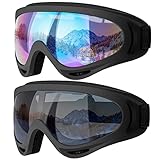
- Best Value: MAMBAOUT 2-Pack Snow Ski Goggles, Snowboard Goggles for Men, Women, Youth, Kids, Boys or Girls
- Premium Choice: Ski Goggles, 2 Pack Snow Goggles Snowboard Goggles for Men Women Kids | UV Protection Foam Anti-Scratch Dustproof Snowboarding Skiing Skating Mountaineering
The best cheap ski goggles are ones that fit your face and helmet properly, carry a double-layer anti-fog lens with 100 percent UV protection and offer a lens suited to your usual light, and models from Smith, Giro and Anon’s entry ranges plus value brands like OutdoorMaster and Zionor often fit that description. Fit and lens choice matter more than price.
As an Amazon Associate we earn from qualifying purchases at no extra cost to you.



Quick Look: Entry-Level Goggle Families
| Brand / family | Best for | Typical maker-stated features | Limits |
|---|---|---|---|
| Smith (entry ranges such as Squad) | Everyday resort skiers wanting a trusted brand | Double lens with anti-fog treatment, helmet-compatible strap, vent design | Premium lens tech reserved for upper models |
| Giro (such as Axis and Contact lines) | Value-minded riders | Cylindrical or spherical lens options, helmet integration | Fewer swappable-lens kits in the lowest tier |
| Anon (entry lines) | Snowboarders and freeriders | Frame designs with magnetic or simple lens systems on higher models | Basic models use a fixed lens |
| OutdoorMaster | Budget buyers wanting spare lenses | Interchangeable-lens kits, UV400 and anti-fog claims on the maker’s page | Quality and fit vary; less brand support |
| Zionor and similar value brands | Occasional trips | Magnetic or cylindrical lenses and UV protection claims | Optical clarity and durability less documented |
Model names and features rotate every season. Confirm lens type, UV rating and helmet compatibility on the maker’s current page before ordering.
What to Look for in Budget Goggles
Fit with face and helmet
Goggles should seal along the forehead and cheeks without pressure points, and the strap must sit over the helmet without a gap above the frame. A visible gap between goggle top and helmet brim is a common complaint. Some brands list helmet compatibility, such as Smith’s I/O and Giro’s own helmets, and it is worth matching helmet and goggle brands when possible. Sizing varies; small, medium and large frames exist, and youth models fit smaller faces.
Lens technology
A double lens with a thin air gap between layers is the standard anti-fog design, according to maker descriptions. A coating on the inside surface supplements it. Single lenses fog far more easily in cold, humid weather. Cylindrical lenses are flatter and cheaper; spherical lenses curve in two directions and give a wider, less distorted view at higher cost.
Lens tint
Dark, mirrored tints suit bright sun; yellow, rose or amber lenses add contrast in flat or low light. Some value brands include a spare lens for each condition. If you ski year-round conditions, a kit with two lenses is more useful than one very dark lens.
UV protection
Look for 100 percent UV protection or UV400 wording in the maker’s listing. Snow reflects ultraviolet light, so this is a safety feature rather than a luxury.
Ventilation
Vents in the frame and foam let moist air escape. Too little ventilation causes fog, and too much allows cold air. Larger frames with top and bottom vents are common in budget lines.
Otg and glasses compatibility
Over-the-glasses (OTG) goggles have larger frames and cut-outs in the foam for glasses arms. Check the maker’s fit notes if you wear prescription glasses.
Budget, Mid-Range and Premium Tiers
Budget
Value brands such as OutdoorMaster and Zionor, along with older seasons’ stock of brand-name goggles, fit here. Expect basic anti-fog coatings, simple vents and fewer fit sizes.
Mid-range
Smith Squad-class, Giro’s entry goggles and Anon’s base models bring more refined fit, helmet integration and stronger anti-fog coatings, according to maker descriptions and reviewer roundups.
Premium
Spherical lenses, magnetic quick-swap systems, photochromic lenses and brand-specific tint technologies appear on premium models from Smith, Oakley, Anon and POC. They are beyond what a casual skier needs.
Pick X If… Decision Table
| Skier type | Pick | Why |
|---|---|---|
| Beginner, a few days per year | Value brand with spare lens | Lowest outlay and two light options |
| Regular resort skier | Smith Squad class or Giro entry model | Better fit, anti-fog and support |
| Snowboarder with a helmet | Anon entry range | Designed for riding helmets and low-light days |
| Glasses wearer | OTG-labelled goggles | Room for frames |
| Kids | Youth-specific frame | Proper seal and smaller strap |
| Variable light | Goggle with swappable lenses | Match lens to conditions |
Care and Fit Tips
- Try goggles on with your helmet whenever possible.
- Never wipe the inside of the lens, since this removes the anti-fog coating; shake off moisture and let it air dry.
- Store goggles in their soft bag to prevent scratches.
- Do not put goggles on your forehead when you are warm, because steam rises into the lens.
- Replace the strap or foam if they wear out.
Common Mistakes
- Buying dark mirrored lenses only, then struggling in flat light.
- Choosing goggles without trying helmet fit, leaving a gap on the forehead.
- Skipping UV protection checks on unbranded goggles.
- Wiping the inside of the lens with gloves or cloths.
- Buying too small a frame for a wide face.
Alternatives
Ski sunglasses
For spring skiing or cross-country, wraparound sunglasses are lighter, though they do not protect from wind and snow.
Last season’s models
Brand-name goggles from earlier seasons often keep the same fit and lens tech and tend to be discounted by retailers.
Rental or lens upgrades
If you ski rarely, resort rentals avoid buying at all. If you already own goggles, a spare replacement lens may solve visibility problems more cheaply than a new pair.
Frequently Asked Questions
Are cheap ski goggles safe for my eyes?
They can be, provided the maker states 100 percent UV protection or UV400 and the lens is intact. If a lens is scratched deeply or the UV claim is missing, consider another pair.
Why do my goggles fog up?
Common causes are heat and moisture trapped inside, blocked vents, a single lens, or a damaged anti-fog coating. Keep goggles ventilated, avoid wiping the lens, and stop to cool down.
Do goggles fit all helmets?
Not always. Matching brands and checking the maker’s compatibility note helps reduce gaps between goggle and helmet.
What lens color is best for cloudy days?
Yellow, amber or rose lenses are usually described as boosting contrast in low light, while dark mirrored lenses suit bright sun.
Can I wear glasses under ski goggles?
Yes, with OTG goggles that have extra frame room. Try them on with your glasses and helmet together before buying.
How long do ski goggles last?
With careful storage, several seasons. Scratches, a worn strap or broken foam seal are the usual reasons to replace them.
Reading the Specs on a Budget Listing
Budget goggle listings can be vague, so read for specific claims. Terms such as “double lens,” “anti-fog coating,” “100 percent UV protection” and “helmet compatible” are meaningful when the maker states them. Words like “professional grade” or “military quality” tell you nothing. Look for the lens category too: some makers state a visible light transmission percentage, which indicates how dark a lens is. Lower percentages suit bright sun, higher ones suit overcast days.
Photos of the strap are useful. A wide strap with silicone grip stays put over a helmet, while a narrow one can slide. Foam thickness matters for comfort: a triple-layer foam with a moisture-wicking face layer is common even on entry models, and thicker foam sits better against a helmet. Finally, check the return policy of the seller, since goggle fit is personal and an in-person try-on is not always possible.
When Paying Slightly More Makes Sense
If you ski more than a week a year, in variable weather, a brand-name mid-range goggle with a spare lens often saves money over replacing a poor pair mid-trip. If you only ski a couple of days annually, a value-brand kit is a reasonable way to start, as long as the UV claim is clear and the fit seals properly.







Write Your Review
No reviews yet. Be the first to share your experience!