
- Top Pick: 55 Vegetable Seeds Variety Pack – 35,600+ Non-GMO Heirloom Seeds for Planting Vegetables and Fruits in Individual Seed Packets, Home Garden Seeds for Hydroponic, Indoor and Outdoors Gardening
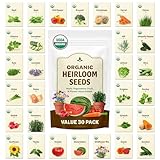
- Best Value: Back to the Roots Organic Heirloom Seeds, Non-GMO Vegetable Seeds, 30 Pack | Rescued surplus seed variety pack of veggies, herbs and flowers for planting; germination tested; assortment varies
- Premium Choice: Sereniseed Certified Organic Vegetable Seeds 30-Pack, Garden Kit | Non-GMO Heirloom Variety Pack for Indoor Outdoor Gardening, Tomato Pepper Spinach Pumpkin Onion Okra Cabbage Spinach
For certified organic seed, High Mowing Organic Seeds is the usual starting point; for the widest range of rare heirloom varieties, Baker Creek Heirloom Seeds and Seed Savers Exchange lead; and for reliable, well-documented performance, Johnny’s Selected Seeds and Renee’s Garden are the common picks. The wrinkle is that “organic” and “heirloom” are two different labels, and very few sellers excel at both. This guide sorts out the difference so a buyer, including a gamer who just wants a low-effort desk-side herb pot or a backyard tomato patch for the off-season, can choose without wasting a growing season.
- Organic vs. Heirloom: What the Labels Actually Mean
- At a Glance: Seed Companies Compared
- High Mowing Organic Seeds: The Certified-Organic Pick
- Baker Creek Heirloom Seeds: Variety and Character
- Seed Savers Exchange: Preservation and Community
- Johnny’s Selected Seeds: Reliability and Documentation
- Alternatives Worth a Look
- How to Choose: Pick X If…
- What to Look for on a Seed Packet or Listing
- Common Mistakes
- Starting Small: A Simple First-Season Plan
- Frequently Asked Questions
As an Amazon Associate we earn from qualifying purchases at no extra cost to you.



Organic vs. Heirloom: What the Labels Actually Mean
Heirloom describes a variety that is open-pollinated, meaning seed saved from the plant grows true to type year after year. There is no single legal definition of how old a variety must be, so companies draw the line differently. Organic describes how the seed was grown: on certified organic land, under a certifying body’s rules. A seed can be heirloom without being organic, and organic without being heirloom. Reviewers who cover seed companies note, for example, that Baker Creek sells only open-pollinated seed and avoids GMO seed, but does not market all of its range as certified organic.
If your goal is “organic heirloom,” look for a variety page that states both things: open-pollinated and certified organic. Many catalogs mark organic items with a clear badge, and it is worth filtering for it rather than assuming.
At a Glance: Seed Companies Compared
| Company | Best for | Organic status (as described by reviewers and makers) | Limits |
|---|---|---|---|
| High Mowing Organic Seeds | Buyers who want everything certified organic | Sells certified organic seed only | Smaller share of rare, antique varieties than the heirloom specialists |
| Baker Creek Heirloom Seeds | Rare and unusual heirloom varieties, colorful catalog | Open-pollinated, GMO-free; not all seed is certified organic | Check each variety page if certified organic is a must |
| Seed Savers Exchange | Preservation-minded gardeners, seed-saving networks | Nonprofit founded in 1975; offers organic and non-organic lines | Organic selection varies by variety |
| Johnny’s Selected Seeds | Well-documented growing guides, broad selection | Offers organic and heirloom items, but is not heirloom-only or organic-only | Mixed catalog, so filter carefully |
| Southern Exposure Seed Exchange | Mid-Atlantic and Southeast growing conditions | Heirloom-focused with organic options | Regional emphasis |
| Renee’s Garden | Small-garden growers who like curated, tested picks | Offers heirloom and organic selections | Smaller catalog than the biggest sellers |
High Mowing Organic Seeds: The Certified-Organic Pick
Reviewers consistently name this Vermont company as the simplest way to guarantee that every packet is certified organic, since it sells no conventional seed. It carries heirloom and open-pollinated tomatoes, peppers, greens and herbs alongside hybrids, so a buyer should still filter for open-pollinated if seed saving is the goal. It suits first-time buyers who want a short, clear rule: if it is on the site, it is organic.
Baker Creek Heirloom Seeds: Variety and Character
Based in Missouri, Baker Creek is known for an enormous range of unusual varieties from around the world. Reviewers describe all of its seed as open-pollinated and GMO-free. Because certified organic status is not universal across its range, anyone who needs the organic label should read the product listing before ordering. It is the pick for the gardener who wants a purple carrot, a striped tomato or a rare pepper and enjoys browsing.
Seed Savers Exchange: Preservation and Community
Seed Savers Exchange, a nonprofit in Iowa, was founded in 1975 to keep heirloom varieties from disappearing, and it runs a member seed-swapping network. Buying from it supports that mission, and the catalog includes organic options. It is a strong choice for someone who plans to save their own seed and wants a source with that culture built in.
Johnny’s Selected Seeds: Reliability and Documentation
Johnny’s is not an heirloom-only company, but reviewers praise the depth of its heirloom selection, its quality control and its detailed, science-based growing information, along with a germination guarantee. It suits buyers who value clear spacing, timing and variety-trial data over rarity.
Alternatives Worth a Look
- Fedco: A cooperative seed seller often mentioned for cold-climate varieties and organic offerings.
- Territorial Seed Company: Frequently cited for varieties suited to the Pacific Northwest.
- Sow True Seed and Adaptive Seeds: Smaller companies that appear in reviewers’ lists for regionally adapted and open-pollinated seed.
How to Choose: Pick X If…
| Pick this | If you… |
|---|---|
| High Mowing | Want certified organic on every packet with no label hunting |
| Baker Creek | Want rare, colorful heirlooms and accept checking organic status per variety |
| Seed Savers Exchange | Want to save seed and support a preservation nonprofit |
| Johnny’s | Want detailed growing guidance and a broad, dependable catalog |
| Southern Exposure | Garden in the Mid-Atlantic or Southeast and want regionally proven varieties |
| Renee’s Garden | Have a small plot or containers and want a curated list |
What to Look for on a Seed Packet or Listing
- Open-pollinated wording: Required if you intend to save seed. Hybrids, often marked F1, will not grow true.
- Organic certification mark: Look for an explicit statement rather than phrases such as “natural” or “untreated,” which do not mean the same thing.
- Days to maturity: Match this to your season length. A long-season tomato can fail in a short summer.
- Packed-for year: Seed viability falls over time, so choose the current season’s stock.
- Germination information: Some companies publish testing details or offer a guarantee.
- Treated or untreated: Organic gardeners typically want untreated seed; the listing should say.
Common Mistakes
- Assuming heirloom means organic, or the reverse.
- Choosing varieties from a catalog written for a very different climate.
- Buying far more seed than a plot needs. Many packets contain enough for several seasons if stored cool and dry.
- Ignoring days to maturity and frost dates.
- Planting too deep. Small seeds often need only a thin covering, and the packet will say so.
Starting Small: A Simple First-Season Plan
A new grower does well to pick three to five reliable crops rather than a dozen. Leaf lettuce, bush beans, a cherry tomato, basil and a hardy herb are the usual beginner suggestions in gardening guides, and all are widely available as open-pollinated or heirloom types from the companies above. Containers work for herbs and compact tomatoes if a sunny spot, such as a balcony, is available. Read the packet for sowing dates, since many crops are started indoors weeks before the last frost.
Frequently Asked Questions
Is Baker Creek certified organic?
Reviewers describe Baker Creek’s seed as open-pollinated and GMO-free, but the company is not marketed as certified organic across its whole range. A buyer who needs the organic label should look for it on the individual variety page.
Can I save seed from organic heirloom plants?
Yes, if the variety is open-pollinated. Saved seed from heirlooms generally grows true, although cross-pollination can occur between related varieties planted close together. Seed Savers Exchange and other sellers publish saving guidance for this reason.
What is the difference between heirloom and open-pollinated?
All heirlooms are open-pollinated, but not every open-pollinated variety is called an heirloom. Heirloom usually implies a longer history, though the age cutoff is not formally defined and companies apply it differently.
Which company is best for beginners?
Reviewers often point beginners to Johnny’s for its growing guides or to High Mowing for the simplicity of an all-organic catalog. Either gives clear sowing instructions on the packet or product page.
How long do heirloom seeds stay viable?
It depends on the crop. Onion and parsnip seed tends to be short-lived, while tomato and bean seed often stays usable longer when kept cool and dry. Packaging dates and the seller’s storage notes are the best guide.
Are organic seeds worth it for a home garden?
Organic seed is grown under certified organic practices, which matters most to buyers who want to support that system or who plan to save seed from organically managed plants. It does not by itself guarantee a better harvest, so growing conditions and variety choice still matter most.







Write Your Review
No reviews yet. Be the first to share your experience!