- Top Pick: GIGABYTE GeForce RTX 5080 Gaming OC 16G Graphics Card, WINDFORCE Cooling System, 16GB 256-bit GDDR7, GV-N5080GAMING OC-16GD Video Card
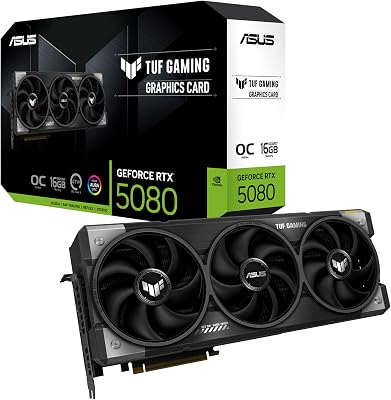
- Best Value: ASUS TUF Gaming GeForce RTX™ 5080 16GB GDDR7 OC Edition Graphics Card
- Premium Choice: ASUS ROG Astral GeForce RTX 5080 16GB GDDR7 White OC Edition Graphics Card
Top Rtx 5080 4080 Benchmark Real Picks for 2026
Here are our current top rtx 5080 4080 benchmark real picks, compared on real Amazon owner reviews, price, and features. Live prices update below.



Save $100.00


5080 vs 4080 benchmark results surprised a lot of people in 2026, because the raw rasterised gap between Nvidia’s new Blackwell card and the older Ada flagship is smaller than the generational jump suggested. Independent testing tells a clear story: modest native frame-rate gains, a big leap in DLSS 4 Multi Frame Generation, and faster GDDR7 memory. This breakdown lays out the real numbers, the practical context, and a straight verdict on which card wins your money.
As an Amazon Associate we earn from qualifying purchases at no extra cost to you. Product prices and availability are accurate as of the date shown and are subject to change.


The Quick Verdict: 5080 vs 4080 Benchmarks at a Glance
The fast answer: the RTX 5080 is the faster card, but in pure rasterised benchmarks it leads the RTX 4080 by only a single-digit margin at 1440p and a low-double-digit margin at 4K. The real separation comes from DLSS 4 Multi Frame Generation, exclusive to the 5080, which can multiply frame rates in supported titles. If you weigh AI features and 4K, the 5080 makes a strong case; if you already own a 4080, the raw uplift alone may not justify upgrading.
Who Wins on Raw Performance
The RTX 5080 wins on raw performance, but more narrowly than its newer architecture implies. Across independent testing, it leads the RTX 4080 by roughly 4–9% at 1440p and around 11–20% at 4K, with some reviews measuring only a 7–10% uplift at the low end. The 5080 lands at roughly 90% of an RTX 4090’s raw speed.
The gap widens at 4K because that resolution leans harder on the 5080’s faster GDDR7 memory and its 10,752 CUDA cores against the 4080’s 9,728. At 1440p, both cards often run so far above typical refresh rates that the difference becomes academic.
If you want the faster card on paper, the 5080 is it — and it is worth checking its current price, since 50-series stock is tight in 2026.
Who Wins on Value
At MSRP the 5080 actually undercut the original 4080 — $999 against $1,199 — while delivering more performance and newer features, which makes it the better value on paper. In the real 2026 market, however, both cards carry inflated street prices, so value depends heavily on what you can actually find.
For a new build the 5080 wins value clearly. For an existing 4080 owner, the modest rasterised uplift means upgrading is hard to justify on frame rates alone — the value case rests almost entirely on whether DLSS 4 Multi Frame Generation matters to you.
This is why the upgrade question splits cleanly by use case. A 4K gamer who plays the latest DLSS 4 titles will feel the 5080’s benefit immediately, while a 1440p esports player who turns upscaling off will see almost none of it. Be honest about which describes you before reading too much into a single benchmark number.
Comparison Table: Benchmark Snapshot
The table below shows approximate native 4K results (no upscaling) from independent testing, illustrating the modest rasterised gap before DLSS 4 enters the picture.
| Title (4K, native) | RTX 4080 | RTX 5080 | Uplift |
|---|---|---|---|
| Black Myth: Wukong | ~52 FPS | ~58 FPS | ~12% |
| Alan Wake 2 (RT) | ~58 FPS | ~68 FPS | ~15% |
| Average across ~17 games | baseline | — | ~11–14% |
| 1440p average | baseline | — | ~4–9% |
Deep Dive Face-Off: 5080 vs 4080
The benchmark snapshot only captures native rasterisation. The full picture includes memory, power, and the AI features that increasingly define modern performance. This section compares the two by the factors that actually decide the experience so you can judge which matters for your build.
Memory, Bandwidth, and Architecture
Both cards carry 16GB of VRAM on a 256-bit bus, so capacity is identical. The difference is the memory type: the 5080 uses faster GDDR7 delivering around 960 GB/s, against the 4080’s GDDR6X at roughly 717 GB/s — a meaningful bandwidth advantage that helps most at 4K.
The 5080’s Blackwell architecture also brings a larger, more efficient design that extracts more from each core and excels in AI workloads. In benchmarks of Stable Diffusion and large-model inference, the 5080 consistently outpaces Ada cards, which matters for creators as well as gamers.
So while the gaming benchmark gap is modest, the underlying hardware is a clear generational step, especially for memory bandwidth and AI throughput.
That bandwidth advantage explains why the 5080’s lead grows at 4K but nearly vanishes at 1440p. Higher resolutions push more data through the memory subsystem, so GDDR7’s extra throughput has room to matter; at lower resolutions the cards are often limited by the CPU or the engine instead, which compresses the gap. Reading benchmarks with resolution in mind is essential to interpreting this match-up correctly.
The cache design plays a quiet role here as well, since Blackwell’s memory subsystem reduces how often the GPU stalls waiting on VRAM. That is part of why the 5080 converts its bandwidth lead into real frames more efficiently at 4K than the raw numbers suggest.
Power, Efficiency, and Thermals
The 5080’s TGP rises to 360W against the 4080’s 320W, nudging it toward an 850W PSU recommendation. Despite the higher ceiling, it is efficient in practice, often delivering more frames per watt than Ada at comparable loads and posting notably low idle power draw.
For builders, the practical note is straightforward: budget for the higher power draw and ensure your case airflow can handle a 360W card under sustained load. If you are reusing a 750W supply from a 4080 build, plan a PSU check before upgrading.
The efficiency gains are real but secondary to the headline story, which remains the feature gap rather than the wattage.
For owners weighing an upgrade from a 4080, the power note carries a hidden cost too. Stepping up to 360W may mean revisiting your power supply and case airflow, which adds to the effective price of the move. When the rasterised gain is already modest, those platform considerations can tip the decision toward keeping the 4080 unless DLSS 4 is the deciding draw.
DLSS 4 and Multi Frame Generation
This is where the 5080 truly separates from the 4080. DLSS 4 with Multi Frame Generation — exclusive to the 50-series — can generate up to several AI frames per rendered frame, dramatically lifting frame rates in supported titles well beyond what any rasterised benchmark shows.
With DLSS 4 active, the 5080 can post 4K frame rates that exceed even a 5090 running older upscaling, transforming a card that is only modestly ahead in raw benchmarks into a genuinely powerful 4K machine. This is Nvidia’s clearest example of forward-looking, architecture-locked technology paying off after purchase.
The trajectory matters too: DLSS 4 adoption keeps widening across new releases, so the 5080’s effective advantage over the 4080 grows over time rather than shrinking. For buyers planning years ahead, that compounding feature gap is central to the decision.
It is worth being honest about how Multi Frame Generation is measured, though. Frame-generated FPS is not identical to native FPS — input latency and image handling differ — so a headline ‘4x’ number is not the same as a 4x rasterised gain. The feature is genuinely transformative for smoothness in supported titles, but the fairest read of the 5080 vs 4080 benchmark gap still separates native results from AI-assisted ones.
Pros, Cons, Pricing, and the Better Buy
With the benchmarks and features mapped, the decision narrows to honest trade-offs and 2026 timing. Below are the strengths and weaknesses of each card in the 5080 vs 4080 benchmark match-up, the market forces shaping their prices, and a clear recommendation.
Pros and Cons of Each Card
The RTX 4080’s pros: still-excellent 4K performance, mature DLSS 3 support, and strong value if found at a fair price below the 5080. Its cons: no DLSS 4 Multi Frame Generation, slower GDDR6X memory, and a higher original MSRP than the newer card.
The RTX 5080’s pros: faster GDDR7 memory, exclusive DLSS 4 Multi Frame Generation, better AI throughput, and a lower launch price than the original 4080. Its cons: a modest rasterised uplift that disappoints upgraders, a higher 360W power draw, and inflated 2026 street pricing.
Weighing the pros and cons of the 5080 vs 4080 benchmark comparison gives a clear rule: buy the 5080 for DLSS 4, GDDR7, and longevity; keep a 4080 if you already own one and do not need the new AI features.
How 2026 Price Hikes and the H200 News Change the Math
These benchmarks land in a rising market. Across early 2026, GPU prices have climbed because GDDR7, GDDR6 and high-bandwidth memory are in severe shortage — VRAM now drives more than 80% of the bill of materials on some high-end cards, and trackers have logged 50-series increases of roughly 15–23%. The 5080’s GDDR7 puts it directly in the path of that shortage, firming its street price well above the $999 launch.
Nvidia’s data-center business intensifies the squeeze. In January 2026 the U.S. approved exports of Nvidia’s H200 AI chip to China, with Chinese firms reportedly ordering more than two million units at around $27,000 each. Every wafer and memory module directed at those high-margin AI orders is capacity not building consumer GeForce cards, keeping high-end gaming GPUs like the 5080 tight and pricey.
The practical takeaway: the 5080 is unlikely to get cheaper soon, and a fairly priced 4080 can look more attractive in that light. If either card appears at a sensible price for your needs, acting sooner beats waiting on a market trending upward.
The Alternative + Final Verdict: Who Should Buy Which
If the 5080 is overpriced where you shop, sensible alternatives include a well-priced 4080 or 4080 Super for raw 4K value, or a 5070 Ti if you want DLSS 4 at lower cost — compare all three before committing. AMD’s high-end Radeon cards are also worth a cross-shop for raster-first buyers who do not need Nvidia’s upscaling.
Final verdict: buy the RTX 5080 if you game at 4K, want DLSS 4 Multi Frame Generation and GDDR7, or run AI workloads — it is the more future-proof card and was cheaper at launch than the original 4080. Keep or buy the RTX 4080 if you already own one, game mainly at 1440p, and do not need the new AI features, since the rasterised uplift alone is modest.
One smart middle path deserves a mention: if you are tempted by the 5080 mainly for DLSS 4, a 5070 Ti delivers the same Multi Frame Generation feature set at a lower price, trading some raw horsepower for a gentler bill. Weigh that option before assuming the 5080 is the only route to Blackwell’s AI features — for many buyers it is the better-value entry point.
Either way, check live stock and pricing through the links on this page before deciding — in a tightening market, the best deal is usually the one available right now.
See More:
Conclusion
The 5080 vs 4080 benchmark story is a lesson in reading past raw frame rates: the 5080 leads by only single digits at 1440p and low double digits at 4K in native rasterisation, but pulls far ahead once DLSS 4 Multi Frame Generation and faster GDDR7 enter the equation. For 4K gamers and AI users it is the smarter, more future-proof buy; for existing 4080 owners the raw uplift alone rarely justifies the cost. With 2026 memory shortages and Nvidia’s H200-driven supply priorities keeping high-end GPUs scarce and expensive, prices are more likely to rise than fall — so once the 5080 vs 4080 benchmark numbers have settled your decision, securing a fair deal sooner beats waiting. Use the links on this page to check today’s price and buy with confidence.
Frequently Asked Questions
What is the best 5080 4080 benchmark in 2026?
The best 5080 4080 benchmark depends on your budget and how you plan to use it. The options compared above are our top-rated picks based on real customer ratings, build quality, and overall value — start with the highest-rated model that fits your budget.
How much should I expect to spend on a 5080 4080 benchmark?
Prices vary by brand and features. Budget options cover the essentials, while mid-range and premium models add durability, performance, and extra features. Compare the prices in the list above to find the best value for your needs.
What should I look for when buying a 5080 4080 benchmark?
Focus on what matters most for your use case — build quality, compatibility, performance, warranty, and verified customer reviews. Every pick above is selected to balance these factors.
Are budget 5080 4080 benchmark options worth it?
Yes. For most people a well-reviewed budget or mid-range 5080 4080 benchmark delivers excellent value. You only need to spend more if you specifically require premium materials or top-tier performance.
How did we choose these 5080 4080 benchmark picks?
We compare current Amazon ratings, review counts, key features, and price to surface the options with the best real-world value. The list is refreshed as ratings and availability change.