
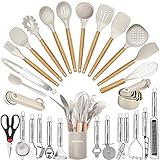
- Top Pick: Umite Chef Kitchen Cooking Utensils Set, 33 pcs Non-Stick Silicone Cooking Kitchen Utensils Spatula Set with Holder, Wooden Handle Silicone Kitchen Gadgets Utensil Set (Khaki)
- Best Value: Astercook 39 PCS Kitchen Utensils Set, Silicone Cooking Utensil Sets with Wooden Handle, 446°F Heat Resistant Food Grade Spatula Set, BPA Free Kitchen Gadgets Tools Set & Spoons for Nonstick Cookware
- Premium Choice: Kitchen Utensils Set- 35 PCs Cooking Utensils with Grater,Tongs, Spoon Spatula &Turner Made of Heat Resistant Food Grade Silicone and Wooden Handles Kitchen Gadgets Tools Set for Nonstick Cookware
The best kitchen utensil set for most households is a mid-sized set in silicone-headed tools with a heat rating printed by the maker, such as OXO Good Grips, with stainless steel or nylon-free options for people who want fewer plastics; pick a larger block or crock set only if you cook daily and have counter room. Material, heat rating and what pans you own decide the winner more than the piece count.
As an Amazon Associate we earn from qualifying purchases at no extra cost to you.



Quick answer: which set fits which cook
Sets come in four main materials: silicone, stainless steel, wood or bamboo and nylon. Brands that reviewers regularly cover include OXO Good Grips, Cuisinart, GIR, Le Creuset and Lodge-adjacent wood tools. Because maker lineups change, read each product page for the current piece list and stated heat limit.
At a glance: materials compared
| Material | Best for | Good at | Limits |
|---|---|---|---|
| Silicone-headed tools | Nonstick and everyday cooking | Gentle on coatings, high stated heat tolerance, dishwasher friendly | Can stain with tomato and turmeric; low-quality heads can warp |
| Stainless steel | Cast iron, stainless pans, heavy-duty use | Durable, no staining | Scratches nonstick pans |
| Wood or bamboo | Enamel cookware, stirring and serving | Gentle on pans, comfortable in hand | Hand washing preferred; can crack over time |
| Nylon | Budget tier nonstick users | Light, inexpensive | Lower heat tolerance; may melt if left in a hot pan |
| Mixed set with crock or holder | Daily cooks | Everything in reach | Takes counter space |
What to look for
Heat rating
Makers print a maximum temperature for silicone and nylon tools. If a set does not state it, treat that as a warning sign. Never leave plastic or silicone tools resting against a hot pan edge, regardless of the rating.
Core construction
Silicone tools with a steel or hard nylon core stay firmer; fully floppy silicone is hard to use for flipping. A seamless head resists trapped food compared with tools where the head is glued on and later separates.
Piece mix
Most useful tools are a spatula or turner, slotted spoon, solid spoon, ladle, tongs, whisk and a spreader or scraper. Large sets add peelers, can openers and mashers that you may already own. A set with a pasta fork or skimmer is useful only if you cook those foods.
Grip and weight
Soft non-slip handles, such as the ones OXO is known for, help during longer cooking. Heavier stainless handles balance well but can fatigue small hands.
Storage
Holes at the handle end let you hang tools, while a crock keeps them on the counter. Check the stated dimensions if your drawer is shallow.
Decision table: pick this if
| Pick this if you… | Choose | Reason |
|---|---|---|
| Own mostly nonstick pans | Silicone or wood set | Protects the coating |
| Cook with cast iron or stainless pans | Stainless steel set | Withstands scraping |
| Want the lowest cost | Budget-tier nylon or silicone set | Covers the basics |
| Prefer fewer plastics | Wood and stainless set | No silicone heads |
| Are furnishing a first kitchen | Mid-sized silicone set with a holder | Covers most tasks |
| Cook daily and want durability | Premium-tier mixed-material set | Better build and finish |
Picks by budget tier
Budget tier
Basic nylon or silicone multipacks from many brands cover essentials. Expect lower heat limits and thinner handles; they suit students and occasional cooks.
Mid-range tier
OXO Good Grips sets are a common reviewer reference point, with silicone-headed tools and comfort handles. Cuisinart also sells matched sets with holders. Compare the stated heat tolerance and dishwasher guidance on each product page.
Premium tier
Seamless one-piece silicone designs such as GIR, Le Creuset tool collections and stainless sets from established cookware makers lead this tier according to many reviewers. You pay for build quality, stain resistance and design.
Care notes
- Wash wood by hand and dry promptly; occasional food-safe oil helps prevent cracking.
- Soak silicone tools stained by tomato sauce with warm soapy water; some staining is cosmetic.
- Replace tools that crack, melt or have separated heads, since food can get trapped.
- Follow the maker’s instructions on dishwasher use.
Common mistakes
- Buying the largest piece count when only five or six tools get used.
- Using metal tools on nonstick pans.
- Ignoring heat ratings and leaving nylon in a hot pan.
- Mixing materials without considering cookware: wood on enamel is fine, steel is not always.
- Forgetting storage; a bulky set in a small drawer is a daily annoyance.
Alternatives
- Buy individual tools: choose the best turner, tongs and spoon rather than a full set.
- Wooden spoon set: low cost and gentle on any pan.
- Stainless tool set for outdoor grilling: longer handles for heat.
Building a set that fits your cooking
Start by listing the dishes you cook most. Stir-fry cooks lean on a wide turner and long spoon, bakers need a spatula and whisk, and grillers need tongs with a locking hinge. Check each tool’s length against your deepest pot so the handle never slides in. If you share a kitchen, matching colours make it easy to keep tools for raw meat separate from those for salads. Finally, weigh a few tools in your hand if you can, because a tool that feels awkward gets left in the drawer however good the specs sound.
It also helps to think about replacement. A set from a brand that sells individual pieces lets you swap a worn spatula without buying everything again, which keeps the cost tier of ownership lower over the years.
Frequently Asked Questions
Is silicone safe for cooking?
Food-grade silicone is widely used in kitchens and makers list heat limits for their tools. Choose products stating food-grade materials and stay within the heat rating.
Which material is best for nonstick pans?
Silicone, wood and bamboo are gentle on nonstick coatings. Metal tools can scratch them. Follow the pan maker’s guidance.
How many pieces do I need?
Most cooks rely on a turner, slotted spoon, spoon, ladle, tongs, whisk and scraper. Anything beyond that depends on your cooking habits.
Can I put utensils in the dishwasher?
Many silicone and stainless sets are labelled dishwasher safe, though wood should be washed by hand. Check the maker’s instructions for each tool.
How often should I replace utensils?
Replace them when heads crack, melt, warp or separate from the handle. Well-made stainless and silicone tools can last many years with normal care.
Do utensil sets make good gifts?
They suit new homes and first kitchens, particularly matched sets with a holder. For experienced cooks, individual high-quality tools may be more welcome.



Write Your Review
No reviews yet. Be the first to share your experience!