
- Top Pick: Gigabyte GeForce RTX 4070 Ti WINDFORCE OC 12G Graphics Card, 3X WINDFORCE Fans, 12GB 192-bit GDDR6X, GV-N407TWF3OC-12GD Video Card
- Best Value: ZOTAC Gaming GeForce RTX 4070 Ti Super Solid OC DLSS 3 16GB GDDR6X 256-bit 21 Gbps PCIE 4.0 Gaming Graphics Card, IceStorm 2.0 Advanced Cooling, ZT-D40730RC-10P
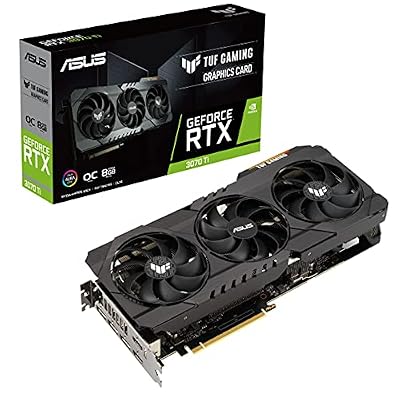
- Premium Choice: EVGA GeForce RTX 3070 Ti FTW3 Ultra Gaming, 8GB GDDR6X, 19000MHz Memory, 1860MHz GPU, 3 Fans, ARGB LED, Metal Backplate, PCIe 4.0, DisplayPort, Desktop Compatible
Top Rtx 3070 Rtx 4070 Upgrade Picks for 2026
Here are our current top rtx 3070 rtx 4070 upgrade picks, compared on real Amazon owner reviews, price, and features. Live prices update below.

Prime
Best Seller
ASUS SFF-Ready Prime NVIDIA GeForce RTX 5070 Graphics Card (PCIe 5.0, 12GB GDDR7, HDMI/DP 2.1, 2.5-Slot, Axial-tech Fans, Dual BIOS), 3 Year Warranty
Dropped $2.52
Save $314.01


Save $309.01

RTX 3070 Ti vs RTX 4070 is a one-generation matchup where the newer card wins on almost every front. The 4070 is faster, far more efficient, carries more VRAM, and adds DLSS 3 Frame Generation, while the 3070 Ti’s main appeal is a lower used-market price. This 2026 comparison breaks down the specs, the real frame rates, the power and value picture, and whether upgrading from a 3070 Ti to a 4070 is worth it before component prices climb further.
As an Amazon Associate we earn from qualifying purchases at no extra cost to you. Product prices and availability are accurate as of the date shown and are subject to change.



Quick Verdict: RTX 3070 Ti vs RTX 4070
This is a more one-sided comparison than most, with the 4070 leading clearly, so the decision is really about whether the upgrade justifies its cost. Here is the fast answer, the spec sheet, and the honest pros and cons.
The Fast Answer
The RTX 4070 is the better card by a clear margin, typically 15 to 25 percent faster than the 3070 Ti while drawing far less power, carrying 12 GB of VRAM versus 8 GB, and adding DLSS 3 Frame Generation the older card cannot run.
The RTX 3070 Ti remains a capable 1080p and entry 1440p card, but its 8 GB buffer is increasingly a limitation in modern titles, and its high power draw makes it the less efficient choice.
The short version for skimmers: buy the 4070 for a modern, efficient 1440p build, and consider the 3070 Ti only as a cheap used card if budget is tight. Checking current pricing below is wise given the tightening market.
Specs Comparison
The spec sheet shows the 4070 winning on memory and efficiency while the 3070 Ti holds a slightly wider bus.
| Specification | RTX 3070 Ti | RTX 4070 |
|---|---|---|
| Architecture | Ampere (GA104) | Ada Lovelace (AD104) |
| CUDA Cores | 6,144 | 5,888 |
| Memory | 8 GB GDDR6X | 12 GB GDDR6X |
| Memory Bus | 256-bit | 192-bit |
| Bandwidth | ~608 GB/s | ~504 GB/s |
| Board Power (TGP) | 290 W | 200 W |
| DLSS Support | DLSS 2 (no Frame Gen) | DLSS 3 (Frame Gen) |
| Launch MSRP | $599 | $599 |
Pros and Cons of Each Card
The 3070 Ti vs 4070 trade-offs strongly favour the newer card, with the 3070 Ti’s only real advantage being a lower used price.
RTX 3070 Ti — Pros: slightly wider 256-bit bus, capable at 1080p, cheap used. Cons: only 8 GB VRAM, high 290 W power draw, no Frame Generation, runs hot for its performance.
RTX 4070 — Pros: faster overall, 12 GB VRAM, very efficient 200 W draw, DLSS 3 Frame Generation, quiet and cool. Cons: narrower 192-bit bus and slightly lower raw bandwidth than the 3070 Ti.
The decisive point is the VRAM gap: the 4070’s 12 GB versus the 3070 Ti’s 8 GB is increasingly important in modern titles, where 8 GB cards are starting to hit limits the 4070 comfortably avoids.
That memory difference is the single most important factor in this comparison. As game requirements rise, an 8 GB card increasingly has to drop texture settings or accept stutter, while a 12 GB card keeps quality high, so the 4070’s buffer protects the experience the 3070 Ti is starting to lose. Combined with its efficiency and DLSS 3, it turns a one-generation gap into a meaningful, lasting advantage.
Deep Dive Face-Off: RTX 3070 Ti vs RTX 4070
The numbers favour the 4070, but the everyday experience depends on how that gap shows across gaming, setup, and features. The face-off compares the cards by these criteria.
It is worth setting expectations first: this is not a contest of equals but a clear generational step, so the interesting question is less which card wins and more whether the margin justifies an upgrade for your specific situation. The criteria below are weighed with that practical decision in mind rather than as an abstract spec battle, since for most readers the real choice is whether to spend now or hold the 3070 Ti a while longer.
Gaming Performance and Benchmarks
At 1440p, the 4070 leads clearly, typically running 15 to 25 percent ahead of the 3070 Ti in modern titles. In a demanding AAA game the 4070 often posts 90 to 120 FPS while the 3070 Ti lands in the 70 to 95 FPS range.
The 3070 Ti’s 8 GB buffer is the bigger story, however. In recent texture-heavy titles it can run short of memory and stutter even when raw performance would otherwise be adequate, a problem the 4070’s 12 GB largely avoids at the same resolution.
The analytical takeaway is that the 4070 is both faster and more consistent, and its DLSS 3 Frame Generation widens the gap further in supported ray-traced titles, turning a solid raster lead into a decisive overall win.
The 8 GB versus 12 GB gap deserves emphasis because it changes more than averages. When a card runs short of memory, the result is not just lower frame rates but sudden stutter and frame-time spikes, exactly the complaint that appears in 3070 Ti feedback at higher settings. The 4070’s 12 GB avoids this in the same titles, so its advantage is about consistency and smoothness as much as raw speed.
Power, Efficiency, and Real-World Setup
Efficiency strongly favours the 4070. At 200 W versus the 3070 Ti’s 290 W, it delivers more performance for far less power, which means less heat, lower noise, and a smaller power supply requirement.
Practically, the 4070 runs cooler and quieter, fits easily in compact cases, and often drops into an existing system without a power supply upgrade, while the 3070 Ti’s higher draw runs hotter and louder.
For anyone building a small or quiet PC, or upgrading a modest system, the 4070 is the easier card to live with, and its low power is one of its most frequently praised traits.
The efficiency also lowers the total cost of upgrading. Because the 4070 draws just 200 W, most buyers will not need a new power supply or extra cooling to accommodate it, savings that make the upgrade cheaper than the card’s price alone suggests. The 3070 Ti’s 290 W, by contrast, runs hotter and louder and can push a marginal power supply harder.
Features and Future-Proofing
The feature gap is decisive. The 4070 supports DLSS 3 with Frame Generation, while the Ampere-based 3070 Ti is limited to DLSS 2 with no Frame Generation.
The experimental angle worth testing is how much DLSS 3 widens the gap in supported titles, where the 4070 can post frame rates the 3070 Ti cannot reach, especially with ray tracing. The 4070’s larger 12 GB buffer also leaves it far better positioned for future games than the 3070 Ti’s 8 GB.
For future-proofing, the 4070’s newer feature set, lower power, and larger memory make it the clearly more durable choice, while the 3070 Ti’s 8 GB is its biggest long-term liability.
There is also a support-lifecycle dimension. As a current-generation card, the 4070 sits earlier in its driver lifecycle and is more likely to gain future optimizations, while the older Ampere 3070 Ti is mature and unlikely to improve much. Combined with its larger buffer and Frame Generation, that makes the 4070 the clearly more durable long-term choice.
Pricing, Alternatives, and Final Recommendation
The 2026 market context matters here too, since neither card is getting cheaper and used 3070 Ti pricing can swing the value calculation.
How the 2026 Price Surge and H200 News Change the Math
GPU prices are rising in 2026 because of a memory shortage that has pushed GDDR and DRAM to a large share of a card’s cost. The 4070, as a current-generation Ada card, is exposed to ongoing increases, while the used 3070 Ti market is propped up by overall scarcity rather than falling as an older card normally would.
The H200 export decision adds indirect pressure. With the U.S. approving capped H200 shipments to China in January 2026, advanced memory is being diverted to AI accelerators, tightening the supply chain that feeds consumer GPUs and keeping even older cards from dropping in price.
For the 3070 Ti vs 4070 decision, the implication is that a new 4070 may hold or rise in price, while a used 3070 Ti is unlikely to become a true bargain. If the 4070 fits your needs at a fair price today, waiting carries more risk than reward in the current cycle.
For skimmers, the short version is simple: buy the 4070 for a modern, efficient 1440p build with more VRAM and DLSS 3, and consider the 3070 Ti only as a cheap used card for 1080p. Because both launched at $599, the newer card is effectively a free upgrade in performance and efficiency at the same original price.
The Alternative if Both Are Too Expensive
If you want a step up from both, the RTX 4070 Super adds more CUDA cores while keeping Ada efficiency, DLSS 3, and the same 12 GB buffer, all at a similar price point to the 4070.
For buyers on a very tight budget, holding onto an existing 3070 Ti and relying on DLSS 2 plus tuned settings is a reasonable short-term option, though the 8 GB buffer will continue to limit it in newer titles.
And for those who want more headroom, the RTX 4070 Ti Super offers a 16 GB buffer and a wider bus, a sensible choice if you plan to push 1440p hard or move toward 4K later.
A fourth, simplest option exists for the budget-conscious: if your current 3070 Ti still runs your games acceptably at 1080p with DLSS 2, there is no obligation to upgrade at all in a high-price market. Saving toward a larger jump later, such as a 5070 Ti with GDDR7 and DLSS 4, can deliver more lasting value than a modest one-generation step today, especially while prices remain elevated and supply is tight.
Final Verdict: Who Should Buy Which
Buy the RTX 4070 if you are buying new or upgrading, value efficiency, want more VRAM, and want DLSS 3 Frame Generation. It is the clearly better card for modern 1440p gaming.
Keep the RTX 3070 Ti only if you already own one and budget is tight, or buy one used at a low price for 1080p gaming, accepting its 8 GB buffer and higher power as the cost of that value.
If the decision still feels close, weigh how long you plan to keep the card. For a multi-year hold the 4070’s 12 GB buffer, DLSS 3, and low power make it the safer choice, since the 3070 Ti’s 8 GB is the part most likely to force compromises as games grow more demanding. Matching the purchase to your timeline, rather than to today’s price alone, turns a close call into a clear one.
Once you have weighed the RTX 3070 Ti vs RTX 4070 trade-offs against current prices, check the latest availability below before the next adjustment.
See More:
- Graphics cards RTX 4090
- RTX 4070 Ti vs 5080
- 4090 vs 4070 Ti Super
- RTX 3080 Ti vs RTX 5080
- Nvidia RTX 4090 vs 5090
Conclusion
The RTX 3070 Ti vs RTX 4070 comparison clearly favours the newer card: the 4070 is faster, far more efficient, carries more VRAM, and adds DLSS 3 Frame Generation, while the 3070 Ti competes only on used-market price. With the 2026 memory shortage and the H200 export shift keeping prices elevated, the smart move is to choose the 4070 if buying new and secure it at today’s price rather than waiting for a discount the market is unlikely to deliver.
Frequently Asked Questions
What is the best rtx 3070 ti rtx 4070 in 2026?
The best rtx 3070 ti rtx 4070 depends on your budget and how you plan to use it. The options compared above are our top-rated picks based on real customer ratings, build quality, and overall value — start with the highest-rated model that fits your budget.
How much should I expect to spend on a rtx 3070 ti rtx 4070?
Prices vary by brand and features. Budget options cover the essentials, while mid-range and premium models add durability, performance, and extra features. Compare the prices in the list above to find the best value for your needs.
What should I look for when buying a rtx 3070 ti rtx 4070?
Focus on what matters most for your use case — build quality, compatibility, performance, warranty, and verified customer reviews. Every pick above is selected to balance these factors.
Are budget rtx 3070 ti rtx 4070 options worth it?
Yes. For most people a well-reviewed budget or mid-range rtx 3070 ti rtx 4070 delivers excellent value. You only need to spend more if you specifically require premium materials or top-tier performance.
How did we choose these rtx 3070 ti rtx 4070 picks?
We compare current Amazon ratings, review counts, key features, and price to surface the options with the best real-world value. The list is refreshed as ratings and availability change.










Write Your Review
No reviews yet. Be the first to share your experience!