
- Top Pick: GIGABYTE GeForce RTX 4070 Ti Super Eagle OC 16G Graphics Card, 3X WINDFORCE Fans, 16GB 256-bit GDDR6X, GV-N407TSEAGLE OC-16GD Video Card
- Best Value: GIGABYTE GeForce RTX 5070 Ti Gaming OC 16G Graphics Card, 16GB 256-bit GDDR7, PCIe 5.0, WINDFORCE Cooling System, GV-N507TGAMING OC-16GD Video Card
- Premium Choice: ZOTAC Gaming GeForce RTX 4070 Ti Super Solid OC DLSS 3 16GB GDDR6X 256-bit 21 Gbps PCIE 4.0 Gaming Graphics Card, IceStorm 2.0 Advanced Cooling, ZT-D40730RC-10P
Top Rtx 4070 Super Rtx 5070 Picks for 2026
Here are our current top rtx 4070 super rtx 5070 picks, compared on real Amazon owner reviews, price, and features. Live prices update below.


RTX 4070 Ti Super vs RTX 5070 Ti is the closest sibling rivalry in Nvidia’s upper-midrange lineup, with both cards carrying 16 GB of memory and targeting the same high-refresh 1440p and entry 4K crowd. The difference is generational: Ada GDDR6X versus Blackwell GDDR7, and DLSS 3 versus DLSS 4. This 2026 comparison covers the specs, the real frame rates, the power and value picture, and which 16 GB card is the smarter buy before the market tightens further.
As an Amazon Associate we earn from qualifying purchases at no extra cost to you. Product prices and availability are accurate as of the date shown and are subject to change.


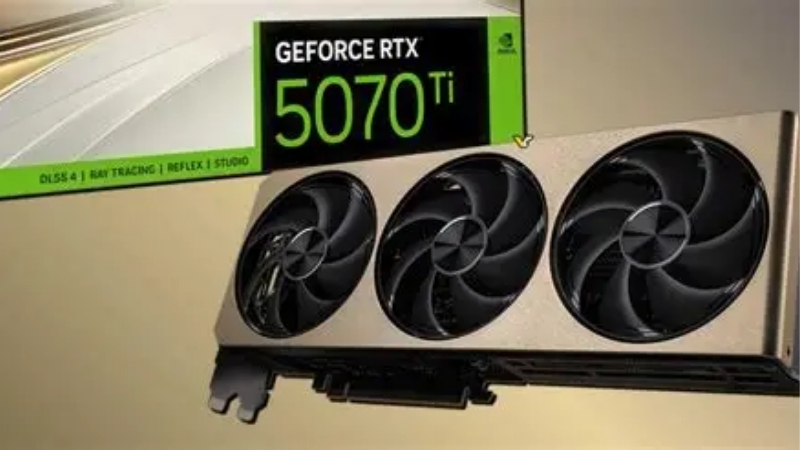
Quick Verdict: RTX 4070 Ti Super vs RTX 5070 Ti at a Glance
These two cards are remarkably evenly matched in raw output, which makes the feature set and price the deciding factors. Here is the fast answer, the spec sheet, and the honest pros and cons of each.
The Fast Answer
The RTX 5070 Ti edges ahead overall, thanks to GDDR7 bandwidth and exclusive DLSS 4 Multi Frame Generation, while delivering a modest raw performance lead of around 10 to 20 percent depending on the title.
The RTX 4070 Ti Super remains a strong, efficient 16 GB card and can be the better value if you find one priced well below the 5070 Ti, especially since both share the same memory capacity.
For buyers who want the longest relevance, the 5070 Ti’s DLSS 4 support tips the balance. If price is your priority and DLSS 4 is not essential, the 4070 Ti Super is a close second. Checking current pricing below is sensible, as both are subject to 2026 increases.
RTX 4070 Ti Super vs RTX 5070 Ti Specs Comparison
The cards line up closely, with the 5070 Ti’s advantages concentrated in memory type and feature support rather than core count.
| Specification | RTX 4070 Ti Super | RTX 5070 Ti |
|---|---|---|
| Architecture | Ada Lovelace (AD103) | Blackwell (GB203) |
| CUDA Cores | 8,448 | 8,960 |
| Memory | 16 GB GDDR6X | 16 GB GDDR7 |
| Memory Bus | 256-bit | 256-bit |
| Bandwidth | ~672 GB/s | ~896 GB/s |
| Board Power (TGP) | 285 W | 300 W |
| DLSS Support | DLSS 3 (Frame Gen) | DLSS 4 (Multi Frame Gen) |
| Launch MSRP | $799 | $749 |
Pros and Cons of Each Card
The 4070 Ti Super vs 5070 Ti trade-offs are narrow, which is exactly why this matchup is so popular. Both are excellent 16 GB cards; the differences are at the margins.
RTX 4070 Ti Super — Pros: mature drivers, efficient 285 W draw, 16 GB VRAM, often discounted. Cons: lower bandwidth, no DLSS 4, slightly slower in newer titles.
RTX 5070 Ti — Pros: GDDR7 bandwidth, DLSS 4 Multi Frame Generation, modern Blackwell efficiency, competitive MSRP. Cons: slightly higher power, newer card exposed to steeper 2026 price hikes, occasional availability gaps.
Deep Dive Face-Off: RTX 4070 Ti Super vs RTX 5070 Ti
Because the cards are so close on paper, the meaningful differences emerge in how they perform across resolutions, how they fit into a build, and how their feature sets age. The face-off compares them by these criteria.
Gaming Performance and Benchmarks
At 1440p, both cards are high-refresh machines, comfortably exceeding 100 FPS in most modern games. The 5070 Ti’s extra bandwidth gives it a measurable but modest edge, often in the 10 to 15 percent range.
At 4K, the GDDR7 advantage matters more. The 5070 Ti holds up slightly better in bandwidth-sensitive scenarios, though both cards lean on upscaling to keep demanding 4K titles smooth. Neither is a no-compromise 4K card, but both handle it respectably.
The analytical takeaway is that raw performance alone does not separate these cards dramatically; the 5070 Ti is faster, but not by a generation-defining margin. Their shared 16 GB buffer keeps both viable in memory-heavy games.
Concrete frame rates show how narrow this race is. In a demanding AAA title at 1440p, the 4070 Ti Super typically runs 95 to 120 FPS while the 5070 Ti sits around 110 to 135 FPS, a real but modest lead of roughly 10 to 15 percent. At 4K both drop into the 50 to 70 FPS band and lean on upscaling to stay smooth, with the 5070 Ti’s GDDR7 bandwidth giving it a slight edge in the most demanding scenes. Neither is a no-compromise 4K card, but both handle it respectably, and at 1440p the difference is one most players would struggle to feel without a frame counter on screen.
Power, Efficiency, and Real-World Setup
Practically, the two cards are easy to live with. The 4070 Ti Super’s 285 W and the 5070 Ti’s 300 W both run well on a quality 750 W power supply, and neither is unusually large.
For most builders, either card drops into a mid-tower without special planning. The 5070 Ti’s slightly higher draw is negligible in practice, and both run quiet on modern coolers under typical loads.
This parity means setup should not be the deciding factor; the choice comes down to features, price, and how long you intend to keep the card.
Their efficiency also makes them friendly to a wide range of systems. Both pair well with a mid-range CPU without serious bottlenecking at 1440p, and both fit comfortably in compact and mid-tower cases where a larger flagship would not. For anyone upgrading an older build, either card is a low-friction choice that rarely demands a new power supply, which is part of why this tier is so popular with mainstream gamers. The takeaway is that setup considerations are effectively a tie, pushing the decision back onto features and price.
Features and Future-Proofing
Here the 5070 Ti pulls ahead in the way that matters most for longevity. Its DLSS 4 Multi Frame Generation can lift frame rates in supported titles well beyond the 4070 Ti Super’s DLSS 3 single Frame Generation.
The experimental angle worth testing is how that feature gap grows as more games adopt DLSS 4. In those titles, the 5070 Ti can post frame counts the older card cannot match, even though their raw shader power is similar. Both cards share the same generous 16 GB buffer for textures and light AI work.
For a buyer keeping the card several years, DLSS 4 is the single strongest argument for the 5070 Ti over the 4070 Ti Super.
It is worth being realistic about how that advantage cashes out. DLSS 4 Multi Frame Generation only helps in titles that implement it, so on day one the two cards feel very close. Over a two or three year ownership window, however, the list of DLSS 4 games grows, and in those titles the 5070 Ti can pull meaningfully ahead without any extra raw power. The 4070 Ti Super is not left behind in raster performance, but it cannot gain that same software-driven uplift, which is why the feature gap weighs heaviest for buyers planning to keep the card a long time.
Pricing, Alternatives, and Final Recommendation
As we navigate the middle of 2026, the mid-to-high-end GPU market is caught in a state of flux. The clash between the RTX 4070 Ti Super (Ada Lovelace architecture) and the newcomer RTX 5070 Ti (Blackwell architecture) is no longer a simple race for the highest frame rates. It has evolved into a complex strategic puzzle involving supply chains, manufacturing costs, and long-term hardware value.
The Market Landscape: “Memory Mania” and AI Pressures
Why is 2026 such a paradoxical year for GPU buyers? The answer lies in the global DRAM and GDDR shortage. The explosive growth of AI infrastructure has driven memory demand to unprecedented levels, disproportionately inflating production costs for consumer hardware.
- The “AI Tax” on GDDR7: The RTX 5070 Ti features the new GDDR7 memory standard, offering superior bandwidth. However, this component is being aggressively prioritized for AI server production. Consequently, production costs for the 5070 Ti have surged by 15% to 23% compared to initial NVIDIA projections.
- The H200 Ripple Effect: The January 2026 U.S. export decision allowing capped H200 shipments to China created a significant supply bottleneck. As advanced memory resources are diverted to AI accelerators, the supply for consumer GDDR7 has tightened. This explains why the 5070 Ti frequently suffers from availability issues, with “street prices” often significantly exceeding its $749 MSRP.
- Ada Lovelace Stability: In contrast, the RTX 4070 Ti Super utilizes GDDR6X—a mature, stable technology with a reliable supply chain. This stability has protected the older line from extreme price spikes, with fluctuations staying within 5-10%. For many, this makes the 4070 Ti Super a “safe harbor” against the volatility of the current market.
Architectural Comparison: Blackwell vs. Ada Lovelace
When assessing technical specifications, the RTX 5070 Ti holds a clear architectural advantage. Blackwell is not merely a clock speed bump; it is deeply optimized for AI-driven processing pipelines.
- DLSS 4 and AI-Driven Features: This is Blackwell’s “secret weapon.” While both cards handle heavy lifting well, the 5070 Ti is engineered to leverage next-generation AI software libraries—specifically DLSS 4—with greater efficiency. For users planning to hold onto their card for 3-4 years, the extended software support and superior AI upscaling will be the defining factors in maintaining performance as future titles become more demanding.
- Rasterization Performance: In pure rasterization (without heavy DLSS or Ray Tracing), the RTX 4070 Ti Super remains a beast. With its 16 GB VRAM buffer, it handles almost all 1440p gaming at max settings with ease. The 5070 Ti is technically faster, but in real-world gameplay, the gap often narrows to a modest 5-8%.
Buying Strategy: Buy by Price, Not by Paper Specs
The biggest mistake a 2026 buyer can make is to become emotionally fixed on a single model. With raw performance being so closely matched, the “best” card is the one that offers the best real-world value at the moment you decide to purchase.
- The Pricing Formula: Treat MSRP as a reference point, not the actual cost. If the RTX 5070 Ti is hovering between $749 and $780, it is the superior choice. However, when supply shortages push it toward $850, its economic value evaporates rapidly.
- The $100 Delta Rule: Set a clear financial boundary. If the price difference between the two cards is less than $50, prioritize the 5070 Ti for its architectural benefits. If the gap widens past $100, the 4070 Ti Super becomes the smarter play, allowing you to reallocate those savings into other high-quality components like a premium power supply or a better chassis for airflow.
Alternative Paths: If Both Are Out of Budget
The market is not limited to these two models. If you feel stuck, consider these strategic alternatives:
- RTX 4070 Super (The Value King): If you don’t strictly require 16 GB of VRAM and primarily game at 1440p on balanced settings, the 4070 Super remains the efficiency champion. It is significantly cheaper and satisfies 90% of the needs of the average enthusiast.
- RTX 5080 (The Upsell): If the 5070 Ti’s price creeps toward $900 due to scarcity, do not settle. It is often wiser to stretch your budget slightly higher to reach the RTX 5080. The performance jump from a 5070 Ti to a 5080 is far more substantial than paying an inflated premium for a “mid-tier” Blackwell card.
Final Verdict: Who Should Buy Which?
The clash between these two GPUs in 2026 has no singular answer.
- Choose the RTX 4070 Ti Super if: You encounter a clearance discount, prioritize proven efficiency, and are not strictly reliant on DLSS 4. It is a workhorse—reliable, cool, and predictable.
- Choose the RTX 5070 Ti if: You desire future-proofing through DLSS 4 and GDDR7 bandwidth, and you are able to secure it near its MSRP.
Final Advice for 2026: Set up automated price alerts for both models. In an era of supply chain unpredictability, patience is your best tool. Monitor the market for a few weeks; the “better deal” between these two cards alternates frequently based on inventory drops. Secure the one that hits your target price first, and enjoy the 16 GB experience.
See More:
- Graphics cards RTX 4090
- RTX 4070 Ti vs 5080
- 4090 vs 4070 Ti Super
- RTX 3080 Ti vs RTX 5080
- Nvidia RTX 4090 vs 5090
Conclusion
The RTX 4070 Ti Super vs RTX 5070 Ti comparison is a close one decided largely by features and price: both are strong 16 GB cards, but the 5070 Ti’s DLSS 4 support and GDDR7 bandwidth give it the edge for buyers who value longevity. With the 2026 memory shortage and the H200 export shift keeping prices in motion, the smart approach is to track current pricing and grab whichever card offers the better deal before the next increase lands.
Frequently Asked Questions
What is the best rtx 4070 ti super rtx 5070 ti in 2026?
The best rtx 4070 ti super rtx 5070 ti depends on your budget and how you plan to use it. The options compared above are our top-rated picks based on real customer ratings, build quality, and overall value — start with the highest-rated model that fits your budget.
How much should I expect to spend on a rtx 4070 ti super rtx 5070 ti?
Prices vary by brand and features. Budget options cover the essentials, while mid-range and premium models add durability, performance, and extra features. Compare the prices in the list above to find the best value for your needs.
What should I look for when buying a rtx 4070 ti super rtx 5070 ti?
Focus on what matters most for your use case — build quality, compatibility, performance, warranty, and verified customer reviews. Every pick above is selected to balance these factors.
Are budget rtx 4070 ti super rtx 5070 ti options worth it?
Yes. For most people a well-reviewed budget or mid-range rtx 4070 ti super rtx 5070 ti delivers excellent value. You only need to spend more if you specifically require premium materials or top-tier performance.
How did we choose these rtx 4070 ti super rtx 5070 ti picks?
We compare current Amazon ratings, review counts, key features, and price to surface the options with the best real-world value. The list is refreshed as ratings and availability change.










Write Your Review
No reviews yet. Be the first to share your experience!