
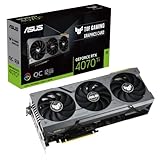
- Top Pick: ZOTAC GAMING GeForce RTX 4070 Ti SUPER Trinity Black Edition 16GB GDDR6X
- Best Value: GIGABYTE GeForce RTX 4070 Ti Super Eagle OC 16G Graphics Card, 3X WINDFORCE Fans, 16GB 256-bit GDDR6X, GV-N407TSEAGLE OC-16GD Video Card
- Premium Choice: MSI GeForce RTX 4070 Ti Super 16G Ventus 2X OC Gaming Graphics Card – 16 GB GDDR6X (21Gbps / 256 Bits), PCIe 4.0-2 x TORX 4.0 Fans – HDMI 2.1a, DisplayPort 1.4a
Top 4090 4070 Super Which Ada Picks for 2026
Here are our current top 4090 4070 super which ada picks, compared on real Amazon owner reviews, price, and features. Live prices update below.


4090 vs 4070 Ti Super pits Nvidia’s Ada Lovelace flagship against its strongest upper-midrange card, and the result is one of the widest performance gaps inside a single generation. One is a 24 GB 4K powerhouse; the other is a 16 GB 1440p champion that costs roughly half as much. This 2026 comparison lays out the specs, the real frame rates, the power and value trade-offs, and exactly which buyer each card suits, so you can choose with confidence before Ada pricing drifts higher.
As an Amazon Associate we earn from qualifying purchases at no extra cost to you. Product prices and availability are accurate as of the date shown and are subject to change.




Quick Verdict: 4090 vs 4070 Ti Super at a Glance
These two cards are not direct rivals; they sit a full tier apart in both price and performance. The right pick depends almost entirely on your target resolution and budget. Here is the fast answer, the spec sheet, and the honest pros and cons.
The Fast Answer
The RTX 4090 is dramatically faster, often 60 to 70 percent ahead at 4K, and its 24 GB buffer makes it the obvious choice for 4K gaming, content creation, and local AI work. If you need the most performance Ada offers, it stands alone.
The RTX 4070 Ti Super is the smarter value for the majority of gamers. With 16 GB of VRAM and a 256-bit bus, it handles 1440p effortlessly and even manages entry-level 4K, all at a far lower price and power draw.
For most buyers, the 4070 Ti Super delivers the better performance-per-dollar, while the 4090 is reserved for those who genuinely need 4K or creator-grade horsepower. Either way, it is worth checking current availability below, since both cards face upward price pressure.
4090 vs 4070 Ti Super Specs Comparison
The spec gap is enormous, particularly in core count, memory bus width, and bandwidth.
| Specification | RTX 4090 | RTX 4070 Ti Super |
|---|---|---|
| Architecture | Ada Lovelace (AD102) | Ada Lovelace (AD103) |
| CUDA Cores | 16,384 | 8,448 |
| Memory | 24 GB GDDR6X | 16 GB GDDR6X |
| Memory Bus | 384-bit | 256-bit |
| Bandwidth | ~1,008 GB/s | ~672 GB/s |
| Board Power (TGP) | 450 W | 285 W |
| DLSS Support | DLSS 3 (Frame Gen) | DLSS 3 (Frame Gen) |
| Launch MSRP | $1,599 | $799 |
Pros and Cons of Each Card
Weighing the 4090 vs 4070 Ti Super trade-offs shows two cards built for different missions. The 4090 maximizes raw output; the 4070 Ti Super maximizes balance.
RTX 4090 — Pros: unmatched 4K and creator performance, 24 GB VRAM for large workloads, strong resale value. Cons: very high price, 450 W power draw, large physical footprint, and limited availability that inflates street prices.
RTX 4070 Ti Super — Pros: excellent 1440p performance, 16 GB VRAM, efficient 285 W draw, much lower cost, easier to fit and cool. Cons: noticeably slower at 4K, fewer cores, and the same DLSS 3 ceiling as the 4090 rather than DLSS 4.
Deep Dive Face-Off: 4090 vs 4070 Ti Super
Beyond the spec sheet, the experience these cards deliver depends on how you game and what you create. The face-off compares them by gaming performance, power and setup realities, and the shared Ada feature set that shapes longevity.
Gaming Performance and Benchmarks
At 1440p, the two cards are closer than the price gap suggests. The 4070 Ti Super already exceeds the refresh rate of most monitors in many titles, so the 4090’s extra power often goes unused unless you run a 240 Hz panel or very demanding settings.
At 4K, the 4090 separates itself emphatically. It maintains smooth frame rates with ray tracing enabled where the 4070 Ti Super has to lean harder on DLSS or drop settings. In the most demanding path-traced games, the gap can exceed 60 percent.
The analytical reading is clear: at 1440p you are often paying for headroom you will not see, while at 4K the 4090 delivers a tangible, repeatable advantage. Your monitor decides whether the premium is worth it.
The concrete figures make this vivid. At 1440p in a demanding AAA title, the 4070 Ti Super commonly runs in the 110 to 140 FPS range, already past what a 144 Hz panel needs, while the 4090 pushes 150 to 200 FPS that only a high-refresh display can show. Move to 4K and the roles invert: the 4070 Ti Super often sits in the 45 to 65 FPS band with heavy settings, whereas the 4090 holds 75 to 100 FPS and stays smooth with ray tracing on. That is the gap you are actually paying for, and it only becomes visible once the resolution rises.
Power, Efficiency, and Real-World Setup
Practically, these cards live very different lives inside a case. The 4070 Ti Super’s 285 W rating runs happily on a 700 W to 750 W power supply and fits most mid-tower builds without drama.
The 4090 demands an 850 W to 1,000 W unit and is one of the largest consumer GPUs ever made, with many models exceeding three slots. Verifying case clearance and the 12VHPWR connector seating is essential, a step that appears in nearly every cautionary owner review.
For real-world builders, the 4070 Ti Super is the simpler upgrade, while the 4090 often requires planning around power, cooling, and physical space before it ever leaves the box.
Monitor pairing reinforces the same logic. The 4070 Ti Super is best matched to a high-refresh 1440p panel, where it feels effortless and never wastes its output, and it pairs cleanly with a mid-range CPU without bottlenecking. The 4090 is built for 4K or ultrawide high-refresh displays, and on anything smaller it spends much of its time CPU-limited, leaving performance on the table. Buying a 4090 for a 1440p 144 Hz screen is a common mismatch in owner reviews, where the card is technically overkill for the display it feeds.
Features and Future-Proofing
Because both cards are Ada Lovelace, they share the same feature stack: DLSS 3 with single Frame Generation, the same encoder, and the same architecture-level capabilities. Neither supports DLSS 4 Multi Frame Generation, which is exclusive to Blackwell.
Where they diverge for the future is memory. The 4090’s 24 GB buffer is the experimental advantage worth highlighting, as it comfortably handles 4K textures, heavy Blender scenes, and local language and image models that simply will not fit in 16 GB. The 4070 Ti Super’s 16 GB is still generous for gaming but less suited to memory-hungry AI experimentation.
For pure gaming longevity at 1440p, the 4070 Ti Super holds up well; for creator and AI longevity, the 4090’s VRAM is the deciding factor.
It is worth being precise about what 24 GB versus 16 GB unlocks. In gaming the difference rarely shows today, since few titles exceed 16 GB even at 4K. In creation and AI it shows immediately: larger Stable Diffusion models, longer 4K and 8K editing timelines, and bigger Blender scenes fit on the 4090 where the 4070 Ti Super has to swap or fail. For a buyer who only games, both cards are well provisioned; for one who experiments with local models or heavy rendering, the 4090’s buffer is the feature that keeps it useful years longer.
Pricing, Alternatives, and Final Recommendation
The 2026 market context reshapes this decision, because Ada cards are no longer falling in price the way previous generations did once superseded. Supply and component costs now favour buying sooner rather than later.
How the 2026 Price Surge and H200 News Change the Math
GPU prices are climbing in 2026 as a memory shortage drives up the cost of GDDR and DRAM, which now make up a large portion of a card’s bill of materials. Older Ada cards like these two are reportedly seeing increases of roughly 5 to 10 percent rather than the discounts buyers usually expect from a previous generation.
The H200 export decision compounds the squeeze. With the U.S. approving capped H200 shipments to China in January 2026, more advanced memory is being routed toward AI accelerators, tightening the broader supply that consumer GPUs depend on. That keeps even discontinued or end-of-cycle Ada cards from dropping in price.
For the 4090 vs 4070 Ti Super choice, the practical implication is that waiting is unlikely to save money. The 4090 in particular has held its value unusually well, so if it fits your needs, the current price may be the best you will see for a while.
The figures underline the urgency. The 4090 launched at $1,599 and the 4070 Ti Super at $799, yet both have resisted the usual end-of-generation decline, with the 4090 in particular trading at or above its launch price in many regions. Because the next round of increases is expected to roll out in monthly steps through 2026, the realistic expectation is gradual upward drift rather than relief. For either card, locking in a fair price now removes the risk of paying more for the same hardware a few months later, which is the opposite of how GPU buying usually works.
The Alternative if Both Are Too Expensive
If the 4090 is out of budget but the 4070 Ti Super feels like too little for 4K, the RTX 5070 Ti is a strong alternative. It brings 16 GB of GDDR7 and DLSS 4 Multi Frame Generation, adding future-proofing the Ada cards lack at a mid-tier price.
For buyers chasing 4090-class capability at a lower cost, a used RTX 4080 Super offers 16 GB and performance closer to the 4090 than the 4070 Ti Super, sitting neatly between the two contenders here.
Budget-focused buyers have one more route worth weighing. A previous-generation RTX 4070 Ti, the non-Super model with 12 GB, can occasionally be found cheaper than the 4070 Ti Super and still delivers strong 1440p performance, provided you accept the smaller buffer and narrower bus. It is the right call only when the price gap is large, because the Super’s 16 GB ages noticeably better in newer titles. At the other end, anyone who keeps creeping toward the 4090’s price should simply buy the 4090 outright rather than overspend on a heavily marked-up mid-tier card, since the flagship’s resale strength means its effective long-term cost is lower than it first appears.
Final Verdict: Who Should Buy Which
Buy the RTX 4070 Ti Super if you game at 1440p, want strong efficiency and value, and do not need the absolute top of the stack. It covers the vast majority of gaming use cases for far less money.
Buy the RTX 4090 if you game at 4K, run high-refresh setups, or do serious content creation and local AI work. The premium buys real, measurable performance and the 24 GB buffer that no other Ada card matches.
Once you know which side of the 4090 vs 4070 Ti Super divide your build lands on, check the latest pricing and stock below before the next adjustment.
See More:
Conclusion
The 4090 vs 4070 Ti Super comparison is really a question of resolution and ambition: the 4070 Ti Super is the efficient 1440p value pick, while the 4090 is the uncompromising 4K and creator flagship. With the 2026 memory shortage and the H200 export shift keeping Ada prices firm, the wisest approach is to choose the card that fits your resolution and workload and buy it at today’s price rather than betting on a discount that current supply conditions make unlikely.
Frequently Asked Questions
What is the best 4090 4070 ti super in 2026?
The best 4090 4070 ti super depends on your budget and how you plan to use it. The options compared above are our top-rated picks based on real customer ratings, build quality, and overall value — start with the highest-rated model that fits your budget.
How much should I expect to spend on a 4090 4070 ti super?
Prices vary by brand and features. Budget options cover the essentials, while mid-range and premium models add durability, performance, and extra features. Compare the prices in the list above to find the best value for your needs.
What should I look for when buying a 4090 4070 ti super?
Focus on what matters most for your use case — build quality, compatibility, performance, warranty, and verified customer reviews. Every pick above is selected to balance these factors.
Are budget 4090 4070 ti super options worth it?
Yes. For most people a well-reviewed budget or mid-range 4090 4070 ti super delivers excellent value. You only need to spend more if you specifically require premium materials or top-tier performance.
How did we choose these 4090 4070 ti super picks?
We compare current Amazon ratings, review counts, key features, and price to surface the options with the best real-world value. The list is refreshed as ratings and availability change.






Write Your Review
No reviews yet. Be the first to share your experience!