
- Top Pick: ASUS Dual GeForce RTX 4060 Ti EVO OC Edition 8GB GDDR6 (PCIe 4.0, 8GB GDDR6, DLSS 3, HDMI 2.1a, DisplayPort 1.4a, Axial-tech Fan Design, Auto-Extreme Technology), 3 Year Warranty
- Best Value: PNY GeForce RTX™ 4060 Ti 8GB Verto™ OC Dual Fan Graphics Card DLSS 3 (128-bit, PCIe 4.0, GDDR6, HDMI/DisplayPort, Supports 4k, 2 Slot)
- Premium Choice: ASUS Prime GeForce RTX 5060 Ti 16GB GDDR7 Gaming Graphics Card
The Nvidia GeForce RTX 4060 Ti occupies a specific niche: it is the card you buy when you want reliable 1080p and solid 1440p gaming without paying premium-tier prices, but you still need modern features like DLSS 3 frame generation and hardware ray tracing. The problem is that the market has grown crowded. Buyers now face a lineup that mixes true RTX 4060 Ti variants with older budget cards and newer-generation replacements, all sold under similar search terms, which makes comparing apples to apples genuinely confusing.
What separates a good pick from a disappointing one in this segment comes down to three things: how much VRAM you actually get, whether the cooling solution fits your case, and whether you are paying for performance you will use. An 8GB card running at a lower price than a 16GB card is only a better deal if your workload never exceeds the framebuffer. This roundup lays out the published specs, current prices, and owner-reported experience across eight options so you can draw that line yourself.
As an Amazon Associate we earn from qualifying purchases at no extra cost to you.


Quick Picks
| Product | Best for | Price |
|---|---|---|
| ASUS Dual RTX 4060 Ti EVO OC 8GB | Best overall value | under $500 |
| PNY RTX 4060 Ti Verto OC | Lowest price entry | under $500 |
| ASUS Prime RTX 5060 Ti 16GB | Next-gen upgrade path | under $800 |
| ZOTAC RTX 4060 Ti Twin Edge OC White | Compact white builds | $529 |
| ASUS Dual RTX 3050 6GB OC | Budget 1080p only | under $300 |
| ASUS Dual RTX 5060 Ti 16GB OC | OC performance + VRAM | under $800 |
| GIGABYTE RTX 5060 Ti WINDFORCE OC 8G | PCIe 5.0 platform | under $600 |
| MSI RTX 4060 Ti Ventus 3X 16G OC | Max VRAM on Ada | under $1,000 |
How We Picked
We evaluated each card on four criteria: VRAM capacity relative to price, feature set (DLSS 3, display outputs, PCIe generation), cooling form factor and case compatibility, and warranty or brand support terms. A card that offers more memory but costs nearly double does not automatically win; value is context-dependent. We also weighed owner feedback for noise levels, coil whine reports, and thermal consistency across different chassis sizes.
The 8 Best Nvidia Geforce RTX 4060 Ti in 2026
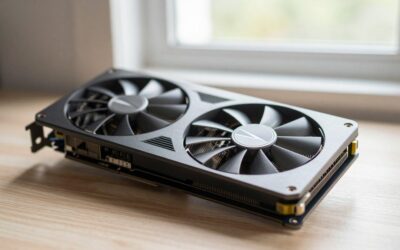
ASUS Dual GeForce RTX 4060 Ti EVO OC Edition 8GB
This is the balanced choice for most buyers. The Axial-tech fan design keeps noise low under sustained loads, and Auto-Extreme manufacturing means fewer QC surprises. You get HDMI 2.1a and DisplayPort 1.4a for current-gen monitor compatibility, plus a three-year warranty that outlasts most competitors in this price band. Owners consistently praise the compact two-slot footprint that fits smaller cases without thermal throttling.
- Reliable cooling with quiet operation under load
- Three-year warranty and strong brand support network
- Only 8GB VRAM, which limits texture-heavy titles at 1440p and beyond
Skip it if you already run games with ultra texture packs that exceed 8GB framebuffer usage or plan to keep this card for several years at higher resolutions.
PNY GeForce RTX 4060 Ti 8GB Verto OC Dual Fan
The cheapest true RTX 4060 Ti on this list makes a compelling case for buyers who prioritize raw price over brand prestige. PNY has a long history supplying workstation and OEM cards, and the Verto line inherits that no-frills engineering. The 128-bit memory bus and PCIe 4.0 interface are standard for the GPU, and the card supports 4K output for media consumption. Its dual-slot design is compact and easy to install.
- Lowest price among RTX 4060 Ti options
- Proven OEM pedigree from PNY
- Limited warranty coverage compared to ASUS; fewer display output specifics published
Consider skipping it if you need extended support or plan to resell, since ASUS and MSI cards hold resale value more consistently.
ASUS Prime GeForce RTX 5060 Ti 16GB GDDR7
This is not an RTX 4060 Ti, but it appears in searches for that keyword because it is the direct successor. The jump to GDDR7 with 16GB gives it a clear memory advantage for future-proofing. The Prime series is positioned as a clean, professional-looking card with solid thermals, making it suitable for builds where aesthetics matter. The price is higher, but you are buying the current generation with faster memory bandwidth.
- 16GB GDDR7 future-proofs against growing texture demands
- Clean design language from the ASUS Prime line
- Significantly more expensive than 8GB RTX 4060 Ti options
It wins if you want to skip a resale cycle and hold the card through several game releases without VRAM becoming a bottleneck.
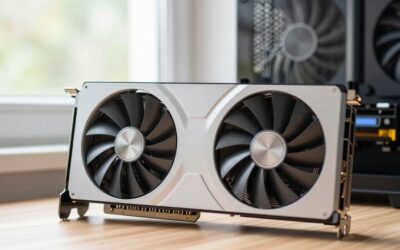
ZOTAC Gaming GeForce RTX 4060 Ti 8GB Twin Edge OC White Edition
The White Edition exists for one reason: builders who want a fully white or pastel-themed rig without buying a limited-run card that costs more. IceStorm 2.0 cooling is ZOTAC’s own solution and gets the job done quietly in a compact form factor. Spectra RGB lighting lets you match software-controlled effects to your motherboard ecosystem. The 18 Gbps memory speed is standard for this GPU tier.
- Full white PCB and shroud for themed builds
- Compact footprint suits SFF and mATX cases
- RGB adds cost that does not benefit non-RGB buyers
Skip the White Edition if you do not care about aesthetics, because the standard version typically costs slightly less for identical performance.
ASUS Dual GeForce RTX 3050 6GB GDDR6 OC Edition
Appearing in a 4060 Ti roundup because of search overlap, this card is genuinely a different product. At $257, it is the cheapest option here, but the 6GB frame buffer and older Ampere architecture mean it cannot match the 4060 Ti in ray tracing or DLSS 3 frame generation. It serves buyers who need a basic GPU for 1080p esports titles or a quick system recovery when a primary card fails.
- Lowest absolute price in the lineup
- Compact and power-efficient for small builds
- 6GB VRAM and lack of DLSS 3 make it obsolete quickly for AAA titles
Skip it if your budget allows even the PNY 4060 Ti at $456, because the generational gap in both performance and feature support is substantial.
ASUS Dual GeForce RTX 5060 Ti 16GB GDDR7 OC Edition
Almost identical in price and memory spec to the Prime variant above, the Dual OC Edition adds a factory overclock and the familiar Dual-fan layout that fits more case configurations than the Prime’s design. The OC means you get slightly higher out-of-the-box clocks without manual tuning. For buyers who want the RTX 5060 Ti experience in a proven, compact ASUS Dual chassis, this is the practical pick.
- Factory overclock with familiar Dual cooling design
- 16GB GDDR7 handles demanding texture workloads comfortably
- Price mirrors the Prime edition without meaningful cost savings either way
It is the right choice if you prefer the Dual aesthetic or need the specific shroud clearance that Dual cards provide over Prime.
GIGABYTE GeForce RTX 5060 Ti WINDFORCE OC 8G
This card stands out for one architectural reason: PCIe 5.0 support. If you are building on a new platform with a 5.0-capable slot, you get the full bandwidth advantage, though practical gaming gains over 4.0 remain marginal. The 8GB GDDR7 configuration keeps the price reasonable for the generation. WINDFORCE cooling is GIGABYTE’s tried-and-true dual-fan solution with solid owner reports for noise management.
- PCIe 5.0 interface for next-gen platform readiness
- GDDR7 memory offers higher bandwidth than the 4060 Ti generation
- Only 8GB VRAM, which partially negates the bandwidth advantage
Skip it if your motherboard only has PCIe 4.0 slots; you will not realize any transfer benefit, and the price premium over 4060 Ti cards may not justify the memory ceiling.
MSI GeForce RTX 4060 Ti Ventus 3X 16G OC
The most expensive card on this list by a wide margin, the Ventus 3X pairs the Ada Lovelace architecture with 16GB of GDDR6 and a triple-fan cooler. Owners report extremely low thermals even in poorly ventilated cases. The 18 Gbps memory speed and PCIe 4.0 interface are unchanged from 8GB variants, so the extra VRAM is the sole differentiator. At $950, it costs nearly double the PNY option.
- Triple-fan Ventus cooler keeps temperatures very low
- 16GB VRAM prevents texture-streaming issues in current and near-future titles
- Priced nearly as high as the RTX 5060 Ti cards with GDDR7 memory
Skip it unless your workflow genuinely demands 16GB on the Ada platform. If you are buying at this price range, a GDDR7 card is likely the smarter long-term investment.
Buying Guide
VRAM Capacity and Why It Matters Here
8GB versus 16GB is the single most consequential choice in this category. Games with ultra texture settings increasingly push past 8GB of framebuffer usage at 1440p. The RTX 4060 Ti 16GB variants eliminate that ceiling, but at a significant price premium. If you play primarily at 1080p high settings or use DLSS Quality mode at 1440p, 8GB remains workable in the short term. For content creation or running several AI models locally, the 16GB cards justify their cost through practical usability.
Cooling Form Factor and Case Fit
Dual-fan cards fit in most mid-tower cases without clearance issues. Triple-fan designs like the MSI Ventus 3X require more room and can interfere with front-mounted radiators in smaller chassis. If you build in an SFF case, prioritize two-slot compact options like the ZOTAC Twin Edge or ASUS Dual series. Check your case’s maximum GPU length specification before ordering, because a factory-overclocked card may be slightly longer than the reference design.
Display Outputs and Monitor Compatibility
HDMI 2.1a matters if you connect to a modern TV or a 4K 120Hz+ monitor, because HDMI 2.0 on older cards caps you at 4K 60Hz without DSC compression. DisplayPort 1.4a handles most gaming monitors at high refresh rates. The PNY Verto lists HDMI and DisplayPort without version specifics, which means you should verify the exact port revision before assuming 4K 120Hz support. For most users in 2026, at least one DisplayPort 1.4 output is sufficient unless you need multi-monitor setups with varying refresh rates.
Our Verdict
The ASUS Dual RTX 4060 Ti EVO OC is the top pick for most buyers: balanced price, a three-year warranty, compact cooling, and modern display outputs. The budget pick is the PNY RTX 4060 Ti Verto OC at $456, which delivers the same GPU silicon for less money if you can accept a shorter support window. If you need more than 8GB of VRAM for creative work or AI tasks and want to stay on the Ada platform, the MSI Ventus 3X 16G wins despite its price, simply because no other RTX 4060 Ti here offers that memory in a proven triple-fan package.
FAQ
Is the RTX 4060 Ti still worth buying over an RTX 5060 Ti?
If you find an RTX 4060 Ti at or below $500 with 8GB, it remains a capable 1080p card. The RTX 5060 Ti adds GDDR7 bandwidth and 16GB VRAM at a higher price. The choice depends on whether your games or workflows actually need the extra memory today or if you are comfortable with a shorter upgrade timeline.
Does DLSS 3 make a meaningful difference in 2026?
DLSS 3 frame generation adds interpolated frames that reduce GPU load in supported titles, effectively smoothing performance in demanding games. Support has grown substantially since launch, and most new AAA releases include it. For cards with 8GB VRAM, the bandwidth savings from rendering at lower internal resolution plus frame generation can extend playable lifespan noticeably.
Can I use the 8GB RTX 4060 Ti for video editing or 3D rendering?
It handles 1080p and light 4K editing comfortably, and CUDA-based renderers benefit from the tensor cores. However, complex scenes with large textures or multi-layer compositions can exhaust the 8GB buffer, causing spills to system RAM and slowdowns. For sustained professional workloads, a 16GB variant is the safer choice.
Should I worry about PCIe 4.0 versus PCIe 5.0 compatibility?
PCIe is backward and forward compatible, so a 4.0 card works in a 5.0 slot and vice versa without any issue. The bandwidth difference between generations has negligible impact on gaming frame rates for cards in this performance tier. You will not lose measurable performance by running a PCIe 4.0 card in a 5.0 board.



Write Your Review
No reviews yet. Be the first to share your experience!