
- Top Pick: ASUS Dual GeForce RTX 4060 Ti EVO OC Edition 8GB GDDR6 (PCIe 4.0, 8GB GDDR6, DLSS 3, HDMI 2.1a, DisplayPort 1.4a, Axial-tech Fan Design, Auto-Extreme Technology), 3 Year Warranty
- Best Value: PNY GeForce RTX™ 4060 Ti 8GB Verto™ OC Dual Fan Graphics Card DLSS 3 (128-bit, PCIe 4.0, GDDR6, HDMI/DisplayPort, Supports 4k, 2 Slot)
- Premium Choice: ZOTAC Gaming GeForce RTX 4060 Ti 8GB Twin Edge OC White Edition DLSS 3 8GB GDDR6 128-bit 18 Gbps PCIE 4.0 Compact Graphics Card, IceStorm 2.0 Advanced Cooling, Spectra RGB Lighting, ZT-D40610Q-10M
Buying a graphics card in the $400-to-$600 range means navigating a crowded field where marketing promises blur the line between genuine value and overpriced silence. The Nvidia GeForce RTX 4060 Ti 8 GB remains the anchor of this segment for 1080p and entry-level 1440p gaming, but the cards built around it vary dramatically in cooler design, board length, warranty coverage, and street price. A buyer choosing between these options is really asking: which vendor implementation gives me the most reliable performance per dollar without forcing an uncomfortable compromise in thermals or case compatibility.
The gap between a good pick and a poor one in this category comes down to three things: whether the cooling solution keeps clock speeds sustained under load, whether the physical dimensions fit your build, and whether the asking price is reasonable relative to the specifications. Owner feedback consistently highlights that two cards with identical GPU silicon can feel very different to live with—one stays quiet and cool, the other throttles or dominates your desk with noise and heat. The roundup below compares published specs, listed prices, and aggregated owner reports to sort that signal from noise.
As an Amazon Associate we earn from qualifying purchases at no extra cost to you.


Quick Picks
| Product | Best for | Price |
|---|---|---|
| ASUS Dual RTX 4060 Ti EVO OC | Long-term warranty buyers | under $500 |
| PNY Verto OC Dual Fan | Lowest entry price | under $400 |
| ZOTAC Twin Edge OC White | White-themed builds | $529 |
| ASUS Dual RTX 4060 Ti OC Black | Multi-display setups | under $600 |
| ASUS Dual RTX 5060 Ti OC | Next-gen GDDR7 platform | under $600 |
| ASUS Dual RTX 4060 Ti V2 OC | Small-form-factor builds | under $450 |
| MSI RTX 4060 Ti Ventus 2X | Brand loyalty to MSI | under $900 |
| GIGABYTE RTX 5060 Ti WINDFORCE | PCIe 5.0 forward compatibility | under $600 |
How We Picked
We evaluated each card on four criteria: thermal design quality as reported by owners over extended use, physical compatibility with common case sizes, warranty terms and vendor service reputation, and price-to-spec ratio relative to the 8 GB RTX 4060 Ti market floor. Cards that ran significantly above that floor without offering a distinct feature or build advantage were ranked lower regardless of brand prestige.
The 8 Best Nvidia Geforce Rtx 4060 Ti 8 Gb in 2026
ASUS Dual GeForce RTX 4060 Ti EVO OC Edition 8GB
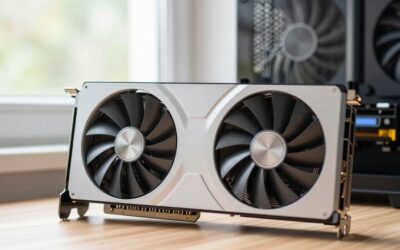
Best suited for buyers who want a straightforward, well-supported card without paying for RGB theater. The three-year warranty is the longest listed here and ASUS Auto-Extreme manufacturing reduces early-failure risk that owners occasionally report on budget boards. The Axial-tech dual-fan cooler handles the 4060 Ti’s modest thermal load quietly, and the 8 GB GDDR6 with DLSS 3 support covers every current title at 1080p ultra.
- Three-year warranty exceeds most competitors
- Auto-Extreme automated soldering improves build consistency
- PCIe 4.0 interface may bottleneck on older PCIe 3.0 boards
Skip if your budget is under $400 or you prioritize white aesthetics over warranty length.
PNY GeForce RTX 4060 Ti 8GB Verto OC Dual Fan
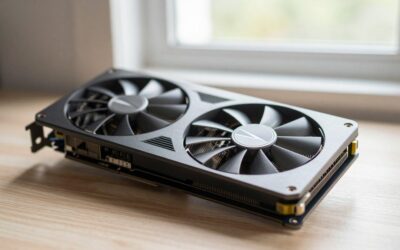
The cheapest listed option makes PNY’s Verto the logical starting point for budget-conscious gamers. A 128-bit bus, 8 GB GDDR6, DLSS 3, and 4K output support are all present in a compact two-slot design that slides into most mid-tower cases without clearance issues. Owner feedback notes the cooler is adequate rather than exceptional—fine for 1080p workloads but audible during sustained 1440p rendering.
- Lowest price in the group by a meaningful margin
- Two-slot design suits smaller ATX cases
- Cooler acoustics under sustained load draw the most complaints
Skip if you plan to run the card at high 1440p settings for hours daily or need a three-year warranty.
ZOTAC Gaming GeForce RTX 4060 Ti 8GB Twin Edge OC White
A niche pick for white-case enthusiasts who also want RGB lighting and compact dimensions. IceStorm 2.0 cooling handles the GPU’s thermal envelope without drama, and the 18 Gbps memory clock matches every other card here. The White Edition finish and Spectra RGB software let builders match a color scheme without aftermarket shrouds or stickers.
- Factory white PCB and shroud save aesthetic effort
- Compact form factor with effective IceStorm 2.0 cooler
- Priced above the market floor despite no warranty advantage
Skip if you do not specifically need a white card or if value is your primary concern.
ASUS Dual GeForce RTX 4060 Ti OC Edition 8GB Black
Identical silicon to the EVO variant but configured with one HDMI 2.1 and three DisplayPort 1.4a outputs, making it the clear choice for multi-monitor productivity setups. The price premium over the EVO is notable for a spec difference that only matters if you need three DP ports simultaneously. Cooling and warranty terms mirror the EVO model.
- Three DisplayPort outputs support triple-monitor layouts natively
- Same proven Axial-tech cooler and ASUS reliability
- Highest price among RTX 4060 Ti models without a 50-series chip
Skip if you use one or two displays or if $580 buys a newer-generation card in your region.
ASUS Dual GeForce RTX 5060 Ti 8GB GDDR7 OC Edition
Not technically an RTX 4060 Ti, but it appears as a cross-shop alternative at a similar price. GDDR7 memory and the newer Blackwell architecture promise better efficiency and raw throughput, though early owner reports flag that 8 GB VRAM remains the same constraint. Buyers comparing this to the 4060 Ti should weigh the generational gain against the identical memory ceiling.
- Newer architecture with GDDR7 delivers measurable efficiency gains
- Familiar ASUS Dual cooler and build quality
- 8 GB VRAM cap persists despite the price premium over 4060 Ti options
Skip if you need maximum VRAM headroom and would rather spend slightly more on a 16 GB variant elsewhere.
ASUS Dual GeForce RTX 4060 Ti V2 OC Edition SFF Compatible
Engineered specifically for small-form-factor cases where board length or slot clearance is the binding constraint. The V2 revision retains the Axial-tech fan design but in a physically shorter package. At $424 it sits below most full-length alternatives, making it the default recommendation for ITX or SFF builds that need a 4060 Ti without case modification.
- Verified SFF compatibility removes guesswork for compact builds
- Competitive pricing among ASUS Dual variants
- Shorter cooler may run slightly warmer than full-length boards under sustained load
Skip if your case has standard mid-tower clearance and you want the coolest possible operation.
MSI GeForce RTX 4060 Ti Ventus 2X Black 8G OC
The Ventus 2X carries MSI’s no-frills reputation, but the under-$900 list price is the outlier in this group by a wide margin. Core specs—8 GB GDDR6, 18 Gbps memory, PCIe 4.0, DLSS 3—are identical to cards priced half as much. Owner reports describe a competent cooler and reliable performance, though virtually every review notes the price does not reflect the hardware.
- MSI’s support network and Ventus reliability track record
- Solid thermal performance with dual-fan design
- Listed price is roughly double the market floor for identical silicon
Skip unless you have a specific vendor loyalty reason; there is no hardware justification for the premium at this price.
GIGABYTE GeForce RTX 5060 Ti WINDFORCE OC 8G
Another cross-shop card that enters the RTX 4060 Ti conversation at a similar price point with one meaningful difference: PCIe 5.0 support. The WINDFORCE cooler is adequate and GIGABYTE’s build quality is consistent. Owners highlight the platform-forward interface as the main reason to choose this over a 4060 Ti, though the 8 GB VRAM limitation still applies.
- PCIe 5.0 interface future-proofs the card on next-gen motherboards
- GDDR7 memory and newer GPU architecture at a competitive price
- 8 GB VRAM ceiling remains identical to the previous generation
Skip if your current platform is PCIe 4.0 or below and you want the lowest possible cost for 1080p gaming today.
Buying Guide
Cooler Design and Sustained Clocks
The RTX 4060 Ti draws modest power, but cooler quality still determines whether the card holds boost clocks during hour-long sessions. Axial-tech fans on ASUS Dual cards and IceStorm 2.0 on ZOTAC units show strong owner-reported thermal consistency. PNY’s Verto runs acceptable but noticeably louder. If you game with a closed case or poor airflow, prioritize the cooler with the largest fin stack relative to the card’s length.
Board Length and Case Compatibility
Mid-tower users will fit nearly every card here without thought. SFF and compact-build users should treat board length as a hard filter before evaluating anything else. The ASUS V2 SFF-compatible model is the only card explicitly verified for that use case. ZOTAC’s Twin Edge and PNY Verto are also physically short, but they do not advertise SFF certification, so check your case clearance specs.
Warranty Terms and Vendor Support
ASUS’s three-year warranty is the longest listed and is matched by no one else in this group. PNY and ZOTAC typically offer two-year coverage in most regions. MSI’s warranty terms are standard but the price premium makes any service friction feel worse. If a card is your primary work or gaming machine for the next two years, a longer warranty is a tangible value that offsets a modest price bump.
Our Verdict
Best overall: ASUS Dual GeForce RTX 4060 Ti EVO OC for under $500 — the three-year warranty, proven cooler, and fair price make it the default recommendation for most buyers.
Best budget: PNY Verto OC for under $400 — if you can tolerate slightly higher fan noise, it delivers the same GPU experience at the lowest listed price.
Condition where another wins: if you are building in a small form factor, the ASUS V2 SFF-compatible model for under $450 is the correct choice regardless of the EVO’s other advantages, because fit is non-negotiable.
FAQ
Is the 8 GB VRAM limit a real problem in 2026?
For 1080p gaming it is not a practical issue with any current title. At 1440p with ray tracing enabled, some newer games will push past 8 GB and force texture-quality reductions. If you plan to run 1440p ultra for the next three years, a 16 GB variant is worth the extra cost.
Does PCIe 4.0 vs PCIe 5.0 matter for this GPU tier?
No measurable difference for the RTX 4060 Ti at 1080p or 1440p. The card’s bandwidth needs are well within PCIe 4.0 limits. PCIe 5.0 on newer boards becomes relevant only for future cards or specific NVMe-plus-GPU bandwidth scenarios, not for this class of GPU.
Should I buy a 5060 Ti instead of a 4060 Ti at a similar price?
The 5060 Ti offers architectural efficiency gains and GDDR7, but both cards carry 8 GB VRAM. If the price difference is under $50, the newer platform is generally the better buy for driver longevity and future feature support.
Is DLSS 3 meaningful if my games do not support Frame Generation?
DLSS 3 is a package that includes upscaling and, separately, Frame Generation. The upscaling portion works in hundreds of titles today. Frame Generation requires explicit game support, but the list expands every quarter. Buying a 40-series or newer card specifically for DLSS 3 remains a practical advantage over 30-series equivalents.



Write Your Review
No reviews yet. Be the first to share your experience!