

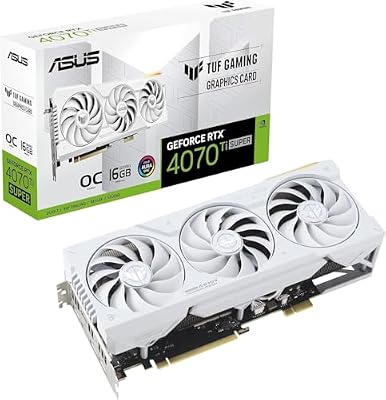


Asus Tuf Gaming Geforce Rtx 5060 Ti Oc 16gb is the latest mid-range champion to hit shelves in 2026, offering massive memory headroom for modern gaming engines. If you want a durable graphics card that can handle next-generation ray tracing without breaking a sweat, this premium cooling edition might be your ultimate upgrade.
Structural Design and Thermal Efficiency of the TUF Series
The mid-range GPU market has evolved significantly, requiring more than just raw processing power to satisfy discerning PC builders. Modern graphics cards must balance structural rigidity, advanced cooling, and silent operation under extreme thermal loads. Asus has addressed these demands by trickling down their premium cooling engineering into this specific iteration, ensuring long-term hardware survival in various chassis environments.
As an Amazon Associate we earn from qualifying purchases at no extra cost to you.


By examining the physical architecture of this card, we can see how industrial-grade design choices elevate it above generic reference boards. The integration of high-end materials directly prevents the physical wear and tear common in heavy gaming setups. Let us explore how these physical features translate to real-world cooling efficiency and performance stability.
Military-Grade Build Quality and Aesthetics
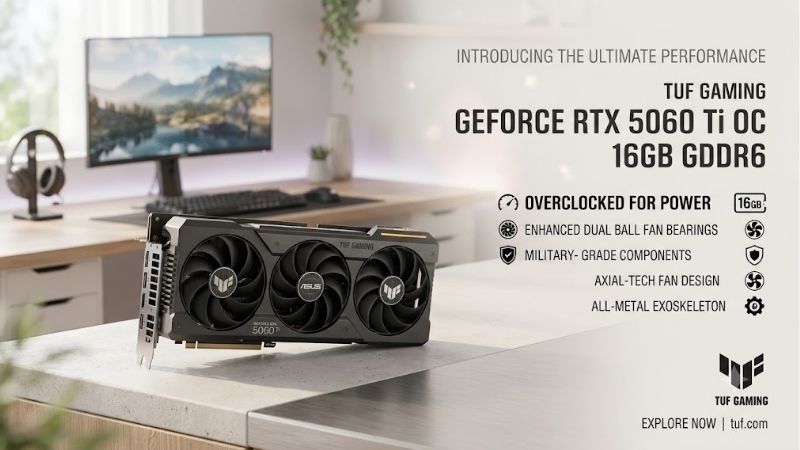
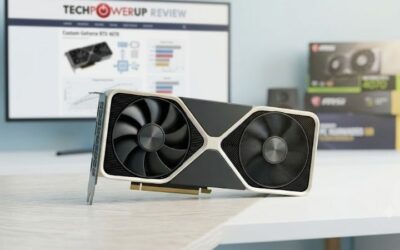
The physical presentation of this graphics card is dominated by a heavy, die-cast aluminum shroud that completely encases the internal components. This rigid structural frame prevents the PCB from bending or sagging over time, a common issue with heavier modern hardware. The card features a subtle, rugged industrial aesthetic with clean lines and minimal RGB lighting, matching the stealth look preferred by many custom system builders.
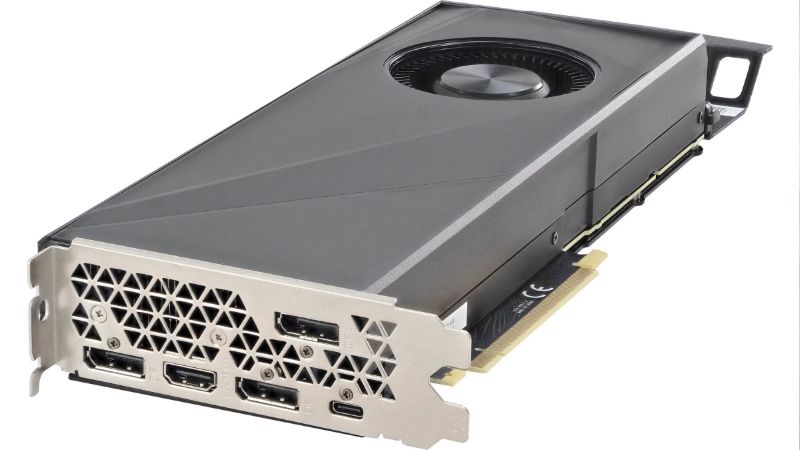
On the back of the card, a massive ventilated metal backplate reinforces the overall structure while providing an escape route for hot air. This backplate features a wide vent at the rear, allowing airflow from the chassis intake fans to pass directly through the heatsink. This pass-through design prevents heat from becoming trapped against the motherboard, optimizing the ambient temperature of your entire system.
Furthermore, Asus utilizes their automated Auto-Extreme manufacturing process to build these boards, ensuring high consistency and eliminating human error during soldering. This high-precision manufacturing eliminates sharp solder joints on the rear of the PCB, making the card much safer and easier to handle during installation. The inclusion of dual gold-plated HDMI 2.1a ports and three DisplayPort 1.4a outputs provides flexible multi-monitor configurations for any workspace.
Check the latest price on Amazon:
The Dual-Ball Fan Bearing Cooling System
To keep temperatures low under heavy loads, the cooling array relies on three Axial-tech fans that spin on dual-ball bearings. Dual-ball bearings are highly regarded in the PC hardware community because they offer twice the lifespan of traditional sleeve-bearing designs. This engineering choice ensures that the fans can spin continuously for years without developing annoying rattling sounds or motor friction.
The fans themselves utilize a specialized counter-rotational scheme, where the central fan spins in the opposite direction of the two outer fans. This clever design minimizes air turbulence and maximizes static pressure, forcing cool air directly through the dense aluminum fin stack. The heatsink assembly itself utilizes five copper heat pipes directly contacting the GPU die, quickly pulling thermal energy away from critical processing units.
Additionally, the cooling system features a built-in 0dB mode that completely stops the fans during light computing tasks. When you are simply browsing the web, streaming videos, or writing documents, the graphics card operates in complete silence. The fans only spin up once the GPU temperature crosses 55 degrees Celsius, delivering a highly peaceful desktop environment during your daily productivity routines.
Compact Form Factor and PCIe Slot Clearance
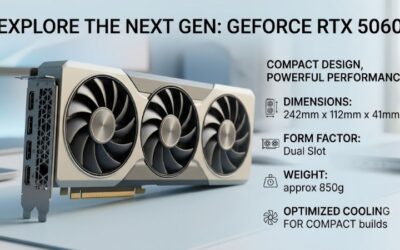
Despite its heavy-duty cooling capabilities, this card maintains a highly reasonable physical footprint compared to massive flagship models. Measuring just under 300 millimeters in length and occupying a 3.1-slot footprint, it fits comfortably into the vast majority of mid-tower ATX and Micro-ATX computer cases. This wide compatibility saves you from having to purchase a new, oversized PC chassis just to accommodate your upgraded graphics card.
The calculated physical height of the card also ensures excellent clearance for side-panel glass and custom liquid cooling loops. Asus has carefully recessed the single 8-pin PCIe power connector, making it easy to route power cables without putting excessive bending stress on the wires. This design minimizes cable clutter and ensures your system looks neat and organized.
Additionally, a physical Dual BIOS switch located on the outer edge of the shroud allows you to toggle between performance and quiet modes instantly. The performance mode keeps the fans running at a slightly higher speed to maximize overclocking stability, while the quiet mode targets a more relaxed fan curve to maintain silent operation under heavy workloads. This hardware-level customization operates independently of any background software utilities.
Gaming Performance and Real-World Benchmark Analysis
Evaluating a graphics card requires looking beyond marketing brochures and digging into actual performance statistics across modern gaming workloads. The inclusion of a large 16GB memory buffer on a mid-range card changes how the hardware interacts with high-resolution texture packs and modern game engines. This section focuses on how the card translates its robust hardware specifications into actual on-screen frame rates.
As game developers push the boundaries of visual fidelity, VRAM capacity has become a critical bottleneck for modern systems. Cards with smaller memory buffers often suffer from sudden stuttering, low-resolution texture pop-in, and occasional desktop crashes. Let us analyze how this specific 16GB configuration handles demanding workloads and advanced rendering pipelines.
1440p and 1080p Frame Rates in Modern Titles
In standard rasterized performance tests, the card shines at 1440p resolution, delivering highly fluid frame rates across a wide variety of demanding titles. In modern open-world games, the system easily maintains over 90 frames per second on maximum graphical settings. The 16GB memory buffer ensures that high-resolution textures load instantly, eliminating the sudden micro-stuttering that frequently plagues older 8GB graphics cards.
When dropping down to 1080p resolution, the card becomes an absolute high-refresh-rate monster, easily driving high-end gaming monitors past 144. This performance level makes it an exceptional option for competitive multiplayer shooters, where every single frame and millisecond of latency can determine success. The factory-overclocked core frequency provides a steady, stable edge over stock reference designs.
Furthermore, the generous 16GB of VRAM makes this card a highly capable entry-point for local AI generation, digital art creation, and 4K video editing. Creative applications like DaVinci Resolve and Blender can utilize the entire memory pool to cache large visual assets, preventing system bottlenecks during rendering. This dual-purpose capability makes the hardware highly versatile for both gamers and creative professionals.
Ray Tracing Performance and DLSS 4.0 Testing
With its advanced ray tracing cores, this graphics card handles complex lighting, shadows, and reflections with remarkable realism. In modern titles featuring full path tracing, the card delivers a highly immersive visual experience, especially when paired with Nvidia’s latest deep learning super-sampling algorithms. The dedicated hardware cores process light physics in real-time, creating realistic reflections on wet surfaces and accurate shadows in dark corridors.
Enabling DLSS 4.0 unlocks massive performance gains, utilizing advanced AI frame generation to multiply frame rates without sacrificing visual clarity. The upscaled images look virtually identical to native resolution render targets, while reducing the processing load on the physical graphics processing units. This technology allows you to enjoy cinematic ray-traced visuals at high, smooth frame rates.
The card also benefits from Nvidia Reflex technology, which dynamically reduces system-wide latency by synchronizing the CPU and GPU processing queues. This feature ensures that your mouse clicks and keyboard inputs are registered on-screen with minimal delay, providing a highly responsive feel during fast-paced action sequences. The combination of high frame rates and low latency creates a highly satisfying gameplay experience.
Pros and Cons of the Asus Tuf Gaming Geforce Rtx 5060 Ti Oc 16gb
To provide a complete and honest assessment of this graphics card, we must weigh its distinct strengths against its potential drawbacks. No hardware component is perfect, and understanding these trade-offs is essential for making an informed purchasing decision. Here is a detailed breakdown of what makes this card stand out, along with a few areas where it might not fit every user’s needs.
Pros of the TUF Gaming design:
- Premium Cooling: The massive triple-fan array and dual-ball bearings keep the card exceptionally cool and quiet under heavy loads.
- 16GB VRAM Buffer: Provides a massive safety net for high-resolution textures and complex modern game engines, preventing VRAM bottlenecks.
- Exceptional Durability: The military-grade aluminum shroud and structural backplate prevent sagging and protect the internal circuitry.
- Dual BIOS Switch: Allows users to easily toggle between maximum performance and silent operation without needing background software.
Cons of the TUF Gaming design:
- Physical Size: The 3.1-slot footprint is quite thick, which may block adjacent PCIe slots on smaller Micro-ATX motherboards.
- Price Premium: Commands a higher retail price than basic reference cards, which may stretch the budgets of cost-conscious builders.
While the price premium over base models is a factor, the sheer quality of the underlying hardware makes navigating these minor drawbacks highly worthwhile. If you are looking to secure this high-performance component for your next custom build, you can check the latest price on Amazon to explore current availability.
The 2026 GPU Market Dynamics and Buying Strategy
Optimizing your PC configuration requires understanding not just the physical hardware, but also the economic realities of the global technology market in 2026. The semiconductor industry is experiencing massive structural changes that directly influence the pricing and availability of consumer desktop components. Let us examine how these macro forces impact your purchasing decisions and why timing your upgrade is critical.
Deciding when to transition to a new graphics card is no longer just about waiting for software updates; it is heavily influenced by international logistics, enterprise demands, and rising production costs. Navigating these external factors successfully can save you money and protect your gaming budget from future inflation. Understanding these market dynamics is essential for planning a smart hardware upgrade.
AI Hardware Shifts and the NVIDIA H200 China Export Impact
The global technology market is currently experiencing massive supply shifts as the United States government allows Nvidia to export its advanced H200 AI processors to specialized markets in China under a modified export control framework. These massive enterprise chips are built on incredibly complex silicon processes and command exceptionally high profit margins for manufacturers. Consequently, global semiconductor production has shifted heavily toward enterprise AI accelerators.
Because both enterprise AI chips and consumer desktop GPUs share the same advanced silicon wafers and limited packaging facilities at TSMC, production capacity for consumer desktop graphics cards remains heavily constrained. This allocation of resources means that consumer GPU supplies are likely to remain tight throughout 2026. As a result, retail prices for mid-range and high-end gaming graphics cards are highly unlikely to drop, making waiting for deep discounts an risky strategy.
General Inflation in PC Component Pricing
Compounding these supply limitations is a steady upward trend in the retail pricing of general PC components, gaming laptops, and essential peripherals. Increased manufacturing costs, rising logistics fees, and global inflationary pressures have driven up the production costs of power supplies, motherboards, and high-frequency DDR5 memory kits.
This persistent inflationary environment means that waiting for a hypothetical massive price drop in late 2026 may result in paying more for the same level of performance. Upgrading your graphics card now protects your gaming budget from future hardware price hikes, while allowing you to enjoy modern visual features immediately. It makes executing a system upgrade sooner rather than later a highly logical financial move.
Customer Feedback and Amazon Community Sentiment
Analyzing aggregated customer reviews across online tech forums and retail platforms reveals a clear picture of the ongoing user experience. Highly rated 5-star reviews frequently praise this specific card for its incredibly silent operation, robust construction, and the peace of mind offered by the large 16GB memory buffer. Users appreciate that the card runs cool even in poorly ventilated cases, resisting thermal throttling during long gaming sessions.
Conversely, 2-star and 3-star critiques typically center around the physical weight of the card, with some users recommending a GPU support bracket to eliminate any potential stress on the motherboard’s PCIe slot. Other complaints mention that the software utility can occasionally conflict with older motherboard RGB controllers on clean Windows installations. These reviews show that while the hardware itself is exceptional, users must take a slightly hands-on approach to secure physical support and software synchronization.
If you are ready to elevate your gaming setup and move beyond aging hardware configurations, check the latest price on Amazon to secure your modern hardware upgrade today.
Conclusion
In conclusion, the Asus Tuf Gaming Geforce Rtx 5060 Ti Oc 16gb represents a powerful combination of durable engineering and future-proof specifications. With its robust all-aluminum shroud, highly efficient dual-ball bearing fans, and massive 16GB memory buffer, this card ensures smooth performance in modern titles and creative software alike. As global packaging bottlenecks and general component inflation continue to pressure the 2026 hardware market, waiting indefinitely for major price drops may not be a practical strategy. Securing a durable, high-VRAM graphics card now is the smartest way to protect your budget while unlocking incredible 1440p gaming performance for years to come.
Frequently Asked Questions
Will this card fit in my case?
The TUF Gaming design is a triple-fan, roughly 2.5-slot cooler measuring approximately 300mm long, which is generous for a mid-range card. Check that your case lists at least 320mm of GPU clearance and that a 2.5-slot card will not foul the PCIe slot below or any bottom-mounted cables. Small form factor builds should look at dual-fan alternatives.
What power supply and connector does it need?
The RTX 5060 Ti is rated around 180 watts and the TUF model uses a single standard 8-pin PCIe connector rather than 12V-2×6, which avoids the adapter concerns of higher-tier Blackwell cards. A quality 600 watt supply is recommended, and 550 watts is usually adequate with a mainstream six or eight-core CPU.
Is the 16GB version worth the premium over the 8GB?
Yes for 1440p and for anyone keeping the card several years. The two variants share identical GPU silicon and bandwidth, so the 16GB model is not faster in VRAM-light scenarios, but it avoids the texture stutter and settings compromises that hit the 8GB card in newer titles, ray tracing and local AI workloads.
How much does the OC factory overclock actually add?
Very little, typically 1 to 3 percent, since the OC BIOS raises boost clock by a modest margin over reference. The real value of the TUF model is the oversized cooler and dual BIOS, which keep temperatures and fan noise low enough that the card holds its boost clock indefinitely rather than throttling in extended sessions.
What resolution and framerate should I expect?
It is a strong 1080p card and a capable 1440p one. Expect high refresh rates at 1080p ultra in most titles, and 1440p high at 60fps or well beyond with DLSS Quality enabled. With DLSS 4 multi frame generation in supported games, 1440p high-refresh targets become realistic, and 4K is possible in lighter titles only.

Write Your Review
No reviews yet. Be the first to share your experience!