
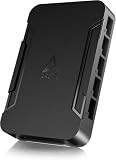
- Top Pick: ARCTIC Fan Controller – 10 Ports with Individual PWM Control, Windows & Linux (Kernel 7.2+) Support, 2 A per Port, 4.5 A Total, Magnetic or Adhesive mounting
- Best Value: GPU Cooling Replacement Fan for MSI RTX 3070 3060 3060TI 3050 Ventus 2X / OC / V1 for RX 6600 6600XT 6650XT 6700XT 6750XT MECH 2X / OC Series 4 Pin 95mm PLD10010S12HH (fan2)
- Premium Choice: 110mm Cooling Fan Replacement for Nvidia RTX 3090 FE 3090FE 3090Ti Founders Edition Graphics Card Fan (Fan-A)


GPU fan control NVIDIA questions come up constantly, usually from one of two worried owners: the person whose fans sit completely still and fears the card is broken, and the person whose fans roar so loudly they cannot hear their game. The reassuring truth is that both situations are almost always fixable, and often the behavior is completely normal. This review explains how NVIDIA GPU fans are designed to work, how to tell a real fault from expected behavior, the best tools to take control, and how to build a quiet, safe fan setup, so you can stop worrying about your fans and get back to gaming.
Understanding GPU Fan Control on NVIDIA Cards
Most fan worries disappear the moment you understand how modern NVIDIA cards are designed to behave. This section explains the idle fan-stop feature that alarms so many owners, how to tell whether your fans are actually faulty, and the tools available to take manual control when you want it.
As an Amazon Associate we earn from qualifying purchases at no extra cost to you.




Why NVIDIA Fans Behave the Way They Do
The single most common source of panic is fans that do not spin at all when the PC is idle. On most modern NVIDIA cards this is a deliberate feature, often called idle fan stop or zero-RPM mode, where the fans switch off entirely once the card is cool enough to be cooled passively.
This is by design, not a defect. Keeping the fans off at low temperatures makes your PC silent during desktop work, browsing and light tasks, and the fans spin up automatically once the card heats past a set threshold, typically when you launch a game.
So a card whose fans sit still at the Windows desktop is usually working exactly as intended, which is the first thing to understand before assuming anything is wrong.
Is Your Fan Broken or Normal?
To tell a fault from normal behavior, watch what happens under load. Launch a demanding game and monitor your GPU temperature and fan speed with a tool like MSI Afterburner. If the fans spin up as the card heats and keep temperatures in a safe range, everything is working correctly, even if they were still at idle.
A genuine fault looks different. If the card climbs to high temperatures under load and the fans never respond, or if one fan is visibly stuck while others spin, or you hear grinding and rattling, then you may have a real hardware problem worth investigating.
The quick test is simple: idle silence is normal, but fans that refuse to spin while the card overheats under load are not.
Tools for NVIDIA GPU Fan Control
Several tools let you take control of NVIDIA GPU fans. MSI Afterburner is the community favorite, offering custom fan curves and monitoring that work across virtually any card, and it is the tool most guides recommend for full control.
The NVIDIA App also provides some fan and performance tuning in a more streamlined interface, which suits users who want a simpler, first-party option. Between these, you have everything you need to override default behavior and set fans to run exactly how you prefer.
For most people, MSI Afterburner for detailed curves and the NVIDIA App for quick adjustments cover every fan-control need without any third-party clutter.
GPU Fan Control NVIDIA Review: Fixing Common Problems
With the basics clear, the practical value is in solving the two problems that drive people to search for fan control in the first place. This section covers fans that stay off, fans that are too loud or ramp wrong, and the honest trade-offs of taking manual control.
Fans That Won’t Spin or Stay Off
If your fans stay off at idle, the fix is usually nothing at all, since that is the intended zero-RPM behavior. If you would rather they always spin for peace of mind, you can disable idle fan stop by setting a custom curve in MSI Afterburner that keeps a low minimum fan speed even at cool temperatures.
If fans genuinely fail to spin under load while the card overheats, first update your drivers and reseat any fan power connectors if you are comfortable inside the case. If the problem persists after that, the fan or its controller may be faulty, which points toward repair or replacement rather than a software fix.
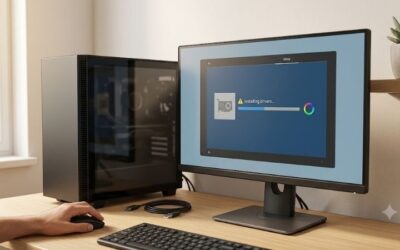
Before concluding the worst, though, rule out the simple causes. A driver glitch, a temporary sensor error, or a paused fan-control app that failed to launch at startup can all mimic a hardware fault. Restarting, updating drivers and confirming your fan tool is running will clear the majority of these scares.
Fans That Are Too Loud or Ramp Wrong
Loud fans are the other common complaint, and a custom fan curve is the cure. By setting fans to stay slower at moderate temperatures and only ramp up when the card is genuinely hot, you eliminate the unnecessary noise that aggressive default profiles sometimes produce.
Erratic ramping, where fans surge up and down audibly, comes from a curve with sudden jumps. Smoothing the curve so fan speed rises gradually with temperature stops this pulsing and gives you steady, predictable acoustics. A little tuning here transforms a distractingly noisy card into a quiet one.
It is also worth checking that loud fans are not simply reacting to a genuinely hot card. If temperatures are high, the fans are doing their job, and the real fix is better airflow rather than slower fans. Lowering fan speed on an already-hot card trades noise for heat, which is a bad bargain, so always read the temperature alongside the noise.
Pros and Cons of Manual Fan Control
The pros of taking manual control are real: quieter operation during light use, better cooling and sustained performance under load, and the peace of mind of knowing exactly how your fans behave. It costs nothing and carries very little risk.
The cons are minor: you need to run a tool like MSI Afterburner at startup for a custom curve to stay active, and there is a small learning curve to setting things up well. For the benefits gained, these are easy trade-offs to accept, which is why manual fan control is so widely recommended.
Setting Up Safe, Quiet GPU Fan Control
Once you understand the tools, a good setup is about balance and knowing your limits. This section covers building an effective fan curve, balancing noise against temperature, and recognizing when the issue is hardware that software simply cannot fix.
Building a Good Fan Curve
A good curve keeps fans quiet at low and moderate temperatures, then ramps them steadily as the card heats toward its busier range, topping out at a strong but not deafening speed under heavy load. The goal is silence when you are not gaming and effective cooling when you are.
Avoid sharp steps in the curve, which cause audible surging, and enable the option to apply your settings at Windows startup so the curve is always active. Test it in your most demanding game while watching the temperature overlay, and adjust until you are happy with the balance of heat and noise.
Balancing Noise and Temperatures
The art of fan control is trading a little noise for a lot of cooling, or a little heat for a lot of silence, depending on your priorities. There is no single correct curve, only the one that suits your tolerance for fan noise and your card’s thermal behavior in your case.
As a rule, keep load temperatures within a comfortable margin of your card’s limit rather than chasing the lowest possible number, since the last few degrees usually cost far more noise than they are worth. A calm, gradual curve that keeps the card safely cool is the sweet spot for almost everyone.
Your case and ambient temperature shape this balance too. A well-ventilated case lets you run lower fan speeds for the same temperatures, while a cramped or warm environment may need a slightly more aggressive curve. Tune to your actual conditions rather than copying someone else’s numbers, since every build cools differently.
When It’s a Hardware Fault
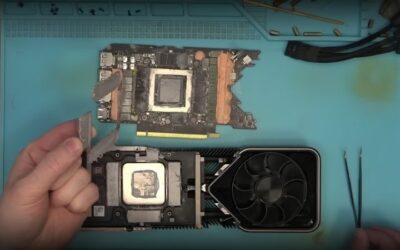
If no amount of tuning keeps your card cool, or a fan is physically failing, the problem is hardware rather than settings. Rattling, grinding or a fan that will not spin under load despite correct drivers and connections signals a mechanical fault that software cannot address.
In those cases, the practical options are hardware fixes. Improving case airflow with quality fans helps a card that is starved of fresh air, and a card with a genuinely failed fan may need a repair or replacement. If you conclude your cooling hardware is the limit, comparing quality case fans or a better-cooled GPU through the links here is the sensible way forward.
See More:
Final Verdict: Mastering GPU Fan Control on NVIDIA
The reassuring conclusion is that most GPU fan control NVIDIA worries are either normal behavior or an easy software fix. Idle fans are usually the intended zero-RPM feature, loud fans are tamed with a smooth custom curve, and free tools like MSI Afterburner give you complete control over how your card behaves, quiet at rest and effectively cooled under load.
Learn to read your temperatures, build a gradual fan curve, and set it to load at startup, and your fans will stop being a source of stress. If genuine hardware faults or airflow limits are the real culprit and no amount of GPU fan control on your NVIDIA card resolves them, check the latest prices on quality case fans or a cooler-running GPU through the links in this guide to solve the problem for good.
Frequently Asked Questions
Why do my GPU fans stay off at idle?
That is zero RPM mode, a deliberate feature on most modern cards. The fans remain stopped until the core passes roughly fifty to sixty degrees Celsius, eliminating noise during desktop use. It is not a fault, and disabling it only adds unnecessary wear and sound.
Can I control fan speed without third-party software?
The NVIDIA App and Control Panel do not expose a full manual fan curve, though the App added basic tuning controls. For a proper multi-point curve most users still rely on MSI Afterburner, which works with any brand of NVIDIA card regardless of the board partner.
What is a safe GPU temperature?
Core temperatures up to the low eighties Celsius are normal and within specification. The figure worth watching is memory junction temperature on GDDR6X and GDDR7 cards, which should ideally stay under about ninety-five degrees. Hot spot delta above twenty degrees can indicate degraded thermal paste or pads.
Why do my fans ramp up and down constantly?
Aggressive curve slopes combined with a short hysteresis window cause oscillation during variable loads such as browsing or menu screens. Flatten the curve between forty and sixty degrees, and increase the fan speed update delay so the card ignores brief temperature spikes.
Does a custom fan curve void my warranty?
Adjusting fan speed within the card’s supported range does not void warranty coverage, since it uses the manufacturer’s own control interface. Setting fans to zero percent under load, however, risks heat damage that would be treated as user-caused, so always keep a minimum floor.



Write Your Review
No reviews yet. Be the first to share your experience!