

The RTX 3060 Ti remains one of the smartest GPU purchases you can make in 2026. Built on NVIDIA’s Ampere architecture with 4,864 CUDA cores, 8GB of GDDR6 memory on a 256-bit bus, and a 448 GB/s memory bandwidth, it delivers genuine 1080p and capable 1440p gaming performance at a fraction of its original $399 launch price. On the used and refurbished market today, you can regularly find AIB variants in the $280–$350 range — a compelling value proposition against new-generation alternatives. Whether you’re building a budget gaming rig or upgrading from a GTX 1060/1070-era card, the 3060 Ti hits a performance-per-dollar sweet spot that few GPUs can match in its price bracket. In this guide, we compare the four best AIB (add-in board) models — ASUS, MSI, Gigabyte, and EVGA — covering thermals, factory overclocks, build quality, and real-world benchmark data to help you choose the right card. See also our RTX 3080 review and best mid-range graphics cards roundup.
- Best Cooling: ASUS Dual OC — runs quietest under sustained load, compact at 267mm
- Best Overall: MSI Gaming LHR — proven TORX Fan 3.0, wide availability, reliable long-term
- Best Value: Gigabyte Eagle OC REV2.0 — most affordable AIB, decent dual-fan cooling
- Best OC Potential: EVGA FTW3 Ultra — highest factory boost at 1830 MHz, triple iCX3 fans
Note: All four cards are available refurbished or used on Amazon. Prices vary — check current listings before buying.

Save $22.00
Save $92.32

Prime
Limited Time
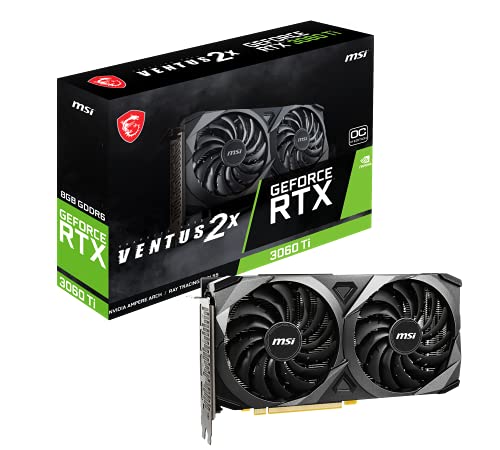
Gigabyte GeForce RTX 3060 Ti Eagle OC 8G (REV2.0) Graphics Card, 2X WINDFORCE Fans, LHR, 8GB 256-bit GDDR6, GV-N306TEAGLE OC-8GD REV2.0 Video Card


Dropped $0.02
RTX 3060 Ti Full Specifications
| Specification | Detail |
|---|---|
| Architecture | Ampere GA104 |
| CUDA Cores | 4,864 |
| VRAM | 8GB GDDR6, 256-bit bus |
| Memory Bandwidth | 448 GB/s |
| Base / Boost Clock | 1410 MHz / 1665 MHz (reference) |
| TDP | 200W (2× 8-pin connectors) |
| NVLink (SLI) | No |
| DirectX | 12 Ultimate |
| Ray Tracing | 2nd Generation RT Cores |
| DLSS | 2.x (Tensor Cores) |
| Launch MSRP | $399 (street: ~$280–350 used in 2026) |
Performance Benchmarks
The following averages are based on aggregated data from community benchmarks, Hardware Unboxed, and Digital Foundry testing at their respective settings. Results represent typical AIB performance (factory OC variants may score 2–4% higher).
1080p Gaming (Average FPS)
| Game | Ultra Settings | High Settings |
|---|---|---|
| Cyberpunk 2077 (RT Off) | ~67 FPS | ~85 FPS |
| Fortnite (DX12) | ~140 FPS | ~190 FPS |
| Valorant | ~244 FPS | ~300+ FPS |
| Elden Ring | ~80 FPS | ~95 FPS |
| COD Warzone | ~100 FPS | ~125 FPS |
1440p Gaming (Average FPS)
| Game | High Settings | With DLSS Quality |
|---|---|---|
| Cyberpunk 2077 (RT Off) | ~48 FPS | ~65 FPS |
| Fortnite (DX12) | ~90 FPS | ~120 FPS |
| Elden Ring | ~62 FPS | ~82 FPS |
RTX 3060 Ti AIB Comparison
| Card | Boost Clock | Cooling | Length | TDP | VRAM | Amazon |
|---|---|---|---|---|---|---|
| ASUS Dual OC | 1770 MHz | Dual Axial Fan | 267mm | ~200W | 8GB GDDR6 | View |
| MSI Gaming LHR | 1770 MHz | TORX Fan 3.0 | 323mm | ~200W | 8GB GDDR6 | View |
| Gigabyte Eagle OC REV2.0 | 1755 MHz | Dual WINDFORCE | 285mm | ~200W | 8GB GDDR6 | View |
| EVGA FTW3 Ultra | 1830 MHz | Triple iCX3 | 300mm | ~220W | 8GB GDDR6 | View |
Best Cooling
ASUS Dual NVIDIA GeForce RTX 3060 Ti OC 8GB GDDR6X
Best for compact builds and noise-sensitive setups — ASUS delivers excellent thermal control in a 267mm footprint.
- Boost: 1770 MHz
- Dual Axial Fans
- 267mm Length
- 2× 8-pin Power
- 8GB GDDR6
- Excellent thermal performance
- Very low noise under load
- Compact 267mm — fits tight cases
- Solid ASUS build quality
- Dual fan (not triple — slightly warmer than FTW3)
- Limited to GDDR6 (not GDDR6X on this tier)
The ASUS Dual OC is arguably the most refined dual-fan RTX 3060 Ti available. Its axial-tech fans keep GPU temperatures in the low-70s Celsius under full load, and the 267mm length means it slides into ITX and mATX cases without issue. Factory-overclocked to 1770 MHz out of the box, it matches the MSI Gaming’s clock speed while maintaining notably quieter acoustics. For anyone building a clean, quiet mid-range gaming PC, this is the card to beat at its price point.
Best Overall

MSI Gaming GeForce RTX 3060 Ti LHR 8GB
Best all-rounder — proven TORX Fan 3.0 cooling, wide availability, and consistent long-term reliability from a tier-one AIB partner.
- Boost: 1770 MHz
- TORX Fan 3.0
- 323mm Length
- 2× 8-pin Power
- 8GB GDDR6
- Proven TORX Fan 3.0 cooling system
- Excellent build quality and reliability
- Widely available used/refurb on Amazon
- Strong brand warranty support
- 323mm length — verify case clearance
- No triple-fan configuration at this model tier
The MSI Gaming is the most commonly recommended RTX 3060 Ti for good reason: it combines a 1770 MHz factory boost with MSI’s dependable TORX Fan 3.0 dual-fan shroud, resulting in stable temperatures and quiet operation across extended gaming sessions. The card’s wider 323mm footprint requires a mid-tower or larger case, but in the right build it’s a rock-solid foundation. Wide used availability on Amazon means pricing is competitive and stock is rarely an issue. If you want a well-rounded, no-compromise pick, this is it.
Best Value
Gigabyte RTX 3060 Ti Eagle OC 8G REV2.0
Best for budget builders — the cheapest AIB variant with adequate WINDFORCE cooling and a mid-compact 285mm length.
- Boost: 1755 MHz
- Dual WINDFORCE
- 285mm Length
- 2× 8-pin Power
- 8GB GDDR6
- Most affordable AIB option
- Decent WINDFORCE dual-fan cooling
- Compact 285mm — good case compatibility
- REV2.0 PCB improvements over original
- Lowest boost clock of the group (1755 MHz)
- Runs slightly warmer than ASUS/MSI under sustained load
The Gigabyte Eagle OC REV2.0 is the entry point for RTX 3060 Ti AIB cards, and it delivers genuine value without embarrassing compromise. The 1755 MHz boost clock is only 15 MHz behind the ASUS and MSI variants — imperceptible in practice. WINDFORCE dual fans keep thermals in check during normal gaming loads, and the 285mm length offers good flexibility for mid-tower builds. The REV2.0 revision addressed some minor PCB issues from the original, making it the more reliable purchase. If your budget is tight and you want the 3060 Ti experience, the Eagle delivers it.
Best OC

EVGA FTW3 Ultra GeForce RTX 3060 Ti 8GB
Best for overclockers and enthusiasts — the highest factory boost clock of any 3060 Ti AIB, with triple iCX3 fans built to sustain it.
- Boost: 1830 MHz
- Triple iCX3 Fans
- 300mm Length
- 2× 8-pin Power
- 8GB GDDR6
- Highest factory OC at 1830 MHz
- Triple iCX3 cooling system — exceptional thermals
- Excellent build quality and PCB design
- Strong manual OC headroom beyond factory settings
- Harder to find — EVGA exited GPU market in 2022
- 300mm length requires medium or larger case
The EVGA FTW3 Ultra is the pinnacle of RTX 3060 Ti AIB engineering. Its 1830 MHz factory boost — 165 MHz above reference — is backed by EVGA’s triple iCX3 fan cooling system that monitors multiple thermal zones across the card, sustaining those clocks without thermal throttling. Build quality is exceptional, with a robust PCB and backplate that feel premium even by 2026 standards. The main caveat is availability: EVGA exited the GPU market in late 2022, so you’re buying used. When found in good condition under $320, it’s a compelling pick for overclock enthusiasts.
DLSS 2 and Ray Tracing Performance
One of the RTX 3060 Ti’s most underrated strengths is DLSS 2.x (Deep Learning Super Sampling). Using NVIDIA’s Tensor Cores, DLSS Quality mode renders the game at roughly 67% of the target resolution and upscales intelligently — delivering image quality nearly indistinguishable from native while adding approximately 35–40% to frame rates. At 1440p, this means games like Cyberpunk 2077 jump from a borderline 48 FPS to a smooth 65 FPS, and Fortnite goes from 90 FPS to 120 FPS — transforming a playable experience into a fluid one. DLSS Performance mode offers even bigger gains (50–60%) at the cost of some sharpness, useful for 4K downsampling scenarios.
On ray tracing, the 3060 Ti’s second-generation RT Cores handle medium-tier RT workloads acceptably at 1080p. Cyberpunk 2077 with RT Medium settings averages around 45–50 FPS at 1080p, which is serviceable with DLSS Quality enabled. Heavy RT presets (RT Ultra or Path Tracing) push it well below 30 FPS, so aggressive RT use requires DLSS as a crutch. For games with lighter RT implementations — ambient occlusion, reflections in titles like Control or Watch Dogs Legion — the card performs admirably, delivering noticeable visual improvements without crippling frame rates.
Compared to running without ray tracing at all, enabling RT Medium in most titles costs the 3060 Ti roughly 30–40% of its native framerate. With DLSS Quality active, that deficit largely disappears, making RT + DLSS the practical standard for this GPU. Titles that support both, including Cyberpunk 2077, Minecraft RTX, and recent Unreal Engine 5 games, represent the sweet spot for this architecture in 2026.
Is the RTX 3060 Ti Still Worth Buying in 2026?
The honest answer depends entirely on price. Against current new-generation alternatives, the RTX 4060 retails for around $299 new and offers better power efficiency, AV1 encoding, and DLSS 3 Frame Generation — but trails the 3060 Ti slightly in raw rasterization throughput. AMD’s RX 7600 at $269 new delivers competitive 1080p performance with 8GB VRAM but lacks DLSS support and RT optimization depth. If you find an RTX 3060 Ti in good used condition under $280, it represents strong value — you’re getting performance that exceeds both competitors at a lower price. At $280–$310, it’s roughly break-even with the RTX 4060 when you factor in the newer card’s efficiency and feature advantages. Above $320, skip it — the RTX 4060 new makes more sense at that price band.
Best PC Build with RTX 3060 Ti
Pairing your 3060 Ti with the right components maximizes its potential. Here are our top picks for CPU, PSU, and RAM that match the GPU’s performance tier without overspending.
9.5/10
AMD Ryzen 5 5600X Desktop Processor
The ideal CPU pairing for an RTX 3060 Ti build — 6 cores, 12 threads, Zen 3 architecture, and virtually no CPU bottleneck at 1080p/1440p.
- 6 Cores / 12 Threads
- Zen 3 Architecture
- Up to 4.6 GHz Boost
- AM4 Socket
- 65W TDP
The Ryzen 5 5600X remains one of the best-value CPUs for mid-range gaming builds in 2026. Its Zen 3 IPC improvements ensure zero bottlenecking with the 3060 Ti across virtually all gaming titles. The 65W TDP keeps thermals and power draw manageable, and AM4 motherboard compatibility is broad and affordable.
9.0/10
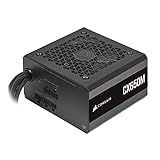
CORSAIR CX650M 650W Semi-Modular PSU
Perfect wattage match for the RTX 3060 Ti — 650W delivers ample headroom with semi-modular cable management for cleaner builds.
- 650W Output
- Semi-Modular
- 80+ Bronze
- ATX Form Factor
- 5-Year Warranty
The CORSAIR CX650M provides exactly the right headroom for a Ryzen 5 5600X + RTX 3060 Ti system, which draws around 350–380W under full load. The extra overhead ensures stable delivery during GPU boost spikes. Semi-modular cabling keeps unused cables out of the case, improving airflow and aesthetics without the premium of fully modular units.
8.8/10
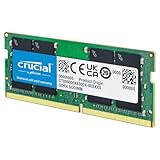
Crucial 8GB DDR4 3200MHz Desktop Memory
Reliable, affordable DDR4 memory — buy two sticks for 16GB dual-channel, the optimal configuration for a 3060 Ti gaming rig.
- 8GB Per Stick
- DDR4 3200MHz
- CL22 Latency
- 288-pin DIMM
- Crucial Reliability
Crucial’s DDR4 3200MHz sticks are a dependable, no-frills memory choice that pairs well with Ryzen 5000 series CPUs. Ryzen benefits significantly from dual-channel — buy two sticks for 16GB total, which covers all modern gaming titles comfortably. The 3200MHz speed hits Ryzen’s memory sweet spot without requiring XMP tuning headaches.
Frequently Asked Questions
Can the RTX 3060 Ti run 4K gaming?
Technically yes, but it’s not the intended use case. At 4K Ultra settings, the 3060 Ti struggles to maintain 60 FPS in demanding titles — Cyberpunk 2077 averages around 30–35 FPS at 4K Ultra without DLSS. With DLSS Performance mode enabled, playable frame rates (50–65 FPS) are achievable in many titles. For native 4K, an RTX 3080 or newer-generation card is a better fit. The 3060 Ti shines at 1080p and delivers capable 1440p performance — those are its optimal resolutions.
Is 8GB VRAM enough in 2026?
For 1080p gaming, 8GB remains sufficient for virtually all titles in 2026. At 1440p Ultra settings in VRAM-heavy games like Hogwarts Legacy, Cyberpunk 2077 with mods, or Microsoft Flight Simulator, you may see stuttering or forced texture downgrades as VRAM fills up. Competitive titles (Valorant, Fortnite, CS2) are completely fine. The honest answer: 8GB is a limitation at the high end of 1440p but doesn’t meaningfully affect typical 1080p gaming.
RTX 3060 Ti vs RTX 4060 — which should I buy in 2026?
Buy the RTX 3060 Ti if you can find it used under $280. Buy the RTX 4060 new if you’re paying $300+. The 3060 Ti wins on raw rasterization throughput (about 5–10% faster on average). The RTX 4060 wins on power efficiency (115W TDP vs 200W), DLSS 3 Frame Generation support, better AV1 encode/decode, and a smaller die with lower heat output. For purely gaming performance per dollar at used prices, the 3060 Ti still edges ahead — but the 4060 is the smarter long-term platform purchase for new builds.
What PSU do I need for the RTX 3060 Ti?
NVIDIA officially recommends a 600W PSU minimum. In practice, a quality 550W unit is sufficient for a Ryzen 5 or mid-range Intel build, but 650W provides comfortable headroom for overclocking and future upgrades. The card uses two 8-pin PCIe power connectors and draws up to 200W at load (220W for the EVGA FTW3 Ultra). Avoid low-quality PSUs at these wattages — a 80+ Bronze or higher rated unit from Corsair, Seasonic, or EVGA is strongly recommended.
Does the RTX 3060 Ti support ray tracing?
Yes — the RTX 3060 Ti features second-generation RT Cores that support hardware-accelerated ray tracing in DirectX 12 Ultimate games. Performance at RT Medium settings at 1080p is playable (45–55 FPS in most titles). For best RT results, enable DLSS Quality mode alongside ray tracing to recover lost frames. RT Ultra or Path Tracing is generally too demanding for this GPU tier and will require significant DLSS Performance mode compromises.
What CPU pairs best with the RTX 3060 Ti?
The AMD Ryzen 5 5600X is the consensus best-value pairing — 6 cores, fast Zen 3 IPC, and zero bottleneck at 1080p/1440p. The Intel Core i5-12400F and i5-13400F are also excellent alternatives at similar price points. Avoid bottlenecking from the other direction: older quad-core CPUs like the Ryzen 5 1600 or i5-7600K will hold back the 3060 Ti in CPU-bound scenarios. Aim for a modern 6-core CPU at minimum for the best pairing.
Final Verdict
The RTX 3060 Ti is a proven, high-performing Ampere GPU that still delivers exceptional value in 2026 — provided you buy smart on the used market. Here’s how our four AIB picks score across key categories:
| Card | Performance | Thermals | Value | Build Quality | Overall |
|---|---|---|---|---|---|
| ASUS Dual OC | 9.0 | 9.5 | 8.5 | 9.0 | 9.0 |
| MSI Gaming LHR | 9.0 | 8.8 | 8.8 | 9.0 | 8.8 |
| Gigabyte Eagle OC | 8.5 | 8.2 | 9.5 | 8.2 | 8.5 |
| EVGA FTW3 Ultra | 9.2 | 9.5 | 8.0 | 9.5 | 8.7 |
- Tightest budget (under $260): Gigabyte Eagle OC REV2.0 — adequate performance, lowest entry cost
- Best all-around (under $290): ASUS Dual OC or MSI Gaming LHR — both deliver class-leading thermals and reliability
- Enthusiast / OC build: EVGA FTW3 Ultra — when found in good used condition, it’s the top performer of the group
- Over $320: Consider a new RTX 4060 instead — better efficiency and DLSS 3 make more sense at that price
Related Reviews
- RTX 4060 Ti Review 2026: Worth the Upgrade Over 4060?
- RTX 4060 Ti Review 2026: Worth the Upgrade Over 4060?
- RTX 4060 Ti Review 2026: Worth the Upgrade Over 4060?
Ready to decide? Our #1 pick for 2026 is the Architecture.
Live price & availability on Amazon.
