
As an Amazon Associate we earn from qualifying purchases.
Shopping for the InfiRay RH25 V2 is not like picking a handheld thermal scanner, because this is one device meant to do four jobs: handheld scanner, helmet-mounted monocular, standalone weapon sight, and clip-on in front of a day scope. The real decision is whether you need that flexibility, since a multi-role optic costs more than a dedicated scanner and demands more mounting, zeroing, and setup. Buyers also face a hurdle: the RH25 V2 is sold through specialist thermal-optics dealers rather than general marketplaces, so stock, warranty, and seller checks matter as much as specifications.
This guide is for hog and coyote hunters, for shooters who want one thermal that moves between rifle and helmet, for night hikers and land managers who need a compact scanner, and for buyers comparing 640-core thermals before committing to a premium device. It explains what the RH25 V2 does, how its sensor, display, and mounting options compare with simpler monoculars, and which checks to run before ordering, using manufacturer and retailer specifications.
What Makes the RH25 V2 Different
The RH25 V2 is InfiRay Outdoor’s second-generation RICO MICRO, a compact 25 mm thermal optic built around a 640×480, 12-micron sensor with MATRIX III image processing and a manual-focus f/1.0 objective lens. Compared with the original RH25, it gains a sharper 1440×1080 AMOLED display and a 60 Hz refresh rate instead of 50 Hz, which makes moving animals look smoother when you pan across a field. Retailer listings put its detection range at roughly 1,375 yards, and the unit is recoil rated to .300 Win Mag, so it can serve as a standalone sight on a hard-kicking rifle rather than only as a handheld scanner.
What sets it apart from most thermal monoculars is the four-way role. The same unit works handheld for scanning, mounts to a helmet for hands-free observation, bolts to a rifle as a dedicated thermal sight, or clips on in front of a conventional day scope. The housing is magnesium, keeping weight to about 11.3 ounces, and the kit ships with CR123A batteries, a USB charger, and mounting accessories in a hard case. Onboard recording, Wi-Fi connectivity, and USB-C external power round out a feature set aimed at buyers who want one thermal device to cover several jobs instead of buying a separate scanner and a separate scope.
How to Choose
Sensor Resolution and Detection Range
Sensor resolution decides how much detail you see at distance, and the RH25 V2’s 640×480 core sits a clear step above entry-level 384-core monoculars. A higher-resolution sensor renders an animal’s outline, legs, and movement more distinctly at long range, which matters when you need to tell a hog from a calf or a coyote from a dog before taking a shot. The 25 mm lens gives a narrower field of view than a shorter lens, so it reaches farther but shows less of the landscape at once. If most of your scanning happens inside 200 yards in thick cover, a wider field of view may serve you better than maximum reach.
One Device or Four Roles
The RH25 V2’s selling point is versatility, so be honest about how many of its four roles you will actually use. A hunter who scans from a truck, then mounts the same unit on a rifle, gets real value from the design. Someone who only ever holds a thermal in one hand while walking a fence line is paying for helmet and weapon mounts they may never touch, and a simpler dedicated handheld could do the same job for less. Clip-on use adds its own demands: the unit must align with your day scope, hold zero, and return to the same point of aim after removal. Check that the mount system fits your rifle and your helmet before ordering.
Display, Refresh Rate, and Battery
The display is what you stare at for hours, so its quality matters more than the spec sheet suggests. The RH25 V2’s 1440×1080 AMOLED display is a large step up from the small, dim screens on budget monoculars, and the 60 Hz refresh rate keeps the image steady when you sweep across a field instead of smearing. Battery planning matters just as much: the unit runs on CR123A cells, so carry spares on cold nights when battery life drops, and remember that USB-C external power is available for long sits in a blind. Confirm how many hours of runtime to expect in the temperatures you hunt in, not just at room temperature.
Buying Channel, Warranty, and Rules
Because the RH25 V2 is a specialist optic, where you buy it deserves as much attention as which model you pick. No listing for the RH25 V2 was found on Amazon US, and the unit is sold through dedicated thermal-optics retailers, some of which show it out of stock at any given time. Buy from an authorized dealer so the warranty is valid, confirm the return policy before ordering, and check whether the seller includes the mount hardware you need or sells it separately. Also verify the rules where you hunt: some states restrict thermal use for certain game, and thermal devices can be subject to export controls, so confirm both before you buy.
Which One Fits Your Situation
You Want One Thermal for Scanning and Shooting
The RH25 V2 is built for you. Scan a field handheld, then mount the same unit on your rifle when something is worth a closer look, without carrying a second optic. The 640-core sensor gives you the detail to identify animals at distance, and the recoil rating means the unit is meant for live fire rather than observation only. Budget for the mounts and spare batteries alongside the optic itself.
You Mainly Scan on Foot and Never Mount It
If your thermal never leaves your hand, a dedicated handheld monocular may fit better than the RH25 V2. A purpose-built scanner is usually simpler to operate, often lighter in the hand, and can offer a wider field of view for covering ground quickly. The RH25 V2 still works well as a handheld, but you would be paying for helmet and weapon-sight capability you never use, so weigh that against a simpler unit.
You Run Night Vision on a Helmet
Helmet users are one of the groups the RH25 V2 was designed for. Its light magnesium body keeps neck strain down during long nights, and helmet mounting leaves both hands free for a rifle, a light, or navigation. Make sure your helmet mount and dovetail or bayonet interface match the unit, and practice flipping the monocular up and down before relying on it in the field.
You Are Shopping on a Tighter Budget
The RH25 V2 is a premium-priced device, so a tighter budget points toward a simpler thermal monocular. A 384-core handheld, such as the RH25 V2’s smaller sibling the RL25 V2, covers basic scanning and animal detection at shorter ranges for considerably less money. You give up fine detail at long distance and the multi-role mounting, but for checking a backyard, a feeder, or a nearby treeline, that trade can be the right one.
Before You Buy: Availability and Alternatives
Availability is the first thing to check, because the RH25 V2 is not a device you can reliably find on a general marketplace. No Amazon US listing for the RH25 V2 turned up in searches, and several specialist retailers list the unit as out of stock or available only in limited quantities. If a dealer shows stock, confirm the listing is for the V2 rather than the original RH25, since the two share a name and a similar body but differ in display, refresh rate, and sensor performance. Ask the dealer to confirm the exact model number, RH25v2, and what is included in the box before you pay. If the dealer cannot confirm the model number in writing, treat that as a reason to buy elsewhere rather than risking a mix-up with the original RH25.
The closest alternatives sit inside InfiRay’s own lineup. The RL25 V2 is the 384-core sibling in black, aimed at buyers who want the same multi-role body with a lower-resolution sensor. The MH25 V2 is a dedicated handheld thermal monocular for buyers who only need a scanner. Outside InfiRay, dedicated thermal scopes from other brands cover the weapon-sight role, and simple handheld monoculars cover the scanning role, but neither matches the RH25 V2’s trick of doing all four jobs in one housing. Decide which roles you genuinely need, then compare the alternatives against those roles rather than against the RH25 V2’s full feature list.
Common Mistakes
- Assuming the RH25 V2 is sold on Amazon and ordering a lookalike listing from a different brand instead.
- Confusing the RH25 V2, with its 640-core sensor, with the RL25 V2, which uses a lower-resolution 384-core sensor.
- Expecting a wide scanning field of view from a 25 mm lens, which trades width for detection distance.
- Mounting it as a weapon sight without confirming the mount fits your rifle and the unit holds zero after removal and reattachment.
- Forgetting spare CR123A batteries and a cold-weather plan, then running out of power halfway through a night hunt.
Thermal Monocular Alternatives to Compare Against the RH25 V2
A monocular is a personal choice that depends on sensor size, lens and budget. These models sit in similar territory and make good comparisons before you decide.
RIX Pocket K2 Portable Thermal Monocular

A pocket-sized unit with a 256×192 sensor and Wi-Fi. A good fit for people who want a small handheld for scouting and carry it in a coat pocket.
TOPDON TS004 Thermal Imaging Monocular

A 13mm lens model with a 50Hz refresh rate and a 320×240 interpolated image. It appeals to buyers who want a smoother picture on a modest budget.
AGM Taipan V2 10-256 Thermal Monocular

A compact thermal monocular with a 10mm lens and a high-sensitivity sensor. A wider field of view makes it easier to sweep a field quickly.
GOYOJO G210 Thermal Monocular
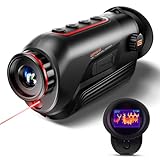
A 256×192 monocular with a 10mm focal length. It is a straightforward option for backyard and property observation at night.
Pulsar Axion XQ19 Compact Thermal Monocular

A step up with a 384×288 sensor and variable magnification. It is aimed at users who want more detail and are willing to spend more for it.
Frequently Asked Questions
Is the RH25 V2 sold on Amazon?
No Amazon US listing for the InfiRay RH25 V2 was found. The unit is sold through specialist thermal-optics retailers, and stock varies by dealer, with some showing it out of stock. Buy from an authorized dealer so the warranty is valid, and confirm the model number is RH25v2 before ordering, since the original RH25 looks similar.
Can the RH25 V2 work as a handheld monocular only?
Yes. Handheld scanning is one of its four roles, alongside helmet mounting, standalone weapon-sight use, and clip-on use in front of a day scope. As a handheld it works like any thermal monocular: point it at the landscape and read heat signatures on the display. Buyers who only ever use it handheld may find a dedicated scanner simpler and cheaper.
What is the difference between the RH25 V2 and the RL25 V2?
The RH25 V2 uses a 640×480 sensor and comes in a tan Cerakote finish, while the RL25 V2 uses a lower-resolution 384-core sensor and comes in black. Both share the same multi-role RICO MICRO V2 body and feature set. The RH25 V2 shows more detail at long range; the RL25 V2 costs less and suits shorter-range scanning.
Does the RH25 V2 need an infrared illuminator?
No. Thermal imaging is passive: the sensor reads heat emitted by animals, people, and objects, so the device works in total darkness without emitting any light. That is one reason thermal optics suit night hunting and observation. An illuminator adds nothing to a thermal image and is only useful for night-vision devices, not thermal ones.







Write Your Review
No reviews yet. Be the first to share your experience!