
- Top Pick: American Soft Linen Premium Turkish 100% Cotton 600GSM 4PC Bath Towels Gray | 27×54", Extra Large Bath Towel Set, OEKO Tex Certified, Soft, Absorbent, Quick Dry, XL Plush Towels for Bathroom After Shower
- Best Value: Tens Towels 4 Piece Extra Large Bath Towels 30 x 60 Inches, Dark Grey | 100% Cotton, Larger & Lighter Weight, Quicker to Dry, Super Soft and Absorbent, Perfect for Bathroom
- Premium Choice: SUPERIOR Egyptian Cotton Ultra Plush & Absorbent, 6 Piece Set, Chocolate | Quick Dry, Soft Luxury Towel Set, Bath Essentials, Guest Bath, Spa, 2 Bath, 2 Hand, 2 Face Towels, Madeline Towels
The best Egyptian cotton bath towels are long-staple, ring-spun towels in a mid-weight range of roughly 500 to 700 GSM, because that combination balances softness, absorbency and drying time; heavier towels feel plush but dry slowly, while light ones dry fast but feel thin. Look for clear sourcing statements rather than the words Egyptian cotton alone.
As an Amazon Associate we earn from qualifying purchases at no extra cost to you.

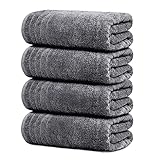


What Egyptian cotton actually means
Egyptian cotton refers to cotton grown in Egypt, valued for long fibers, which are called long-staple or extra-long-staple. Longer fibers can be spun into smoother, stronger yarns, which is why makers promote them for towels. The name is not always a guarantee, however. Industry groups have long warned about mislabeling, and the Cotton Egypt Association runs a Giza cotton licensing program with a certification mark on qualifying products. A towel marked with that program, or a maker that states sourcing in detail, gives more confidence than a generic label.
Egyptian cotton is also often confused with Turkish cotton, Pima and Supima. All are respected cottons; they differ in fiber length, texture and cost. Turkish cotton towels are commonly lighter and quicker to dry, while Egyptian cotton is usually described as dense and plush.
How to read towel specs
| Spec | What it tells you | Typical guidance |
|---|---|---|
| GSM (grams per square meter) | Weight and density | Lower numbers dry faster; higher numbers feel plush and hold more water |
| Ring-spun or combed | Yarn quality and smoothness | Preferred for a softer, more durable towel |
| Ply (two-ply, single-ply) | Number of twisted strands in the yarn | Two-ply is generally stronger |
| Zero twist | Loosely spun, soft, very absorbent | Feels cloud-soft but may shed lint when new |
| Sourcing statement | Where the cotton comes from | Look for specific claims or certification |
| Size | Bath towel dimensions | Check dimensions; bath sheets are larger |
Towel styles at a glance
| Style | Best for | Feel | Limits |
|---|---|---|---|
| Light, 400 to 500 GSM | Gym bags, warm climates, quick-dry needs | Thin, crisp | Absorbs less per wash |
| Mid-weight, 500 to 700 GSM | Everyday bathroom use | Balanced soft and absorbent | Takes longer to dry than light towels |
| Heavy, 700 GSM and above | Spa-style luxury | Dense, plush | Slow to dry; can be heavy to wash |
| Zero-twist towels | Softness seekers | Very soft | Lint on first washes |
| Hotel-style flat or waffle weave | Humid bathrooms, fast drying | Textured | Less plush |
What to look for when buying
Sourcing and certification
Ask where the yarn is grown and spun. Reputable bedding and bath brands such as Frette, Sferra and Peacock Alley are known for premium cotton towels, and many mainstream bath brands also sell Egyptian-cotton lines. Check each maker’s product page for its own sourcing language, since the wording varies by line.
Weight versus drying time
If your bathroom is poorly ventilated or you hang towels in a small space, a mid-weight towel is easier to live with than a very heavy one. A towel that stays damp can develop odors.
Construction
Dense pile, tight stitched hems and double-stitched borders suggest durability. A slightly rough hand when new usually softens after washing, while shedding beyond the first few washes can indicate poor yarn quality.
Color and dye
Dark towels can bleed in the first washes, so launder them separately. OEKO-TEX labels indicate textile chemical testing and are useful for sensitive skin, though they do not describe cotton origin.
Care that extends life
- Wash new towels before first use, separately from clothing.
- Use a modest amount of detergent. Excess product leaves residue that makes towels feel stiff.
- Skip fabric softener, which can coat fibers and reduce absorbency.
- Dry on medium heat rather than very hot, and remove promptly.
- Shake out towels before drying to fluff the pile.
Pick X if…
| If you… | Pick |
|---|---|
| Want a spa feel at home | Heavy, zero-twist or 700 GSM-plus Egyptian cotton |
| Want everyday balance | Mid-weight, ring-spun, two-ply |
| Need quick drying | Lightweight or waffle-weave towels |
| Have sensitive skin | OEKO-TEX labeled, washed before use |
| Want proof of sourcing | Brands that state Egyptian origin or show certification |
Budget tiers
Budget: lighter blends and entry-level Egyptian cotton lines with lower GSM. Mid-range: mid-weight, ring-spun towels from established bath brands, with clear sourcing statements. Premium: luxury towels from Frette, Sferra and Peacock Alley-class makers, with heavier weights and refined finishing.
Common mistakes
- Choosing the highest GSM. Very heavy towels dry slowly and can feel bulky.
- Trusting the words Egyptian cotton without any sourcing detail.
- Washing with fabric softener.
- Ignoring size. A bath sheet is noticeably larger than a standard bath towel.
- Washing dark and light towels together at first.
Alternatives to consider
Turkish cotton towels are lighter and quicker to dry. Supima and Pima cotton towels are soft and durable at a moderate level. Linen and waffle-weave towels suit humid bathrooms. Bamboo-derived towels are another soft option, though their fiber origin and processing differ from cotton.
Frequently Asked Questions
Is Egyptian cotton better than other cotton?
It is prized for long fibers, which can make smoother, stronger yarn. Other cottons such as Turkish, Pima and Supima are also high quality, so the best choice depends on how you want the towel to feel.
How can I tell if a towel is genuine Egyptian cotton?
Look for a certification mark such as the Cotton Egypt Association licensing mark or a clear statement of sourcing from the maker. Be wary of vague labels with no detail.
What GSM is best for bath towels?
Many buyers find 500 to 700 GSM the sweet spot for daily use. Lower is lighter and faster-drying; higher is plusher but slower to dry.
Why do new towels shed lint?
Loose fibers left from manufacturing come off in the first washes. It should reduce quickly; persistent heavy shedding can indicate lower-quality yarn.
How often should I replace towels?
When they feel rough, thin, or stay musty after washing, it is time. Good towels often last several years with proper care.
Can I use fabric softener?
It is better to avoid it because it can reduce absorbency. A small amount of white vinegar in the rinse is a common alternative, but follow the care label.


Write Your Review
No reviews yet. Be the first to share your experience!