
Buying an RTX 2080 Ti in late 2026 is a very different decision from buying one at launch. This is a discontinued generation flagship, so the real question is not whether it was fast in its day, but whether this exact Founders Edition card, in the condition a listing actually offers, still earns its place in your machine against the power draw, case space and support limits that come with an older high-end design.
This review is for gamers holding a capable older rig who want strong 1440p and entry 4K play without moving platforms, builders who specifically want the Founders Edition card, and readers who found this exact model and want its published benchmark record and listing stated specifications checked carefully before committing to a discontinued flagship.
Quick Picks
As an Amazon Associate we earn from qualifying purchases
| Product | Best for | Key spec from title |
|---|---|---|
| NVIDIA GeForce RTX 2080 Ti Founders Edition | Gamers wanting a discontinued Turing flagship for 1440p and 4K play | 11GB GDDR6 memory |
How to Choose
Read Published Benchmarks by Resolution, Not Headlines
Benchmark headlines age badly, so judge this card on named published results at the resolution you actually play. In the benchmarks published by Tom’s Guide, the RTX 2080 Ti recorded 97.8 frames per second in Rise of the Tomb Raider at Very High settings and 1440p, and 80.4 frames per second at 4K. The same published testing recorded 156.3 frames per second in The Witcher 3 at Ultra settings and 1440p, holding 94.1 frames per second at 4K. Those are older titles, so treat them as a floor for period games rather than a promise for current releases, and check how any newer game you care about handles this generation before buying.
Check the Memory and Bandwidth Your Games Need
The specification that still works in this card’s favour is its memory system. The listing states 11GB of GDDR6 memory with a memory clock speed of 14000 MHz, and NVIDIA’s manufacturer specifications for the Founders Edition pair that memory with a 352-bit interface and 616 GB/s of bandwidth. That combination is why the card remains comfortable at 1440p and workable at 4K in older titles: texture heavy games have room to breathe. It does not, however, add the newer memory or efficiency features of later generations, so weigh the capacity honestly against the features the card simply never had.
Confirm Power, Connectors and Case Space First
A flagship from this generation makes physical demands that smaller cards do not. NVIDIA’s manufacturer specifications put the Founders Edition at a 1350 MHz base clock with a 1635 MHz boost clock, fed through dual 8-pin power connectors, and the design was specified around a substantial power supply rather than a basic office unit. The listing gives dimensions of 10.5 inches long by 4.55 inches wide with two fans, so measure your case clearance, confirm your power supply has both connectors spare, and leave airflow room around a card that was built to run hard.
Judge the Discontinued Status Before Anything Else
Be honest about what discontinued means in practice. This card belongs to a generation NVIDIA has long since replaced, so driver attention, warranty cover and replacement availability all sit behind current models, and any unit offered now has a history worth questioning. Check the listing condition carefully, confirm whether the unit is sold as new, renewed or used, and ask what return protection stands behind it. A careful buyer treats the benchmark record as the starting point and the individual card’s condition, seller and stated contents as the deciding factors.
The 1 Best Option
NVIDIA GeForce RTX 2080 Ti Founders Edition

The Founders Edition suits a specific buyer: someone who knows exactly what this card is, wants the reference NVIDIA design rather than a partner board, and is buying it for the games and workloads its published record actually covers. Its 11GB of GDDR6 memory, high memory bandwidth and strong period benchmark results still describe a capable 1440p card and a workable 4K card for older titles, while its first generation ray tracing and deep learning features remain present for the software that supports them. Buy it as a deliberate older flagship purchase, not as a substitute for a current card.
Specs
- Brand: NVIDIA
- Model name: Founders Edition
- Model number: 900-1G150-2530-000
- Graphics description: NVIDIA GeForce RTX 2080 Ti Founders Edition
- Graphics RAM: 11 GB
- Graphics RAM type: GDDR6
- Memory clock speed: 14000 MHz
- Maximum resolution: 7680×4320
- Video output interface: DisplayPort
- Graphics card interface: PCI Express
- Number of fans: 2
- Dimensions: 10.5 inches long by 4.55 inches wide
- Compatible devices: Desktop
- Included in the box: graphics card
Best for: Gamers with a solid power supply and a roomy case who want a genuine Founders Edition card for strong 1440p play and older-title 4K, and who accept discontinued generation support terms.
Watch out for: Confirm the exact condition of the individual unit before ordering, check that your power supply provides two 8-pin connectors, and verify the card’s 10.5 inch length clears your case and drive cages.
Which One Fits Your Situation
You Play Older and Esports Titles at 1440p
This is the situation where the card’s published record speaks most clearly. Results such as the 156.3 frames per second that Tom’s Guide published for The Witcher 3 at Ultra settings and 1440p show a card with headroom in period games, and less demanding current titles generally ask less of a GPU than flagship releases do. If your library leans that way, this single product fits coherently.
You Want Occasional 4K Play Without a Platform Change
The published 4K figures, including 80.4 frames per second in Rise of the Tomb Raider and 94.1 frames per second in The Witcher 3 in Tom’s Guide testing, and the 94.3 frames per second average at 4K in Battlefield 1 reported in the published Tom’s Hardware review, support careful 4K use in older games. Expect settings discipline in anything newer, and choose the card only if that compromise is acceptable.
You Specifically Collect or Prefer Founders Edition Cards
Some buyers want the reference design itself: the NVIDIA built housing, the stated model number and the original flagship specification rather than a partner variant with a different cooler. For that reader, this listing is the product, and no partner board substitutes for it. The checks that matter most are condition, completeness and seller standing, because originality is the whole point of the purchase.
You Are Replacing a Failed Card in an Existing Build
If a similar generation card has died and the rest of the system, from power supply to case, was already built around that class of hardware, a like for like replacement avoids a wider rebuild. Confirm the connectors and dimensions match what your build already provides, and remember that a discontinued replacement carries the same support limits as the card it replaces.
Common Mistakes
- Buying this card on launch era reputation alone, without reading any named published benchmark results, then expecting current flagship behaviour in current games, when the honest evidence base is period testing in older titles at stated settings, and newer releases make demands on features and optimisation that a discontinued Turing generation card was never designed around or subsequently updated to meet.
- Ignoring the power and space requirements until the card arrives, discovering that the power supply lacks two spare 8-pin connectors or that a 10.5 inch card fouls a drive cage or front radiator, and turning a planned upgrade into a second round of purchases, returns and rebuilding that a few minutes with a tape measure and the listing dimensions would have prevented entirely, especially since older flagship cards are rarely stocked locally for a quick exchange and every return cycle costs another week of waiting.
- Skipping the condition check on a discontinued product, assuming every offered unit is factory new and complete, and failing to confirm whether the specific unit is new, renewed or used, what is actually in the box, and what return protection the seller provides, which are precisely the details that decide whether an older flagship purchase is sound or regrettable.
- Comparing this card against current generation models on memory size alone, seeing 11GB on both spec sheets and treating them as equivalents, when architecture, feature support, driver attention and efficiency differ substantially between generations, and the number on the box says nothing about how each card handles modern rendering features or how long its software support will continue to receive priority.
- Installing an older high-end card in a case with weak airflow and then blaming the hardware for heat and noise, when a dual fan flagship of this era was designed for a well ventilated chassis, and restricted intake, dust blocked filters and a cramped layout will undermine any card of this class regardless of its benchmark record or specification sheet, so clean the case, route cables away from the fans and confirm the side panel still closes comfortably before judging performance.
Related Turing Cards and a Support Bracket
The 2080 Ti came in many board designs, and its siblings are useful for comparison. These listings cover other Turing cards plus a part that helps heavy cards stay level.
EVGA GeForce RTX 2080 Ti XC Ultra Gaming
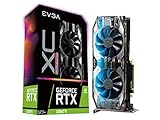
A dual-fan 11GB model with RGB lighting. It offers a quieter cooler than the reference design for people who want the same GPU in a more tuned package.
MSI Gaming GeForce RTX 2080 Ti

An MSI board with a 352-bit memory bus and ray tracing support. A choice for builders who prefer this brand cooling and layout.
ASUS ROG Strix GeForce RTX 2080 Ti 11GB
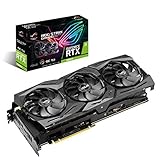
A larger ROG Strix board with a heavier cooler. Suited to cases with plenty of room and to users who want the extra cooling headroom.
NVIDIA GeForce RTX 2070 Super Founders Edition
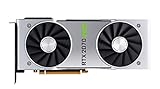
A step-down Turing card in the reference design. A useful comparison point if you wonder whether the top card is worth the extra cost.
ASUS ROG Herculx GPU Anti-Sag Holder

A zinc alloy support that goes under a large card to prevent bending over time. Useful for any heavy triple-slot card like the Ti variants.
Frequently Asked Questions
Is the RTX 2080 Ti still good for 1440p gaming?
For older and less demanding titles, the published record says yes. Tom’s Guide recorded 97.8 frames per second in Rise of the Tomb Raider at Very High settings and 1440p, and 156.3 frames per second in The Witcher 3 at Ultra settings. Newer flagship releases are a different test, so check your specific games before relying on period results.
Can this card handle 4K gaming?
In older titles, at carefully chosen settings, yes. Published Tom’s Guide testing recorded 80.4 frames per second at 4K in Rise of the Tomb Raider and 94.1 frames per second at 4K in The Witcher 3, both at high presets. Current releases at native 4K will often need reduced settings, and this discontinued card should be bought with that expectation set clearly.
What power supply and connectors does it need?
NVIDIA’s manufacturer specifications for the Founders Edition call for dual 8-pin power connectors and a substantial power supply suited to a 250 watt class flagship card. Before ordering, confirm your existing unit provides both connectors on separate consideration of its overall capacity, and check that your case clears the card’s 10.5 inch stated length.
Should I buy a discontinued flagship like this one?
Only as a deliberate, informed purchase. The performance record and memory specification remain respectable for the games they cover, but support, warranty and replacement availability all trail current models, and the individual unit’s condition matters more than the model name. If those terms are acceptable and the checks in this review pass, it can be a rational buy; otherwise a current card is the safer route.







Write Your Review
No reviews yet. Be the first to share your experience!