
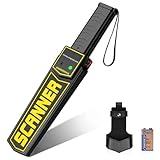
- Top Pick: Metal Detector Wand Rechargeable,Detects All Metals for Security Inspection | 6-Level Sensitivity Adjustable,Security Wand,Built-in Battery,Scanning All Metal Product,Equipped with Headphone Jack
- Best Value: Garrett Super Scanner V Handheld Security Metal Detector Wand, USA Made | Professional grade self-calibrating security wand. Scans all metals with silent/vibrate or audible alarm options
- Premium Choice: Garrett SuperWand Handheld Security Metal Detector Wand, USA Made | Professional, self-calibrating security wand; uniform sensitivity with 360° detection field and tip pinpointing of all metals
For most hobbyists, the Garrett Pro-Pointer AT is the best metal detector wand because it is waterproof, offers proportional audio and vibration, and shows up at the top of nearly every 2026 roundup; the Garrett Pro-Pointer II suits dry-land digging on a tighter budget, and the Minelab Pro-Find 40 suits iron-heavy relic sites. Here a wand means a handheld pinpointer used after a larger detector signals, to locate a target in the hole. Gamers who picked up detecting as an offline hobby will find the same logic applies: sensitivity, build and battery life matter more than flashy extras.
As an Amazon Associate we earn from qualifying purchases at no extra cost to you.


Metal Detector Wands at a Glance
| Model | Best for | Key stated specs | Limit |
|---|---|---|---|
| Garrett Pro-Pointer AT | All-round and wet sites | Waterproof to 20 feet, proportional audio and vibration, 3 sensitivity levels, one-press retune; Serious Detecting lists about 30 hours on one 9V battery and a 3-year warranty | No wireless audio, cannot tell iron from non-ferrous metal, fixed length |
| Garrett Pro-Pointer II | Dry-land budget pick | Water resistant to IP66 rather than submersible | Not for submersion |
| Minelab Pro-Find 40 | Iron-heavy relic sites | Ferrous Tone ID reported by reviewers | Mid to premium tier |
| XP MI-6 | XP detector owners | Wireless link to compatible XP detectors | Best value only within the XP ecosystem |
| DR.OTEK MT6-Pro | Entry budget | Listed in roundups as a low-cost option | Less established than Garrett or Minelab |
| Garrett Pro-Pointer AT Z-Lynk | Garrett Z-Lynk users | Wireless audio with Garrett Z-Lynk receivers | Pairs only with Z-Lynk gear |
How to Choose a Pinpointer Wand
Waterproof or water resistant
If you will dig in creeks, beaches or wet fields, a fully submersible rating is worth the step up. The Pro-Pointer AT is listed as waterproof to 20 feet, while the Pro-Pointer II is water resistant to IP66 and better kept above the waterline. Read the maker’s manual for exact limits and care.
Proportional signal
A proportional wand changes its beep rate or vibration as you move closer to the target. This is the feature that cuts digging time, and reviewers consistently favor it over simple on-off alerts.
Sensitivity controls
Adjustable sensitivity helps in mineralized soil, where an overly hot wand chirps constantly. The Pro-Pointer AT offers three sensitivity levels, according to Serious Detecting.
Battery
Battery type affects running cost and swap speed. The Pro-Pointer AT uses a 9V battery with about 30 hours listed by Serious Detecting. Carry a spare for long days. Dispose of batteries as local rules direct.
Ferrous discrimination
Most wands cannot tell iron from other metals. If you hunt old sites full of nails, a model such as the Minelab Pro-Find 40, which reviewers say offers Ferrous Tone ID, can reduce wasted digs.
Size and grip
Length is not adjustable on the Pro-Pointer AT, which reviewers note may matter if you have larger hands or wear gloves. Handle a wand in a shop if you can, and check that the holster fits your belt.
Top Picks by Buyer Type
Garrett Pro-Pointer AT for most people
It leads roundups because it covers waterproofing, proportional feedback and a long battery life with a 3-year warranty listed by Serious Detecting. It suits beginners and experienced detectorists alike. Its limits are no wireless audio and no iron discrimination, and it sits in the mid-range tier.
Garrett Pro-Pointer II for dry sites
This is the budget pick for dry digging. If you never get your tools wet, the IP66 rating may be enough, and you save compared to the AT.
Minelab Pro-Find 40 for relic hunting
Reviewers highlight its Ferrous Tone ID for iron-heavy ground. It fits people who hunt old homesteads and battlefields where trash iron is everywhere. Always check local laws and landowner permission before detecting on any site.
XP MI-6 for XP detector owners
It links wirelessly to XP detectors, which fits owners of that brand. Outside the XP ecosystem, other wands usually offer better value.
DR.OTEK MT6-Pro for a tight budget
Roundups list it as a low-cost entry option. Newer or less established brands may have shorter warranty histories, so read the maker’s terms.
Pick X If Decision Table
| Pick this | If you | Tier |
|---|---|---|
| Garrett Pro-Pointer AT | detect in wet areas or want one dependable wand | Mid-range |
| Garrett Pro-Pointer II | dig on dry land and want to save | Budget to mid-range |
| Minelab Pro-Find 40 | hunt iron-heavy sites | Mid to premium |
| XP MI-6 | already own an XP detector | Premium |
| DR.OTEK MT6-Pro | want the cheapest way to try pinpointing | Budget |
Handheld Security Wands Are Different
Some searchers want a walk-through style security wand instead. Those are built to detect metal on people at venues and are a separate product class from treasure-hunting pinpointers. Check the maker’s specifications and any venue rules before buying one, as these are not designed for finding targets in soil.
Using a Pinpointer Well
Retune the wand away from the hole and away from metal objects, then keep the tip low as you probe. Sweep the soil in a slow circle and watch for the signal to strengthen as you approach the target. Use the tip rather than the body of the wand to prod, and avoid prying with it, since the housing is not designed as a digging tool. Many makers advise keeping the wand away from your main detector coil while both are running, because the two can interfere. Rinse waterproof models after salt water use and dry them before storage, as the manual describes. Always fill holes neatly and take trash home so access to sites stays open for other hobbyists.
Common Mistakes
- Buying a water-resistant wand for wet digging.
- Expecting a pinpointer to identify metal type. Most cannot separate iron from other metals.
- Forgetting a spare battery.
- Ignoring local rules and landowner permission for detecting.
- Trusting affiliate-style roundups. Several results appear to be affiliate lists, so cross-check with the maker’s own page.
Frequently Asked Questions
What is a metal detector wand?
In hobby detecting, it is a handheld pinpointer that locates a target inside a hole after your main detector signals. It does not search large areas. It speeds up recovery and protects finds from digging damage.
Is the Garrett Pro-Pointer AT worth it?
Reviewers rate it highly for waterproofing and proportional response. It costs more than the Pro-Pointer II, so it pays off mainly if you dig in water or want durability. Dry-land hobbyists can save with the II.
Can a pinpointer tell what metal it found?
Most cannot. Some models, such as the Minelab Pro-Find 40, are reported to offer a ferrous tone so you can recognize iron. Even then, expect to dig some trash.
Do I need a wireless wand?
Not usually. Wireless links work only with compatible detectors, such as XP gear or Garrett Z-Lynk receivers. If you use headphones with another detector, a standard wand is fine.
How long does the battery last?
The Pro-Pointer AT is listed at about 30 hours on one 9V battery by Serious Detecting. Run times vary by model and sensitivity setting. Carry a spare.
Can I detect anywhere?
No. Rules vary by country, park and property. Get permission from landowners and follow local laws, especially at historical sites.



Write Your Review
No reviews yet. Be the first to share your experience!