- Top Pick: Geforce RTX 3080 Ti 12GB GDDR6X PCI Express 4.0 Graphics Card Titanium and Black (Renewed)
- Best Value: EVGA GeForce RTX 3080 Ti FTW3 Ultra Gaming, 12G-P5-3967-KR, 12GB GDDR6X, iCX3 Technology, ARGB LED, Metal Backplate (Renewed)
- Premium Choice: MSI Gaming GeForce RTX 3080 Ti Gaming X Trio 12G Computer Gaming Graphics Card 12GB GDRR6X 320-Bit HDMI/DP Nvlink Torx Fan 3 Ampere Architecture OC, NVIDIA GPU Video Cards for Gaming PC (Renewed)
Top Rtx 3080 Rtx 4090 Upgrade Picks for 2026
Here are our current top rtx 3080 rtx 4090 upgrade picks, compared on real Amazon owner reviews, price, and features. Live prices update below.


Editor's Pick
GIGABYTE GV-N4090AERO OC-24GD GeForce RTX 4090 AERO OC 24G Graphics Card, 3X WINDFORCE Fans, 24GB 384-bit GDDR6X, Video Card

Dropped $750.00

Dropped $50.00
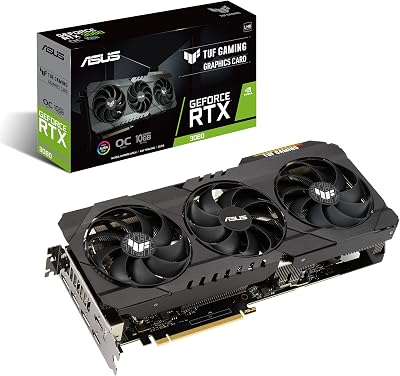

RTX 3080 Ti vs RTX 4090 is a generational gap dressed up as a comparison, and in 2026 plenty of 3080 Ti owners are asking whether the jump to Nvidia’s Ada flagship is worth the cost. The honest answer involves more than frame rates: there is a VRAM chasm, a power-draw difference, and an exclusive software feature that the older card simply cannot run. This breakdown lays out the data, the real-world impact, and a clear verdict on the upgrade.
As an Amazon Associate we earn from qualifying purchases at no extra cost to you. Product prices and availability are accurate as of the date shown and are subject to change.



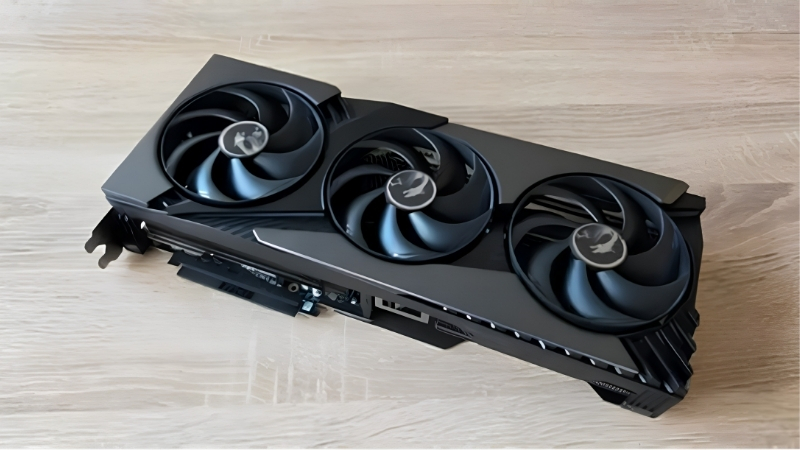
The Quick Verdict: 3080 Ti vs 4090 at a Glance
The short version: the RTX 4090 is in a completely different league, delivering flagship 4K performance, 24GB of VRAM, and DLSS 3 Frame Generation that the RTX 3080 Ti cannot access. The 3080 Ti remains a strong 1440p and capable 4K card, but it is a previous-generation product. If you have the budget and game at 4K, the 4090 upgrade is transformative; if you are content at 1440p, the 3080 Ti still holds up.
Who Wins on Raw Performance
The RTX 4090 wins overwhelmingly. It carries 16,384 CUDA cores against the 3080 Ti’s 10,240 — a 60% increase — and pairs them with a far more efficient Ada architecture. At 4K the 4090 routinely lands 60–80% ahead, and in the heaviest ray-traced titles the gap can stretch even wider once DLSS 3 enters the picture.
This is not a within-tier contest; it is two generations and two price classes apart. If outright performance is your goal and budget allows, the 4090 is the unambiguous winner — check its current price, since flagship stock is especially tight in 2026.
Who Wins on Value
Value depends entirely on how you shop. At new prices the 4090 commands a heavy premium that only makes sense for 4K enthusiasts, creators, and AI users. The 3080 Ti, now found mainly on the used market, can be a genuine bargain for 1440p gamers if priced sensibly.
So the value winner is situational: the 3080 Ti for a cost-conscious 1440p build sourced second-hand, the 4090 for anyone whose workload actually demands flagship 4K muscle and who will keep the card for years.
It also helps to think in cost-per-year rather than sticker price. A 4090 kept for four or five years of native-4K gaming spreads its premium across a long, comfortable lifespan, whereas a cheaper card that needs replacing sooner can cost more over time. For enthusiasts who hold their hardware, the flagship’s longevity softens its upfront sting considerably.
Comparison Table: Core Specs Side by Side
The table shows just how far apart these two generations are on the spec sheet, from core count to VRAM to power.
| Spec | RTX 3080 Ti | RTX 4090 |
|---|---|---|
| Architecture | Ampere (GA102) | Ada (AD102) |
| CUDA cores | 10,240 | 16,384 |
| Boost clock | ~1,665 MHz | ~2,520 MHz |
| VRAM | 12GB GDDR6X | 24GB GDDR6X |
| Memory bus | 384-bit | 384-bit |
| Bandwidth | ~912 GB/s | ~1,008 GB/s |
| DLSS | DLSS 2 (no Frame Gen) | DLSS 3 + Frame Gen |
| Board power (TGP) | 350W | 450W |
| Recommended PSU | 750W | 850W |
Deep Dive Face-Off: 3080 Ti vs 4090
The numbers above only hint at the real-world gap. Mapping each card onto an actual build — your monitor, your power supply, your workload — reveals where the 4090 justifies its cost and where the 3080 Ti still does the job. This section compares them feature by feature.
Design, Cooling, and Power Draw
Power is a serious consideration. The 4090 draws up to 450W and wants an 850W PSU, while the 3080 Ti’s 350W is comfortable on a quality 750W unit. Upgrading to a 4090 often means a new power supply and a hard look at case airflow and clearance — the 4090’s partner cards are among the largest GPUs ever made.
The 3080 Ti, by contrast, fits a wider range of existing builds with less fuss. If your current case and PSU are mid-range, factor the cost and effort of upgrading them into any 4090 purchase.
That hidden cost is easy to underestimate. A 4090 upgrade can quietly require a new 850W-plus PSU, a larger case, and sometimes a sturdier GPU support bracket to prevent sag. Budget for the whole platform, not just the card, when you compare the two — for some 3080 Ti owners those extras tip the math toward waiting a generation.
Thermals favour the newer card on efficiency per frame, but its sheer power ceiling means it still pushes more total heat into your case under full load.
1440p and 4K Gaming Performance
At 1440p, both cards are strong, and the 4090 is frequently CPU-bottlenecked at that resolution — meaning you will not see its full advantage unless you pair it with a top-tier processor. For a pure 1440p gamer, the 3080 Ti already delivers a smooth, high-refresh experience.
At 4K the 4090 separates itself completely. Native 4K with full ray tracing is exactly the scenario it was built for, and its 24GB buffer eliminates the VRAM pressure that the 3080 Ti’s 12GB can feel in the most demanding titles. This is where the upgrade transforms the experience rather than merely improving it.
So the resolution you target is decisive. The 3080 Ti is a 1440p stalwart that handles 4K with compromises; the 4090 is a true native-4K flagship with headroom to spare.
There is also a high-refresh-4K angle. If you own a 4K 120Hz or 144Hz display, the 4090 is one of the few cards that can actually feed it in demanding titles, whereas the 3080 Ti will lean heavily on upscaling and still fall short of those refresh targets in the heaviest games. Matching the GPU to the panel’s refresh ceiling, not just its resolution, clarifies whether the upgrade pays off.
Ray Tracing, DLSS, and AI Features
Here lies the single most important difference: DLSS 3 with Frame Generation is exclusive to the 4090’s Ada architecture and cannot run on the 3080 Ti. In supported titles, Frame Generation can dramatically lift frame rates, widening the real-world gap far beyond the raw hardware difference.
The catch is that Frame Generation works best when base frame rates are already reasonable, so it amplifies the 4090’s strength rather than rescuing weak performance. On the 4090 that synergy is consistent; the 3080 Ti simply cannot tap into it at all.
This is Nvidia’s clearest example of forward-looking, architecture-locked technology paying off after purchase. As more games adopt DLSS 3 and its successors, the 4090’s lead grows, while the 3080 Ti is limited to the older DLSS 2 upscaling without frame generation. For buyers thinking three to five years ahead, that gap compounds.
For creators and local-AI work, the 4090’s 24GB buffer and far greater compute are decisive — large models, high-resolution rendering, and video workloads scale on it in ways the 12GB 3080 Ti cannot match.
Pros, Cons, Pricing, and the Better Buy
With the face-off settled, the upgrade question comes down to trade-offs and 2026 timing. Below are the honest strengths and weaknesses of each card, the market forces shaping their prices, and a clear recommendation on whether to make the jump.
Pros and Cons of Each Card
The RTX 3080 Ti’s pros: still-strong 1440p and capable 4K performance, lower 350W power draw, broad build compatibility, and excellent value if bought used at a fair price. Its cons: only 12GB of VRAM, no access to DLSS 3 Frame Generation, and a previous-generation efficiency profile.
The RTX 4090’s pros: flagship 4K performance, a massive 24GB buffer, exclusive DLSS 3 Frame Generation, and unmatched creator and AI scaling. Its cons: a very high price, a 450W power appetite that often demands a PSU and case upgrade, and enormous physical size.
Reading the pros and cons of the 3080 Ti vs 4090 match-up, the rule is clear: upgrade to the 4090 for native 4K, longevity, and creation; stay on the 3080 Ti if 1440p satisfies you and budget is tight.
How 2026 Price Hikes and the H200 News Change the Math
The upgrade decision is hostage to a rising market. Through early 2026, GPU prices have climbed because GDDR7, GDDR6 and high-bandwidth memory are in severe shortage — VRAM now accounts for over 80% of the bill of materials on some high-end cards, and trackers have logged increases of roughly 15–23% on current-gen models. Flagship and high-end stock has been hit hardest, so a 4090 today carries a steep premium.
Nvidia’s data-center business intensifies the squeeze. In January 2026 the U.S. approved exports of Nvidia’s H200 AI chip to China, with Chinese firms reportedly ordering more than two million units at around $27,000 each. Every wafer and memory module directed at those high-margin AI orders is capacity not building consumer GeForce cards — and flagship-class GPUs feel that pinch most acutely.
The practical lesson: a 4090 is unlikely to get cheaper soon, and if you already own a capable 3080 Ti, there is no urgency to overpay. But if you have decided to upgrade and find a fair price, acting sooner beats waiting on a market trending upward.
For current 3080 Ti owners specifically, this is reassuring news: there is no penalty for sitting tight. Your card still handles 1440p well and remains usable at 4K with upscaling, so you can wait for a genuinely good 4090 deal without feeling left behind. The urgency only applies once you have firmly committed to upgrading.
The Alternative + Final Verdict: Who Should Buy Which
If the 4090 is too expensive or too power-hungry for your build, a sensible middle path is a current-generation card like the RTX 5080, which brings DLSS 4 and newer GDDR7 memory at a lower price and power draw than a flagship — worth comparing before you commit. For 3080 Ti owners on a budget, simply keeping the card another cycle is also a legitimate “alternative.”
A 5080 deserves serious thought before defaulting to the 4090. It delivers a large share of flagship-class performance with newer features, lower power, and a smaller price, which makes it the pragmatic upgrade for many 3080 Ti owners who want a real leap without the 4090’s cost and 450W appetite. Reserve the 4090 for those who truly need the absolute top of the stack.
Final verdict: upgrade to the RTX 4090 if you game at native 4K, want DLSS 3 Frame Generation, or run serious creator and AI workloads — the leap is genuinely transformative there. Keep or buy the RTX 3080 Ti if you game at 1440p, value lower power and easier compatibility, and can source it at a fair second-hand price.
Either way, check live stock and pricing through the links on this page before deciding — in a tightening flagship market, the best deal is usually the one in front of you today.
Conclusion
The RTX 3080 Ti vs RTX 4090 decision is really a question of whether you need a generational leap or simply a solid card. The 4090 is a native-4K flagship with 24GB of VRAM and exclusive DLSS 3 Frame Generation that the 3080 Ti cannot run; the 3080 Ti is a still-capable 1440p performer whose 12GB buffer and older feature set are its limits. With 2026 memory shortages and Nvidia’s H200-driven supply priorities keeping flagship GPUs especially scarce and expensive, prices are more likely to rise than fall — so once you have settled the RTX 3080 Ti vs RTX 4090 question for your build and budget, securing a fair deal sooner beats waiting. Use the links on this page to check today’s price and upgrade with confidence.
Frequently Asked Questions
What is the best rtx 3080 ti rtx 4090 in 2026?
The best rtx 3080 ti rtx 4090 depends on your budget and how you plan to use it. The options compared above are our top-rated picks based on real customer ratings, build quality, and overall value — start with the highest-rated model that fits your budget.
How much should I expect to spend on a rtx 3080 ti rtx 4090?
Prices vary by brand and features. Budget options cover the essentials, while mid-range and premium models add durability, performance, and extra features. Compare the prices in the list above to find the best value for your needs.
What should I look for when buying a rtx 3080 ti rtx 4090?
Focus on what matters most for your use case — build quality, compatibility, performance, warranty, and verified customer reviews. Every pick above is selected to balance these factors.
Are budget rtx 3080 ti rtx 4090 options worth it?
Yes. For most people a well-reviewed budget or mid-range rtx 3080 ti rtx 4090 delivers excellent value. You only need to spend more if you specifically require premium materials or top-tier performance.
How did we choose these rtx 3080 ti rtx 4090 picks?
We compare current Amazon ratings, review counts, key features, and price to surface the options with the best real-world value. The list is refreshed as ratings and availability change.