
- Top Pick: Cordoba C7 Nylon String Guitar Cedar
- Best Value: Yamaha C40II Classical Guitar, Full Size With Rosewood Fingerboard and Bridge, Natural
- Premium Choice: Cordoba C3M Classical Guitar
For most beginners the Cordoba Protege C1 is the sensible entry point, players ready to move up should look at the Iberia-series C5 with its solid cedar top, and anyone chasing a richer, rosewood-backed sound should step to the C7 or C9 class. Cordoba sells its nylon-string guitars in series, and the series name tells you more about build quality than the model number alone, so this guide sorts the lineup by who each guitar suits rather than by a single winner.
- Cordoba classical guitars at a glance
- How to choose between Cordoba series
- Budget tier: Protege C1 and Mini
- Mid-range tier: Iberia C4, C5 and cutaway options
- Premium tier: C7, C9 and beyond
- Pick the right Cordoba if you…
- Alternatives worth comparing
- Common mistakes when buying a classical guitar
- Care and setup tips
- Frequently Asked Questions
Cordoba itself groups its range into Protege, Iberia, Fusion, Luthier, Master and Mini collections, with further filters for traditional, flamenco, small-body, thinbody and cutaway-electric designs. The maker also separates layered-wood, solid-top and all-solid builds, which is the single most useful distinction when you are choosing. Specific tonewoods and dimensions below are the ones the maker and music-retail spec sheets typically list; because exact woods and finishes can change between production runs, confirm the details printed on the product page and in the box before you buy.
As an Amazon Associate we earn from qualifying purchases at no extra cost to you.


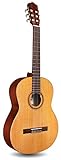

Cordoba classical guitars at a glance
| Model class | Best for | Typical stated construction | Limits |
|---|---|---|---|
| Protege C1 | Absolute beginners, students, kids moving to full size | Spruce top, mahogany back and sides, full-size classical body | Laminate construction, simpler hardware, less projection |
| Iberia C4 / C5 | Improving players wanting a real solid top | Solid cedar top (C5 also offered with spruce), mahogany back and sides | Laminate back and sides on some versions |
| Iberia C7 / C9 | Serious students, recitals, recording | Solid top with rosewood-type back and sides, finer binding and rosette | Costs more, needs humidity care |
| Fusion series | Players who want a thinner body with pickup for stage use | Slimmer body, cutaway, onboard electronics | Different tone from a deep traditional body |
| Mini series | Small hands, travel, children | Reduced scale length body | Shorter scale changes spacing and volume |
| Luthier / Master | Advanced players, collectors | Solid woods throughout, higher-end finishing | Premium tier, overkill for most |
How to choose between Cordoba series
Start with the top wood
A classical guitar’s top does most of the tonal work. Laminate tops are tougher and cheaper, while solid tops tend to open up with playing and respond more to touch. Cedar generally gives a warm, quick-sounding voice that suits fingerstyle and Spanish repertoire, while spruce is usually described as a little brighter and clearer. Cordoba’s Iberia line is where solid tops become the norm, which is why reviewers often point to that tier as the value sweet spot.
Check scale length and nut width
Full-size classical guitars typically use a scale length around 650 millimetres and a wide nut compared with steel-string guitars. That wide, flat fingerboard is part of the style, but it can feel awkward to players coming from acoustic or electric guitars. If your hands are small, a Mini-series guitar or a smaller-body model may be easier, and the maker lists dimensions on each product page.
Think about humidity and cases
Solid-wood guitars react to dry air. Cordoba and most luthiers advise keeping instruments in a case with a humidity-control pack in very dry or very damp climates. A laminate Protege tolerates neglect better than an all-solid instrument, which matters if the guitar will live in a bedroom with a heater.
Decide on electronics only if you need them
Fusion and cutaway-electric models add a preamp and pickup so the guitar can plug into a PA. If you only play at home, those parts add weight and cost without improving the unplugged sound.
Budget tier: Protege C1 and Mini
The Protege C1 is the guitar most often suggested for first-time buyers in the Cordoba range. It is a full-size nylon-string with a spruce top and mahogany body, and it ships as a straightforward instrument rather than one loaded with options. Reviewers who cover entry-level classical guitars tend to credit it with a comfortable neck and steady tuning for its class, while noting that a laminate build limits volume and sustain. If you are buying for a child under about ten, a Mini-series model is the better fit because the shorter scale reduces finger stretch.
Mid-range tier: Iberia C4, C5 and cutaway options
The C5 is the model many guitar teachers point to once a student has outgrown a beginner instrument. The maker’s description centres on a solid cedar top paired with mahogany back and sides, and that combination is known for a warm, round voice. A spruce-top C5 variant is also offered, aimed at players who prefer a brighter, more defined attack. The Iberia line also includes the C4 and cutaway versions; the cutaway makes upper-fret access easier but removes a little body resonance, so it suits players who often play above the twelfth fret.
Premium tier: C7, C9 and beyond
The C7 and C9 move to richer back-and-side woods and more refined finishing. These are for players who want fuller bass and longer sustain for classical repertoire, recording or recitals. The C9 is built on a different body shape from the C7, with Cordoba describing a smaller-bodied, parlor-style design aimed at comfort and a focused tone. Above that sit the Luthier and Master collections, with all-solid construction and hand-finished details. For most hobbyists these are beyond what the playing level can exploit.
Pick the right Cordoba if you…
| If you… | Pick | Why |
|---|---|---|
| Are a first-time learner on a tight budget | Protege C1 | Simple full-size build at the entry tier |
| Have small hands or are buying for a child | Mini series | Shorter scale and smaller body |
| Want your first solid-top guitar | Iberia C5 | Solid cedar top at mid-range tier |
| Prefer a brighter, clearer tone | Spruce-top C5 | Spruce is typically described as brighter |
| Play small stages or open mics | Fusion or cutaway-electric model | Onboard pickup and slimmer body |
| Want rosewood depth for recitals | C7 or C9 | Richer back and sides, finer finish |
Alternatives worth comparing
- Yamaha C40 and CG series: A long-standing student benchmark, frequently recommended for beginner budgets. The CG line moves up to solid tops.
- Alhambra: Spanish-made guitars with traditional construction, usually a step above Cordoba at similar tiers according to some reviewers.
- La Patrie and Godin: Canadian makers offering well-regarded solid-top classical models, often preferred by teachers for clarity.
Common mistakes when buying a classical guitar
- Assuming a steel-string neck feel will carry over. The wider nylon-string neck needs adjustment time.
- Buying a solid-top guitar without a case or humidity plan.
- Paying for electronics that will never be used.
- Ignoring string tension. Normal-tension nylon strings are the usual starting point; high tension adds volume but also finger effort.
- Skipping a setup. A professional setup of nut and saddle height can improve playability on any guitar in any tier.
Care and setup tips
New strings stretch for several days, so expect frequent retuning at first. Wipe the strings after playing, keep the guitar away from radiators and direct sunlight, and store it in its case. If the action feels high or buzzing appears, a luthier can adjust the saddle or nut rather than you trying to alter the guitar yourself.
Frequently Asked Questions
Which Cordoba is best for a beginner?
The Protege C1 is the usual starting suggestion because it is a full-size nylon-string guitar built for new players. Children or players with small hands may do better on a Mini-series model. Whichever you choose, a basic setup helps comfort.
Is a solid top worth it?
For many players, yes, once they have played for a year or so. Solid tops generally respond to dynamics more and develop in tone with age. Beginners who are still deciding whether to continue can start with a laminate model without losing much.
Cedar or spruce top, which is better?
Neither is better outright. Cedar is usually described as warmer and quicker to sound mature, while spruce is typically brighter with more clarity. Choose by listening to which voice fits the music you play.
Can I use steel strings on a Cordoba classical?
No. Classical guitars are built for nylon strings, and the bracing and bridge are not designed for steel tension. Steel strings can damage the instrument.
Do I need a pickup?
Only if you plan to perform through a sound system. For practice and recording with a microphone, an acoustic-only model is lighter and usually less expensive.
How should I look after a solid-wood guitar?
Keep it in a case, avoid sudden temperature swings, and use a humidity-control pack when the air is very dry or very damp. Follow the maker’s care guidance and see a luthier for cracks or lifting braces.



Write Your Review
No reviews yet. Be the first to share your experience!