
- Top Pick: ALMING Compression Bags – Travel Essentials – 12 Pack Space Saver Bags – No Vacuum Pump Or Air Extractor is Needed – Storage Accessorie and Home Packing Organizers (transparent)
- Best Value: Vacbird Rechargeable Wireless Pump Travel Storage Bags Set – Portable Space Saver Bags for Travel & Home – Vacuum Compression Packing Seal for Clothes, Blankets, Seasonal Storage 15 Combo Set
- Premium Choice: Vacbird Travel Vacuum Bags with Rechargeable Pump, 15 combo tarvel size | See Contents Easily with Transparent Bags, 1500mAh Pump Compresses 90+ Bags, Carry-On Size for Easy Travel Packing
For most travellers, zip-compression packing cubes such as Eagle Creek Pack-It compression cubes or Gonex compression cubes give the best balance of space saving and convenience, while roll-up vacuum bags suit bulky winter clothing and compression dry sacks such as Sea to Summit suit hiking and trips with wet gear. Pick the type by what you pack, not by the headline capacity.
As an Amazon Associate we earn from qualifying purchases at no extra cost to you.


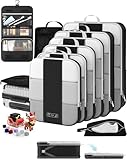
The three kinds of compression bag
Shoppers asking for compression bags are really choosing between three designs, and each solves a different problem.
- Compression packing cubes. Fabric cubes with a second zip that squeezes the contents flat. They keep clothes organised and cut bulk, without needing a pump.
- Roll-up vacuum bags. Plastic bags with a one-way valve. You roll the bag from the sealed end to push air out through the valve. Brands such as Space Bag sell these in travel sizes.
- Compression dry sacks. Waterproof sacks with straps that cinch the sack smaller. They suit sleeping bags, jackets and gear that may get wet.
Airlines count weight, not volume, so compression does not make a bag lighter. It lets you fit more into a defined space, which helps with carry-on dimensions but does not help with weight limits.
At a glance: comparison table
| Type or product | Best for | How it compresses | Strengths | Limits |
|---|---|---|---|---|
| Eagle Creek Pack-It compression cubes (mid-range) | Frequent flyers who want durable organisation | Second zip squeezes the cube | Reusable, quick to pack, trusted travel brand | Compresses less than vacuum bags |
| Gonex compression packing cubes (budget) | Casual travellers wanting a set of sizes | Second zip or compression panel | Often sold as multi-piece sets | Fabric and zip quality can vary by batch |
| Space Bag roll-up travel bags (budget) | Bulky jumpers, coats and bedding | Roll out air through a valve | Biggest volume reduction for soft items | Wrinkles clothes, can leak slowly |
| Sea to Summit compression dry sack (mid-range to premium) | Hikers and campers | Straps cinch the sack, waterproof fabric | Keeps contents dry, built for trail use | Best for soft gear, not tidy shirts |
| Vacuum bag with hand pump (budget) | Home storage and moving | Pump removes air | Strong compression for off-season clothing | Pump is bulky, not ideal for travel |
| Standard packing cubes (budget) | Organisation without compression | None | Lightest and simplest | No space saving beyond tidy folding |
Capacity ratings and material claims are the makers’ own and differ across product lines, so read the sheet for the size you intend to buy.
How to choose
What you are packing
Soft, squashable items such as fleece, jumpers, pillows and down jackets compress well. Structured items, such as dress shirts and trousers that crease, do not. Many reviewers advise a mix, with a compression cube for casual items and a folder for formal clothes.
Zip quality and construction
The compression zip carries the stress when you cinch a full cube. Look for sturdy, double-stitched seams and a zip that glides rather than snags. Cheap sets sometimes fail at this zip first, so brands with a reputation for travel gear tend to last longer.
Material and weight
Lightweight nylon or ripstop polyester keeps weight down. Mesh panels let you see inside and help the contents breathe. Heavier fabrics last longer but use up weight allowance.
Size set
A set with a small, medium and large cube lets you divide by category, for instance underwear, tops and bottoms. Most travellers do well with three to four cubes for a week-long trip.
Waterproofing
Standard cubes are water-resistant at best. If gear may get soaked, a dry sack is a better choice than a cube. For toiletries, use a separate sealed pouch so leaks do not reach clothes.
Valve quality on vacuum bags
Valves on roll-up bags are the weak point. Look for a double-zip closure with a proper valve, and expect a slow reflation over many days. For long trips, check that the bag is still compressed before departure.
Fit and compatibility notes
- Measure your suitcase interior and compare to cube dimensions the maker lists. Cubes that fit side by side waste less space.
- Compressed clothing is dense, so heavy bags can hit airline weight limits faster than expected.
- Vacuum bags may expand at altitude or pressure change, though most makers state their bags are designed for flights. If a bag looks puffy, press it again.
- Dry sacks are good inside a backpack but add bulk if used as packing cubes in a small carry-on.
- Keep medication, valuables and documents in an accessible pocket, not compressed into a cube.
Decision table: pick X if
| Pick this | If you |
|---|---|
| Eagle Creek Pack-It compression cubes | travel often and want tidy, reusable organisation |
| Gonex compression packing cubes | want a multi-size set at a lower budget tier |
| Space Bag roll-up bags | pack bulky winter layers or bedding |
| Sea to Summit compression dry sack | hike, camp or need waterproofing |
| Standard packing cubes | just want organisation without squeezing |
| Vacuum bag with pump | store seasonal clothing at home rather than travel |
Alternatives to consider
Rolling clothes
Rolling shirts and trousers tightly saves space with no extra gear. Many travellers find it good enough for short trips.
Travel organiser pouches
Pouches for cables, toiletries and shoes keep items separate and often improve packing more than compression does.
A bigger or expandable bag
Instead of squeezing, consider an expandable carry-on that adds volume, as long as it stays within the airline’s size rules.
Common mistakes
- Believing compression reduces weight, which it does not.
- Compressing formal clothes, then arriving with creases.
- Overstuffing a cube until the zip strains.
- Choosing a vacuum bag without testing that it holds air before the trip.
- Packing wet items into a standard cube, causing odour and mildew.
- Buying the biggest set instead of sizes that match your suitcase.
Frequently Asked Questions
Do compression bags damage clothes?
Generally not, but they can wrinkle fabrics and may stress delicate items. Avoid compressing items with sequins, structure or fine pleats, and unpack soon after the trip.
Are compression cubes better than vacuum bags?
Cubes are easier and more reusable, while vacuum bags compress more. Cubes suit regular travel, and vacuum bags suit bulky, soft items for home storage or long trips.
Will compressed bags pass airline checks?
Yes, they are normal luggage items. Compression only changes volume, so the airline weight and size limits still apply.
Can I reuse roll-up vacuum bags?
Many are reusable if the seal and valve stay intact. Inspect the seal and keep the zip clean, and replace the bag if it no longer holds air.
How many cubes do I need for a week?
Three or four cubes cover most trips, separated by clothing type or by person. Size depends on your suitcase, so measure before buying.
Are compression dry sacks worth it for city trips?
Usually not, since they are designed for outdoor gear and add bulk without helping with tidy clothing. They make sense if rain or wet gear is likely.



Write Your Review
No reviews yet. Be the first to share your experience!