
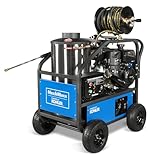
- Top Pick: MechMaxx 4000 PSI 4 GPM DUCAR E-Start Engine Hot Water Pressure Washer | 420 cc 15 HP; Portable with 13" Pneumatic Tires; with Hose Reel; 200℉ (93℃) Max Temperature; 1 Years After-sales Service
- Best Value: Dapper Supply 2600 PSI Electric Hot Water Pressure Washer 4 0 GPM Commercial Hot Water Power Washer Diesel Heated Water Cooled Triplex Pump 50 ft Hose 120V 20A
- Premium Choice: NorthStar Wet Steam/Hot Water Pressure Washer, 2,750 PSI, 2.5 GPM, 230V | Electric-powered operation, Commercial grease and grime removal, Stubborn-soil cleaning, Shop-ready design
The best electric hot water pressure washer is a commercial-class unit from a maker such as Kranzle, Mi-T-M or Hotsy, and the right one depends mainly on the electrical supply you have: 120V models top out around 1,500 PSI at 2 GPM, while 230V models run from roughly 2,000 to 3,500 PSI at 2.8 to 3.9 GPM. Be aware that “electric” in this category describes the motor. The heater is usually a burner that runs on diesel or kerosene, so these machines need ventilation, fuel handling and a correctly rated circuit. They are professional tools, not plug-in consumer washers.
As an Amazon Associate we earn from qualifying purchases at no extra cost to you.


What “Electric Hot Water” Really Means
Most electric hot water washers use an electric motor to drive the pump and a fuel-fired burner to heat the water. Kranzle’s Therm TST series is described by the maker as hot water electric pressure washers that use diesel fuel to heat the water. Mi-T-M’s HSE series is listed with a diesel or kerosene burner and an electric motor. Because a burner is involved, follow the maker’s manual on ventilation, exhaust and fuel storage, and never run a burner machine in an enclosed space without the ventilation the maker requires. Roundups that call a cold-water electric washer a hot water unit are mixing categories, so confirm the heating type.
Models Named in 2026 Listings
No independent lab-style comparison of electric hot water washers was found. The table summarizes what makers and retailers list, and several sources are dealers, so treat ranking claims cautiously.
| Model or series | Maker-listed or retailer-listed specs | Power supply | Best for | Limits |
|---|---|---|---|---|
| Mi-T-M HSE-1002-0MM11 | 1,000 PSI, 2.0 GPM, burner-heated | 120V single phase | Light shop and small commercial use | Low pressure for heavy grease |
| Mi-T-M HSE-1502-0MM11 | 1,500 PSI, 2.0 GPM | 120V single phase | Small businesses on standard outlets | Limited flow |
| Mi-T-M 1,400 PSI (HSE-1400-HD11) | 2.0 GPM, direct drive triplex pump, diesel or kerosene burner | 120V | Portable mid-duty cleaning | Still needs fuel and ventilation |
| Mi-T-M HSE 2,000 to 2,500 PSI models | 2.8 GPM at 2,000 PSI; 3.2 GPM at 2,500 PSI | 230V single phase | Vehicle and equipment cleaning | Needs a 230V circuit |
| Mi-T-M HSE 3,500 PSI model | 3.3 GPM, 3/8-inch hose | 230V single phase | Heavy-duty degreasing | Heavier and needs adequate supply |
| Mi-T-M HHS 3,000 PSI | 3.9 GPM, 8 HP motor, General pump, NEMA 6-50P plug, 10-gallon fuel tank; burner output listed around 341,800 BTU per hour | 230V, 39.5 A | Industrial, high-flow work | Large circuit demand |
| Kranzle Therm 1165TST | Maker lists 2,400 PSI, 5.0 GPM | 220 to 440V, 17 to 25 A | High-flow professional use | Commercial price tier and electrical requirement |
| Kranzle Therm 2175TST | Maker lists 2,500 PSI, 3.3 GPM | 220 to 440V, 17 to 25 A | Professional cleaning | Needs correct supply |
| Hotsy 1075BE | Named best overall in one industrial roundup | Check the maker’s data sheet | Steady commercial work | Source is not independent |
How to Choose
Start with your power supply
A standard household outlet is 120V and limited by its circuit rating. The listed 120V hot water models stay near 1,500 PSI at 2 GPM. The bigger 230V models, including the HHS with a 39.5 A motor listing and a NEMA 6-50P plug, need a dedicated circuit and a plug type your building may not have. Have a licensed electrician confirm the circuit, wiring and breaker size before you install or plug in. Never modify a plug or use an extension cord the maker does not approve.
PSI vs GPM
PSI measures pressure and GPM measures flow. Pressure breaks the bond of dirt, and flow carries it away. For cleaning greasy equipment, flow and heat usually matter as much as pressure, which is why a 3.3 GPM unit often beats a higher PSI unit with a lower flow.
Burner and fuel
Check the fuel type, tank size and burner output. Diesel or kerosene burners produce exhaust and require clearance from walls and combustibles. Follow the maker’s rules for refueling only when the machine is cool, and keep a fire extinguisher nearby as the manual advises.
Water temperature
Makers list maximum outlet temperatures in their manuals. Hot water softens grease and oil, but it can damage some surfaces, paints and seals. Use the lowest temperature that does the job and keep the spray away from skin.
Portability
Mi-T-M’s HSE carts are made to be moved around a shop. Trailer-mounted units, such as one 4,000 PSI trailer listed by a retailer, are heavy and meant for fixed work routes. Think about stairs, doorways and loading.
Pump and maintenance
Triplex pumps are the common type and respond well to routine oil changes and filtered water. Burner coils can scale in hard water, so ask about descaling and a water treatment option. Winter storage needs care because freezing water can crack pumps and coils.
Pick X If…
| Pick | If your situation is |
|---|---|
| Mi-T-M 120V HSE (1,000 to 1,500 PSI) | You have only standard outlets and light grease work |
| Mi-T-M 230V HSE (2,000 to 3,500 PSI) | You run a garage, farm or fleet wash with a 230V supply |
| Kranzle Therm TST | You want a professional machine with high flow |
| Hotsy electric | You value dealer support and commercial reliability reports |
| A cold-water electric washer | Your jobs do not need heat; cheaper and simpler |
Budget Tiers Without Prices
Entry commercial tier: 120V Mi-T-M HSE units. They are the most accessible but also the lowest in flow.
Mid-range tier: 230V Mi-T-M HSE units from 2,000 to 3,500 PSI.
Premium tier: Kranzle Therm TST, Hotsy and high-flow HHS or trailer systems. They are professional investments.
All of these cost far more than consumer washers, and these are high-cost commercial machines, so budget for the machine, hoses, a surface cleaner, fuel and service.
Safety Notes
- Hot water can scald. Wear gloves, eye protection and waterproof footwear, and never point the wand at people or animals.
- Burner exhaust contains carbon monoxide. Use only in well-ventilated areas as the maker specifies.
- Use a ground-fault protected circuit if the manual requires it, and keep connections dry.
- Do not cover or block the burner air intake.
- Let the machine cool before refueling, and store fuel in approved containers away from ignition sources.
- Read the manual and contact the maker or a qualified technician for service. Do not open electrical enclosures yourself.
Common Mistakes
- Assuming “electric” means no fuel or exhaust.
- Ignoring amperage and buying a machine your circuit cannot handle.
- Choosing by PSI alone and neglecting flow rate.
- Skipping descaling in hard-water areas.
- Using hot water on surfaces that should only see cold water.
Alternatives
- Cold-water electric commercial washers: simpler and cheaper, and a good fit if you can pre-treat grease with a degreaser.
- Gas-powered hot water washers: suit sites without a suitable electrical supply, but they are louder and emit exhaust.
- Steam cleaners: better for sensitive surfaces and detail work.
- Rental or a professional cleaning service: sensible if you only need a one-off job.
Frequently Asked Questions
Are electric hot water pressure washers really electric?
The motor is electric, but the heater is normally a fuel-fired burner using diesel or kerosene. That means you still need fuel, ventilation and attention to exhaust. Read the maker’s manual for the exact requirements.
Can I run one on a regular outlet?
Some 120V models, rated around 1,000 to 1,500 PSI at 2 GPM, are designed for that. Larger 230V units need a dedicated circuit. Ask a licensed electrician to confirm your wiring before installing.
What PSI and GPM do I need?
For general shop and vehicle cleaning, 2,000 to 3,500 PSI at about 3 GPM is common in listings. Light jobs can use 1,000 to 1,500 PSI at 2 GPM. Heavy degreasing benefits from higher flow.
Which brands are most mentioned?
Mi-T-M, Kranzle and Hotsy come up most. Several of the sources are dealers or affiliates, so check the maker’s data sheet. No independent test that ranks them head to head was found.
Is hot water necessary?
It helps with grease, oil and sticky residue. For dust, mud and general dirt, cold water and the right detergent often work. Hot water can also damage some finishes, so check the surface maker’s guidance.
How should I store it in winter?
Follow the maker’s winterizing steps to drain water and protect the pump and coil from freezing. Many makers advise antifreeze for pumps in cold climates. Cracked pumps and coils are expensive to repair.



Write Your Review
No reviews yet. Be the first to share your experience!