
- Top Pick: Movo X3-II Shotgun Microphone for Camera – 11” XLR Supercardioid Boom Mic for Filmmaking, DSLR Video, Interviews & Content Creation – Includes Rycote Shockmount, Grip & XLR Cables
- Best Value: Movo XLR Shotgun Microphone & Boom Pole Kit – Professional Location Sound Recording Bundle with Shotgun Mic and Boompole with Internal XLR Cable for Filmmaking, ENG, and Broadcast Audio
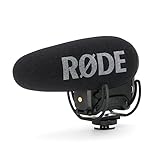
- Premium Choice: RØDE VideoMic Pro+ Premium On-camera Shotgun Microphone with High-pass | Filter, High-frequency Boost, Pad, Safety Channel for Filmmaking, Content Creation and Location Recording
For most filmmakers the best mic is a pairing rather than a single product: a wireless lavalier kit such as the Rode Wireless PRO or DJI Mic 2 for dialogue, plus a supercardioid shotgun such as the Sennheiser MKE 600 or Deity S-Mic 2 for boom or camera work. Gamers who stream cinematic gameplay or cut trailers and short films have the same problem as indie directors: a camera’s built-in microphone captures room echo and handling noise, not clean voice. This guide sorts the 2026 field by job, explains the specs that matter, and points out where each option falls short.
As an Amazon Associate we earn from qualifying purchases at no extra cost to you.



At a Glance: Comparison Table
| Model | Type | Best for | Stated features or limits |
|---|---|---|---|
| Rode Wireless PRO | Wireless lavalier system | Narrative and documentary work | Reviewers highlight 32-bit float safety recording; premium tier; needs a receiver mounted or cabled to the camera |
| DJI Mic 2 | Wireless lavalier system | All-round value, vlogs, interviews | Two transmitters and a receiver in a charging case; mid-range tier |
| DJI Mic 3 | Wireless lavalier system | Long shoot days | One outlet lists battery life of about 28 hours with adaptive gain |
| Rode Wireless GO II | Compact wireless | Two-person interviews | Older generation but still on the market; small body clips straight to clothing |
| Hollyland Lark M2 | Compact wireless | Hidden mic look | Very small transmitters; reviewers cite it when the mic must disappear |
| Sennheiser MKE 600 | Boom shotgun | Interviews, documentary, narrative | Supercardioid pattern; needs phantom power or a battery; boom pole and windshield required outdoors |
| Deity S-Mic 2 | Shotgun | Best-value pro shotgun | Reported to have a brass body; needs power and an XLR path |
| Sennheiser MKH 416 | Shotgun | Reference-grade film sound | Long-running industry standard; premium tier |
| Audio-Technica AT875R | Short shotgun | Camera rigs where length matters | Compact body, just under seven inches according to a roundup |
| Rode VideoMic GO II | On-camera shotgun | Budget solo shooting | Light and simple; less rejection than a boom mic placed close to the actor |
Start With the Type, Not the Brand
Reviewers keep repeating the same advice: choose the mic type before the model. A lavalier clips to a person and captures a close, consistent voice no matter where the camera sits. A shotgun is directional, so it favours whatever it points at and rejects some of the sides, which suits a boom pole held just above the frame. An on-camera shotgun is a compromise: it is convenient, but it sits far from the subject, so it picks up more of the room.
One roundup suggests a three-mic starter kit: an on-camera shotgun, a wireless lav system and one boom shotgun. That covers run-and-gun shooting, interviews and controlled scenes. If budget allows only one purchase, a wireless lav system gives the most usable dialogue in the widest range of situations, because distance from mouth to capsule stays small.
Wireless Lavalier Systems
Rode Wireless PRO
Several 2026 roundups name the Rode Wireless PRO as the top all-rounder for indie narrative and documentary work. The reason cited most often is its 32-bit float recording, which writes a safety track in the transmitter. Float recording means a shouted line or a sudden loud noise is far less likely to clip, and a very quiet line can be raised in editing without a wall of preamp noise. If the radio link drops, the onboard file is still there. This is the premium pick, and it is aimed at people who cannot re-shoot a scene.
DJI Mic 2
The DJI Mic 2 is described by reviewers as the value and all-round choice. The kit centres on two transmitters, a receiver and a charging case, which keeps cabling simple for two-person interviews. It also suits creators who move between a camera, a phone and a computer. Note that the receiver still needs a cold-shoe or cable connection, and any wireless link can be disturbed by interference in crowded radio environments such as conventions and city centres.
DJI Mic 3
The newer DJI Mic 3 is listed by one outlet with about 28 hours of battery life and adaptive gain. That figure makes it interesting for event shooters and long documentary days where charging time is short. Treat any battery number as a maker or outlet claim, since real runtime changes with transmit power and recording mode.
Compact options: Rode Wireless GO II and Hollyland Lark M2
Reviewers point to the Rode Wireless GO II for two-person interviews and to the Hollyland Lark M2 when the mic must be nearly invisible. Smaller transmitters are easier to hide, but the built-in capsule rubs on clothing more readily, so concealment usually means an external lav capsule and careful taping. Roundups note that all three major wireless systems sound better with a better capsule, and the DPA 4060 and Sanken COS-11D are the capsules most often named by professionals.
Budget wireless
The DJI Mic Mini and SmallRig S70 appear in budget lists. They give a clear step up from a camera’s built-in mic, but expect fewer safety features and less rugged build than the premium kits.
Shotgun Microphones
Sennheiser MKE 600
One roundup calls the MKE 600 its go-to boom shotgun for interviews, documentary and narrative. It uses a supercardioid pickup pattern, which gives a tighter pickup than a plain cardioid and is the workhorse pattern for most film dialogue. It runs from phantom power or a battery. Read the maker’s manual for the exact power options and cable requirements before buying a recorder.
Deity S-Mic 2
Reviewers describe the Deity S-Mic 2 as the best-value professional shotgun, with a brass body that handles set life. It suits creators stepping up from a prosumer microphone who still want a mic that can sit on a boom pole for years.
Sennheiser MKH 416
The MKH 416 is widely described as the classic reference microphone in film and broadcast. It sits in the premium tier. Its reputation is about consistency and its ability to cut through outdoor ambience, not about convenience. If you hire a sound mixer, there is a good chance this is what arrives on a bag of gear.
Audio-Technica AT875R and Rode VideoMic GO II
The AT875R is a short shotgun, just under seven inches long in one roundup’s description, which helps on a camera cage or a small boom. Shorter shotguns generally give less directional rejection than longer ones, a common physics trade-off. The Rode VideoMic GO II is the budget on-camera shotgun that reviewers favour for solo shooters. Neither replaces a boom held close to the talent.
How to Choose: Pick X If
| If you are | Pick | Why |
|---|---|---|
| A narrative filmmaker who cannot re-shoot | Rode Wireless PRO plus a boom shotgun | Safety recording and a second capture path |
| A solo creator doing interviews and vlogs | DJI Mic 2 | Two transmitters, simple setup |
| Shooting long days with little charging time | DJI Mic 3 | Battery life reported as the standout |
| Doing a controlled interview with a boom operator | Sennheiser MKE 600 or Deity S-Mic 2 | Supercardioid pickup, XLR workflow |
| On a tight budget with an on-camera setup | Rode VideoMic GO II or a budget wireless kit | Easy and light, big step over built-in audio |
| Wanting wardrobe-hidden audio | Hollyland Lark M2 with a good capsule | Small transmitters |
Specs That Matter
- Pickup pattern: supercardioid for boom work, omnidirectional for lav capsules; each is a trade-off between isolation and forgiveness when the mic moves.
- Connection: XLR needs phantom power or a battery and a recorder or camera with XLR inputs. 3.5 mm and USB-C suit cameras and phones directly.
- Recording format: 32-bit float on the transmitter protects against clipping.
- Range and interference: maker range figures are line-of-sight numbers. Walls, bodies and busy radio bands cut it.
- Wind protection: a furry windscreen is close to mandatory outdoors, with any shotgun or lav.
Common Mistakes
- Buying an on-camera shotgun and expecting boom-quality dialogue from across a room.
- Hiding a lav under tight fabric without a mount, which creates rustle noise.
- Ignoring headphone monitoring; you cannot hear a problem you are not listening for.
- Skipping a windshield and then fighting wind rumble in editing.
- Forgetting that a shotgun and recorder need compatible power and cables.
Alternatives to Consider
- A wired lavalier on a dedicated recorder, which avoids wireless interference completely.
- A handheld recorder with its own XLR inputs, if your camera has weak preamps.
- A smaller shotgun like the Rode VideoMicro II, listed by one outlet as a compact alternative.
Frequently Asked Questions
Is a lavalier or a shotgun better for filmmaking?
Neither wins every time. A lavalier gives close, consistent voice that follows the actor, while a boom shotgun sounds more natural for wide scenes where a visible mic would break the shot. Many productions use both and mix them.
Do I need a 32-bit float recorder?
You do not need it, but it removes the stress of setting gain. Reviewers rate the safety it adds to dialogue where you get one take. Standard recording still works well if you set levels carefully.
Can I use a gaming headset mic for filmmaking?
It is possible for a voice-over, but it is not designed for on-set dialogue. A dedicated lav or shotgun gives cleaner voice and better rejection of room noise.
Do I need phantom power?
Only for XLR condenser shotguns that depend on it, and some can run on a battery instead. Check the maker’s spec sheet and make sure your recorder or camera supplies 48 volts if required.
How do I reduce wind noise outdoors?
Use a foam cover for light breeze and a furry windshield for anything stronger. Position the mic out of direct airflow when possible, and use a low-cut filter only as a last resort.
Which is the best starter mic?
For a beginner, a mid-range wireless lav kit such as the DJI Mic 2 is the most flexible. Add a boom shotgun later when you start shooting controlled scenes.


Write Your Review
No reviews yet. Be the first to share your experience!