
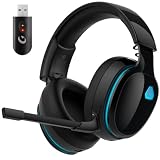
- Top Pick: AOC 2.4GHz Wireless Gaming Headset for PS5, PS4, PC, Switch, 45Hr, Black | Bluetooth 6.0 Gaming Headphones with Noise Canceling Mic, 7.1 Virtual Surround, Great for Fortnite & Call of Duty/FPS Gamers
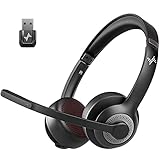
- Best Value: PrancyBt Wireless Headset with Noise Cancelling Microphone, Bluetooth Headset with Mic for Work, Wireless Headphones with Mute & USB Dongle for Work from Home/PC/Computer/Call Center
- Premium Choice: Bluetooth Headset with Microphone, Noise Cancelling Wireless Headset with Mic for Work, Bluetooth 5.3 Dual Connection, 60H Battery, Mute Button, Bluetooth Headphones with Mic for PC/Laptop/Zoom/Teams
For most gaming, a wired headset still gives the lowest delay, no battery to manage, and the best value for sound quality, while a modern wireless headset with a 2.4 GHz USB dongle is close enough in latency that the freedom from a cable makes it the better pick for many players. Standard Bluetooth is the weakest option for competitive play, mainly because of its higher delay.
As an Amazon Associate we earn from qualifying purchases at no extra cost to you.


The two sides, briefly
Wired headsets connect with a 3.5 mm analog plug, a USB cable, or a combination. Audio travels over copper, so there is no radio link, no pairing, and no battery. USB versions often include a built-in sound card with a microphone and software equalizer.
Wireless headsets use one of two radio methods. The first is a proprietary 2.4 GHz link through a USB dongle, which is designed for low delay and is the standard in gaming-focused models. The second is Bluetooth, which connects to phones, tablets, laptops, and consoles without a dongle but with more delay and, in classic profiles, lower voice quality. Many premium headsets offer both, switching between dongle mode for the PC and Bluetooth for a phone.
Key differences at a glance
| Factor | Wired | Wireless (2.4 GHz dongle) | Wireless (Bluetooth) |
|---|---|---|---|
| Latency | Effectively none | Low, commonly cited around 10 to 30 ms | Higher, often cited 100 to 300 ms for classic profiles |
| Battery | Not needed | Rechargeable; makers list roughly 10 to 80 hours or more | Rechargeable; commonly 10 to 40 hours |
| Sound consistency | Stable, no dropouts | Stable in normal range | Can compress audio and drop in busy radio areas |
| Microphone quality | Good, especially detachable boom mics | Good on dedicated gaming models | Often limited by the hands-free profile |
| Weight and comfort | Lighter, no battery | Heavier because of the battery | Varies |
| Compatibility | Nearly universal with 3.5 mm | Needs a USB port for the dongle | Works with phones and laptops directly |
| Cable clutter | Yes | No | No |
| Lifespan | Long, often with replaceable cable | Battery wears after hundreds of cycles | Same battery limits |
The latency figures come from maker and retailer guides, and exact numbers vary by product and conditions, so treat them as ranges rather than guarantees. Several of those sources are sellers, so look at independent reviewer measurements for a specific model.
Latency: how much does it matter?
Wired audio has no wireless delay. A 2.4 GHz dongle adds a small delay that most sources put at tens of milliseconds at most, and some sources argue that delays below roughly 30 ms are not noticeable in practice. Bluetooth is a different story: with classic profiles, sources report delays in the hundreds of milliseconds, and low-latency codecs or newer Bluetooth LE Audio can narrow that gap but still generally trail dongles. In a fast shooter, hearing a footstep a fraction of a second late can matter, but for most players, game sound is only one of several cues. In story games, strategy, and single-player titles, the difference is rarely important.
Sound quality
Sound quality depends on drivers, tuning, and the audio chip, not on whether a cable exists. A wired headset with a good driver can outperform a wireless model at the same level of build quality, because the wireless one spends part of its budget on the battery and radio. Reviewers often note that wireless headsets have caught up, and many deliver clear, balanced audio with surround or spatial features. With Bluetooth, audio compression and the narrower microphone profile in voice chat can lower quality, which is why gaming headsets rely on their own dongles.
Battery and daily use
A wireless headset adds one more thing to charge. Gaming models often last a full day or several days; makers list figures from about 10 to well over 80 hours, depending on the model, volume, and lighting. A wireless headset that can be used while charging with a cable avoids interrupted sessions. Lithium batteries lose capacity over time, and some headsets have batteries that are difficult to replace, so a wired model can outlast a wireless one in the long run.
Common myths
- “All wireless headsets lag.” Dongle-based models are designed for low delay. The claim is largely true only for classic Bluetooth.
- “Wired always sounds better.” The audio chip and tuning matter more than the connection type.
- “Bluetooth is fine for competitive play.” Most guides advise against it because of delay and microphone limits.
- “Wireless means worse microphones.” Many dedicated wireless gaming headsets have good microphones; it is Bluetooth hands-free mode that is limited.
- “Wireless is always more expensive.” Pricing varies widely, and entry-level models exist on both sides, so compare specific products at the time you buy.
Who should pick which
Competitive gamers
Wired is the safest choice, with a 2.4 GHz dongle model as a close second if you want freedom of movement. Avoid relying on standard Bluetooth for ranked play.
Streamers and creators
A wired USB headset or a headset with a detachable microphone integrates easily with mixers and capture setups. Wireless can work if the dongle is stable, but a dedicated microphone often offers better voice quality than any headset.
Casual and living-room players
Wireless is more convenient if you move around or sit far from the PC or console. A model with both a dongle and Bluetooth lets you switch between game audio and phone calls.
Budget-focused buyers
A wired headset typically gives more sound quality and build per unit of cost, since no money goes to the battery and radio. Wireless models at the low end exist, but compromises may include battery life and microphone quality.
Players with several devices
A dual-mode wireless headset (dongle plus Bluetooth) covers PC, consoles with dongle support, and phones. Check the maker’s compatibility list for your console before buying, because dongle support differs by platform.
Practical recommendation
If you play fast shooters, share a desk with a messy cable path rarely, and want simplicity, choose wired. If you want to get up without unplugging, prefer a 2.4 GHz wireless model with a replaceable or long-lasting battery and a detachable or well-reviewed microphone. Examples of current wireless lines from gaming brands such as Turtle Beach, Logitech G, SteelSeries, and Razer include dongle and Bluetooth variants, though specifics change by model year, so read the maker’s specification page. Whichever you choose, comfort matters most: clamp force, weight, and ear-cup size decide how it feels after hours of play.
Frequently Asked Questions
Is wired or wireless better for competitive gaming?
Wired has the lowest possible delay and no battery risk, so it is the traditional pick for competitive play. A 2.4 GHz wireless headset is close, and many players cannot tell the difference. Bluetooth is generally not advised for competitive use.
Do wireless headsets have noticeable lag?
Dongle-based models usually do not, since their delay is small. Classic Bluetooth is more likely to be noticeable, especially in video or fast games. Newer Bluetooth features can reduce delay but vary by headset and device.
How long do wireless gaming headset batteries last?
Makers list a wide range, from roughly 10 hours to well over 80 hours depending on the model and settings. Over years, rechargeable batteries lose capacity, so real-life endurance falls with age.
Can I use a wireless headset while it charges?
Many models support this with a USB cable, which turns them into wired headsets for that time. The maker’s specification page will say whether audio works during charging.
Is Bluetooth good enough for PC gaming?
For casual play, music, and calls it can be fine. For fast games it adds delay, and in voice chat the headset may switch to a lower-quality profile. A dongle is the better route for gaming.
Which lasts longer, wired or wireless?
Wired headsets often last longer, because they have no battery and many have replaceable cables. A well-built wireless headset can last for years too, but the battery is the usual wear point.




Write Your Review
No reviews yet. Be the first to share your experience!