
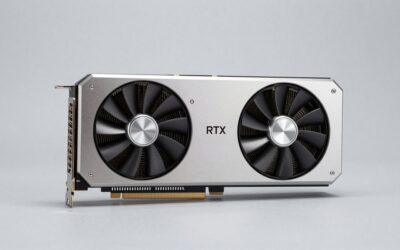
The RTX 2060 launched at a $349 MSRP in January 2019. That is the number to anchor on, and it is the only price this article will quote for the card. What a 2060 costs today depends on whether you find it new old stock, used, or inside a prebuilt PC, and those listings change constantly. So the useful question is not what the sticker said seven years ago but how to judge whether a price you see now makes sense against it.
A launch price tells you where a card was positioned in its own lineup, and comparing it with the launch prices of cards that came after tells you what the money has done since. It is also a handy ceiling for used purchases: a card that has aged out of high settings has no business costing as much as it did when it was new. Below is the context around that $349 figure and a way to use it.
Quick answer: Our top pick in 2026 is the RTX 2060 — our #1 rated choice. See the full ranked comparison, alternatives and buying advice below.
The $349 Number in Context
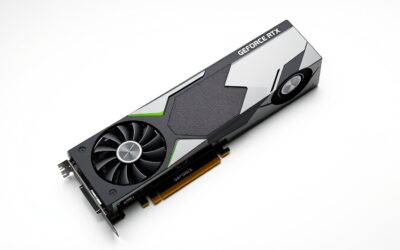
When the 2060 arrived it sat below the 2070, which launched at $499, and well below the 2080 Ti at $999. It was the entry point into the Turing generation, with 6GB of memory, a 160W rating, and support for both ray tracing and DLSS upscaling. At launch it was positioned as a 1080p card with an eye toward 1440p, and review coverage from outlets such as TechPowerUp and Tom’s Hardware framed it that way.
| Card | Launch MSRP | VRAM | Board power |
|---|---|---|---|
| RTX 2060 | $349 | 6GB | 160W |
| RTX 2070 | $499 | 8GB | 175W |
| RTX 2080 Ti | $999 | 11GB | 250W |
| GTX 1070 | $379 | 8GB | 150W |
| RTX 3060 | $329 | 12GB | 170W |
| RTX 4060 | $299 | 8GB | 115W |
| RTX 5060 | $299 | 8GB | 145W |
Read down the Launch MSRP column and the trend is clear: entry-level cards have been launching at or below $349 for years. The 3060 arrived at $329 with twice the memory of the 2060, and both the 4060 and 5060 launched at $299. In nominal dollars the 2060 cost more than the three newest entry cards. Inflation narrows that gap, so treat the comparison as a rough guide, not an exact one.
What That Launch Price Bought
A ray tracing entry ticket
The 2060 was one of the cheapest ways to get RT cores and Tensor cores. At the time, that was the selling point. In practice, ray tracing on this card has always been modest, and DLSS upscaling is the feature that has kept it useful.
Limited memory from day one
The GTX 1070 launched at $379 with 8GB of memory, so the 2060 gave buyers less VRAM for $30 less. That trade-off looked acceptable in 2019 and looks costly now. If you see a 1070 and a 2060 priced the same, the 1070’s memory may matter more than the 2060’s newer features for games that need texture space, while the 2060 is the better choice for DLSS support.
A modest power draw
At 160W it runs on power supplies that would struggle with a 3070-class card. That remains a real advantage for upgrading older office-style desktops, which is a legitimate reason to buy one.
Is the 2060 Worth Buying at a Price Near Launch?
No. Any listing that comes close to $349 should be treated as overpriced, because newer cards with more capability launched for less. A new RTX 5060 at a $299 MSRP brings current features and a warranty. A used card should cost far less than a new card of the same tier, since the buyer takes on the risk of wear and has no warranty to fall back on.
Where the 2060 can be worth buying is at a clear discount to the launch price, for a specific job: a secondary PC, a media or light-gaming build, or a repair of a dead GPU in an existing machine. Compare the listing price to the cards in the table above. If the 2060 costs more than a used 3060 or close to the price of a new 5060, you are paying for something you can get better elsewhere.
Who Might Still Buy It, and Who Shouldn’t
- Buy if you need a plug-in replacement for a failed card in a system with a modest power supply, and the price is a fraction of the $349 launch figure.
- Buy if your games are light and your monitor is 1080p.
- Skip if you play recent releases at higher settings, since 6GB is the limiting factor.
- Skip if the price is anywhere near the original MSRP.
- Skip if you want frame generation, which needs an RTX 40 or newer card.
Checking a Price: A Short Routine
Step one: set the ceiling
Treat $349 as an absolute maximum. Anything near it is a poor deal in 2026.
Step two: compare to the entry cards
Look at the RTX 5060 and RTX 4060 listings and the used RTX 3060 12GB. If the 2060 costs about the same as any of them, buy the other card.
Step three: inspect the listing
Check the condition, the return window, and whether the seller shows the actual card. A cheap price on a card that arrives with worn fans or without a return option is not a bargain.
The current price for any card changes often, so confirm it on the listing rather than relying on an article, including this one.
FAQ
What was the RTX 2060’s launch price?
$349 MSRP, released in January 2019 with 6GB of memory and a 160W board power rating.
Is the 2060 cheaper than newer cards today?
Not at its launch price. The RTX 3060 12GB launched at $329 and the RTX 5060 and 4060 at $299. A used 2060 can be cheaper, depending on the listing.
Should I buy a 2060 or a 3050?
The RTX 3050 8GB launched at $249 and offers more memory with a 130W rating. The raw speed is comparable, so the memory and lower power often tip it in the 3050’s favor. Check the spec page of each listing.
Are there different versions of the 2060?
Yes, there have been Super and later memory variants with different launch prices. This guide covers the original 6GB card at $349. Check the card’s spec page to confirm which version you are looking at.
Ready to decide? Our #1 pick for 2026 is the RTX 2060.
Live price & availability on Amazon.

Write Your Review
No reviews yet. Be the first to share your experience!