
- Top Pick: Amazon Fire HD 10 tablet, built for relaxation, 10.1" vibrant Full HD screen, octa-core processor, 4 GB RAM, 32 GB, Black
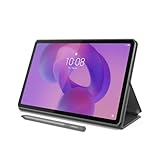
- Best Value: Lenovo Idea Tab – College Tablet – 11″ 2.5K IPS Touchscreen Display – 90Hz – MediaTek Dimensity 6300-4 GB Memory – 128 GB Storage – Integrated Arm Mali-G57 MC2 – Tab Pen and Folio Case
- Premium Choice: Lenovo Tab One – Lightweight Tablet – up to 12.5 Hours of YouTube Streaming – 8.7" HD Display – 4 GB Memory – 64 GB Storage – MediaTek Helio G85 – Includes Folio Case
The best iPad alternatives in 2026 are the Samsung Galaxy Tab S10+ for a premium Android drawing tablet, OnePlus Pad 2 for value and performance, Microsoft Surface Pro 11 for Windows software, and Lenovo Tab P12 for affordable note-taking and media.
- Best iPad alternatives at a glance
- 1. Samsung Galaxy Tab S10+: the closest all-round Android rival
- 2. Samsung Galaxy Tab S10 Ultra: the best large drawing canvas
- 3. OnePlus Pad 2: the performance-value winner
- 4. Lenovo Tab Extreme: a cinematic Android workstation
- 5. Microsoft Surface Pro 11: the Windows tablet alternative
- 6. Lenovo Tab P12: the sensible budget pick
- 7. Xiaomi Pad 7 Pro: sharp, fast, and compact
- 8. Huawei MatePad Pro 13.2: an OLED-first choice
- What the numbers mean for drawing and notes
- Decision matrix: which iPad alternative should you buy?
- Bottom line
As an Amazon Associate we earn from qualifying purchases at no extra cost to you.


Best iPad alternatives at a glance
| Tablet | Screen | RAM options | Stylus | Typical price range | Best for |
|---|---|---|---|---|---|
| Samsung Galaxy Tab S10+ | 12.4-inch AMOLED, 2800 × 1752, 120Hz | 12GB | S Pen included | $800–$1,100 | Drawing and premium Android use |
| Samsung Galaxy Tab S10 Ultra | 14.6-inch AMOLED, 2960 × 1848, 120Hz | 12GB or 16GB | S Pen included | $1,000–$1,400 | Large-canvas drawing and multitasking |
| OnePlus Pad 2 | 12.1-inch LCD, 2120 × 3000, 144Hz | 8GB or 12GB | Stylo 2, usually separate | $400–$600 | Performance per dollar |
| Lenovo Tab Extreme | 14.5-inch OLED, 3000 × 1876, 120Hz | 12GB | Precision Pen 3 support | $700–$1,000 | Media and desktop-style multitasking |
| Microsoft Surface Pro 11 | 13-inch LCD or OLED, up to 2880 × 1920, 120Hz | 16GB or 32GB | Surface Slim Pen, separate | $1,000–$2,000 before accessories | Windows apps and productivity |
| Lenovo Tab P12 | 12.7-inch LCD, 2944 × 1840, 60Hz | 4GB or 8GB | Tab Pen Plus support | $300–$500 | Budget notes and streaming |
| Xiaomi Pad 7 Pro | 11.2-inch LCD, 3200 × 2136, 144Hz | 8GB, 12GB, or 16GB | Focus Pen support | $400–$650 where available | Sharp display and fast Android performance |
| Huawei MatePad Pro 13.2 | 13.2-inch OLED, 2880 × 1920, 144Hz | 12GB or 16GB | M-Pencil support | $800–$1,200 | OLED drawing and media |
1. Samsung Galaxy Tab S10+: the closest all-round Android rival
The Galaxy Tab S10+ is the safest choice for someone who wants an iPad-like premium tablet without leaving Android. Its 12.4-inch AMOLED panel provides deep blacks, strong contrast, and a smooth 120Hz refresh rate. That combination is especially useful for films and games, while the 16:10 aspect ratio gives video less unused space than the squarer screens on many iPads.
Samsung includes the S Pen, removing a common iPad cost. Pen tracking feels responsive for handwriting, sketching, and annotating PDFs, although professional artists may still prefer the wider app ecosystem and highly consistent brush behavior available on iPadOS. The S10+ also benefits from Samsung Notes, multi-window support, DeX desktop mode, and microSD expansion.
Choose it if:
- You want an AMOLED screen and an included stylus.
- You take handwritten notes but also watch a lot of video.
- You need Android multitasking and expandable storage.
2. Samsung Galaxy Tab S10 Ultra: the best large drawing canvas
The Tab S10 Ultra is effectively a portable sketching desk. Its 14.6-inch AMOLED display gives artists more room for a reference image, tool panels, and a canvas at the same time. The S Pen is included, and the 120Hz refresh rate reduces the perceived gap between pen movement and the ink appearing on screen.
The trade-off is physical size. It is excellent on a desk or supported by a keyboard cover, but less comfortable to hold for long periods. Its wide body also makes it less convenient for reading portrait documents. Choose the Ultra over the S10+ only if the extra canvas is worth carrying a larger device; the processor and basic Android experience are broadly similar.
3. OnePlus Pad 2: the performance-value winner
The OnePlus Pad 2 delivers unusually strong performance for its price, using Qualcomm’s Snapdragon 8 Gen 3 platform. Its 12.1-inch LCD has a sharp 3000 × 2120-class resolution and a 144Hz refresh rate. Text is crisp, scrolling is fluid, and games benefit from the high refresh ceiling.
The display cannot match the black levels of Samsung’s AMOLED tablets, and the Stylo 2 pen is generally an additional purchase. That makes the complete drawing setup less inexpensive than the tablet price suggests. Still, for note-taking, browsing, games, and streaming, it is one of the most compelling alternatives to the standard iPad Air class.
Best use case
Buy the OnePlus Pad 2 when processor speed matters more than OLED contrast. The 12GB version is preferable if you frequently switch between a browser, notes, messaging, and large creative applications.
4. Lenovo Tab Extreme: a cinematic Android workstation
The Lenovo Tab Extreme combines a very large 14.5-inch OLED screen with a 120Hz refresh rate, making it particularly attractive for movies, split-screen work, and digital art. Its 16:10-like proportions are comfortable for video, while the large surface leaves enough space for two apps side by side.
It supports Lenovo’s Precision Pen 3 and can work with keyboard accessories, but its software polish and long-term update expectations may not match Samsung’s. It is also an older platform than the newest premium Android tablets, so its appeal depends heavily on discounted pricing.
This is a media-first choice: pick it when screen size and OLED quality matter more than having the newest processor or the smallest body.
5. Microsoft Surface Pro 11: the Windows tablet alternative
The Surface Pro 11 is the right answer if “tablet” must also mean Windows desktop computer. It runs full versions of applications such as Photoshop, Clip Studio Paint, desktop browsers, and business software. The OLED configuration offers excellent contrast, while the LCD version is usually the more economical choice. Both can run at up to 120Hz.
Its Surface Slim Pen is capable for handwriting and drawing, but it is normally an extra cost. Windows also has more variable touch and pen behavior than iPadOS: some applications are excellent, while others still feel designed for a mouse. The Snapdragon X-based models can provide long battery life and quiet operation, but software compatibility should be checked if your workflow depends on older Windows plug-ins, drivers, or specialist utilities.
Choose it instead of an iPad when:
- You need desktop file management or Windows-only applications.
- You want one device for keyboard work and occasional tablet use.
- You can accept a separate pen and keyboard budget.
6. Lenovo Tab P12: the sensible budget pick
The Lenovo Tab P12 is a practical choice for students and families. Its 12.7-inch 3K LCD is sharp enough for documents and video, and the optional Tab Pen Plus makes it suitable for handwritten notes and basic diagrams. The large screen is more comfortable for split-screen reading than a small budget tablet.
Its 60Hz refresh rate makes pen strokes and scrolling look less immediate than on 90Hz, 120Hz, or 144Hz competitors. The 4GB model can also feel constrained when several apps remain open. For note-taking, select the 8GB version and leave sufficient free storage; RAM affects app retention, while free storage helps prevent slowdowns when updates and cached files accumulate.
7. Xiaomi Pad 7 Pro: sharp, fast, and compact
The Xiaomi Pad 7 Pro stands out with an unusually high-resolution 11.2-inch display and a 144Hz refresh rate. Its Snapdragon 8s Gen 3 processor is powerful enough for demanding Android games, multitasking, and creative applications. The smaller body is easier to carry than the 12.4-inch and 14-inch alternatives.
The Focus Pen is aimed at drawing and handwriting, but availability of the tablet, stylus, keyboard, and regional software features varies by market. Check local support before buying, particularly if you need Google services, cellular connectivity, or warranty coverage.
8. Huawei MatePad Pro 13.2: an OLED-first choice
The MatePad Pro 13.2 is appealing for artists and media users who prioritize a large OLED panel, thin construction, and a 144Hz refresh rate. Huawei’s M-Pencil ecosystem supports pressure-sensitive drawing and handwriting, and the 13.2-inch display offers a generous working area without the bulk of a 14.6-inch tablet.
The critical limitation is software: Google Mobile Services and some Android applications may not be available in the usual form. That makes it a poor substitute for an iPad if your workflow depends on specific Google, banking, streaming, or professional apps. It is best considered when Huawei’s software ecosystem already meets your needs.
What the numbers mean for drawing and notes
Refresh rate is not the same as stylus latency, but it affects how often the display can show a new pen position. At 60Hz, a frame arrives every 16.7 milliseconds; at 120Hz, every 8.3 milliseconds; at 144Hz, every 6.9 milliseconds. The tablet’s digitizer, processor, operating system, and application add further delay, so a 144Hz screen does not automatically beat a well-optimized 120Hz pen system.
RAM matters most when switching between applications. A simple note-taking session rarely needs 12GB, but a drawing app, browser with many tabs, reference images, and video call can quickly pressure an 8GB device. For a creative workflow, 12GB is a comfortable target; 16GB is useful mainly for heavy multitasking or a Windows setup.
Decision matrix: which iPad alternative should you buy?
| Your priority | Best match | Why |
|---|---|---|
| Best Android drawing setup | Galaxy Tab S10+ | AMOLED, 120Hz, S Pen included, mature note software |
| Maximum drawing area | Galaxy Tab S10 Ultra | 14.6-inch AMOLED canvas and included S Pen |
| Fastest affordable Android option | OnePlus Pad 2 | High-end processor and 144Hz display at a lower tablet price |
| Windows applications | Surface Pro 11 | Runs desktop software rather than mobile equivalents |
| Lowest-cost note-taking setup | Lenovo Tab P12 | Large sharp screen and affordable pen support |
| OLED media viewing | Lenovo Tab Extreme | Large OLED panel with a cinema-friendly shape |
| Compact high-resolution display | Xiaomi Pad 7 Pro | Sharp 11.2-inch panel and 144Hz refresh rate |
Bottom line
For most people searching for the best iPad alternatives, the Galaxy Tab S10+ offers the most balanced package because its pen is included and its AMOLED screen is excellent for both drawing and media. Choose the OnePlus Pad 2 when value and speed come first, the Surface Pro 11 when Windows software is essential, and the Lenovo Tab P12 when the budget is tight. Artists who want the largest practical canvas should move up to the Galaxy Tab S10 Ultra.
Ready to decide? Our #1 pick for 2026 is the Samsung Galaxy Tab S10+.
Live price & availability on Amazon.


Write Your Review
No reviews yet. Be the first to share your experience!