
nvidia tesla is a name that confuses many people, since it has nothing to do with the carmaker and everything to do with high-performance computing. For years, Tesla was Nvidia’s brand for its data-center and compute graphics cards, powering scientific research and early artificial intelligence rather than gaming. This article explains what the Tesla line actually was, why Nvidia eventually retired the name, the notable cards that carried it, and whether a legacy Tesla GPU is worth using today, so the term finally makes sense.
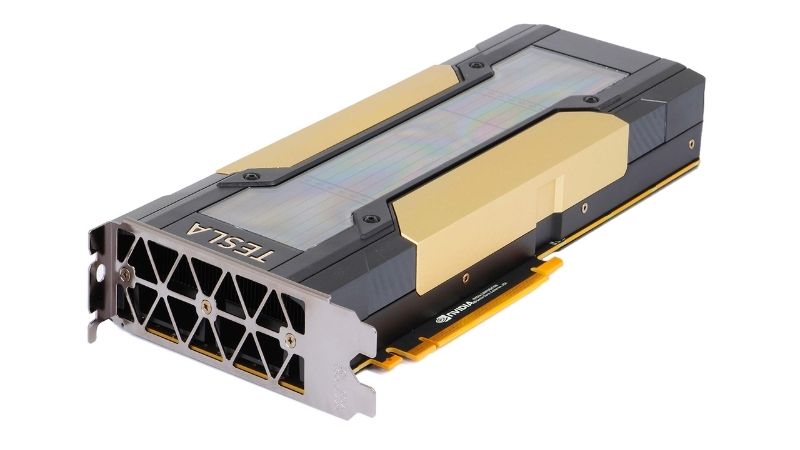
What Nvidia Tesla Actually Was
The Tesla name sat apart from Nvidia’s familiar gaming cards, serving a very different audience. Understanding its purpose, its naming, and why it was retired clears up most of the confusion around the term. This section lays out the essentials.
The data-center and compute brand
Nvidia Tesla was the company’s brand for graphics cards built for computation rather than display, used in servers for scientific simulation, data analysis, and machine learning. These cards accelerated heavy mathematical workloads far beyond what a processor alone could manage.
Unlike the GeForce line aimed at gamers, Tesla cards were designed to sit in data centers and workstations doing serious number-crunching. They were the engines behind much of the early growth in high-performance and artificial intelligence computing, long before AI became a household topic.
In short, Tesla was Nvidia’s professional compute brand, a world away from gaming graphics. It quietly powered much of the heavy computing behind modern science and technology for well over a decade.
Named after Nikola Tesla
The brand took its name from Nikola Tesla, the pioneering inventor and engineer, reflecting the scientific ambitions of the product line. The choice signaled that these were tools for research and engineering rather than entertainment.
This is the source of endless confusion, since the electric-car company shares the same namesake but is entirely unrelated. The two simply drew on the same historical figure for their names.
Knowing the origin makes the branding logical: it honored a scientist, fitting cards built for scientific work. Once you separate the inventor from the carmaker, the name stops being confusing at all.
Why Nvidia retired the Tesla name
Nvidia eventually stopped using the Tesla brand, in large part to avoid exactly the confusion with the well-known carmaker that the shared name caused. As the electric-car company grew globally famous, the overlap became a marketing liability.
After the change, Nvidia’s data-center cards were simply grouped as data-center GPUs rather than carrying the Tesla label. The products and their purpose continued, only under a clearer naming scheme.
So the Tesla name now refers to a specific era of Nvidia’s compute cards rather than any current product. Anyone shopping today will find the compute cards listed under a different, clearer name instead.
Notable Tesla GPUs and What They Did
The Tesla line spanned several generations of increasingly powerful compute cards. Looking at their focus, their examples, and how they differed from gaming cards shows why they mattered. This section covers the highlights.
Built for compute, not gaming
Tesla cards were engineered to maximize computational throughput for tasks like simulations, modeling, and training early neural networks. Their strengths lay in raw parallel math rather than rendering games.
Many carried large memory pools and emphasized reliability for continuous data-center operation, priorities quite different from a gaming card’s. Some versions did not even include standard display outputs, since they were never meant to drive a monitor.
This compute-first design is the defining trait that separated Tesla from consumer graphics cards. Everything about the cards, from their cooling to their memory, was shaped by that single priority.
Examples across the generations
Over the years, the Tesla family included a series of cards that became workhorses of research computing, culminating in accelerators that powered the early artificial intelligence wave. Each generation brought major gains in compute performance and memory, steadily raising the ceiling on what researchers could tackle.
These cards found homes in supercomputers, university labs, and corporate research clusters around the world. They were central to breakthroughs in fields from weather modeling and drug discovery to the deep learning that underpins modern artificial intelligence.
The line’s evolution mirrored the rise of accelerated computing as a whole across science and industry. As workloads grew, each new Tesla generation stepped up to meet the rising demand for parallel power.
How they differed from GeForce
Compared with GeForce gaming cards, Tesla GPUs prioritized sustained compute, memory capacity, and reliability over gaming features and display output. They typically used passive cooling designed for server airflow rather than the fans of a desktop card.
They also lacked the gaming-focused drivers and features that define a GeForce card, since their job was computation, not frame rates. This made them powerful for their purpose but unsuitable as a simple gaming upgrade.
The contrast underlines that Tesla and GeForce solved fundamentally different problems. Confusing one for the other is the root of many mismatched expectations about what a Tesla card can do.
Can You Use a Tesla GPU Today?
Because legacy Tesla cards turn up cheaply on the used market, some enthusiasts wonder about using one. This section weighs the appeal, the practical hurdles, and who such a card actually suits. It sets realistic expectations.
The used-market appeal
Older Tesla cards can appear inexpensive second-hand, tempting hobbyists who want compute power for experiments or home labs. For certain parallel workloads, an old data-center card can offer a lot of capability for little money.
This appeal is strongest for tinkerers exploring machine learning or scientific computing on a budget. The idea of data-center hardware at a bargain price is understandably attractive, especially to students and hobbyists experimenting at home.
The catch is that the low sticker price hides several practical challenges.
The practical hurdles
Many Tesla cards use passive cooling that relies on strong server airflow, so they overheat in a normal desktop without added fans and custom cooling. Setting one up is far from plug-and-play.
Some also lack display outputs entirely, requiring a separate card just to see a screen, and their drivers and power needs suit servers rather than home PCs. Aging hardware adds reliability risks on top.
These hurdles mean a cheap Tesla card can cost far more time and effort than expected to run. The upfront saving can quickly disappear once you account for cooling, extra parts, and setup time.
Who it suits and better alternatives
A legacy Tesla card can suit a determined hobbyist with the know-how to handle server-style cooling and setup for specific compute experiments. For that narrow audience, it can be a rewarding project that teaches a great deal about how server hardware works.
For nearly everyone else, a modern GPU offers far better efficiency, driver support, and ease of use, whether for compute or gaming. Cloud computing services also provide access to powerful hardware without owning any, which suits many people better than maintaining aging equipment.
Matching the tool to your skills and needs is the key, and for most people a modern option is the wiser path. Only those who enjoy the technical challenge itself tend to find a legacy Tesla card rewarding.
Nvidia Tesla Versus Modern Data Center GPUs
Since the Tesla name is retired, it helps to see how today’s data-center cards relate to that legacy. Comparing the naming, the technology, and what it means for buyers puts the old brand in context. This section bridges past and present.
What replaced the Tesla name
After retiring the Tesla brand, Nvidia simply grouped its compute cards as data-center GPUs, continuing the same mission under a clearer label. The products evolved rather than disappeared.
Today’s data-center accelerators are the direct descendants of the Tesla line, now powering the artificial intelligence boom at a vastly larger scale. The lineage is unbroken even though the name changed.
So a modern data-center GPU is, in effect, the Tesla line’s successor, carrying the same mission into the age of large-scale artificial intelligence.
How modern cards differ
Compared with legacy Tesla cards, current data-center GPUs offer enormously greater performance, far more memory, and modern efficiency and software support. The gap between generations is immense.
They are also built for today’s artificial intelligence workloads, which dwarf the tasks the earliest Tesla cards handled. Each generation has multiplied the compute available for research and AI.
This rapid progress is why even a capable old Tesla card feels modest today, having been outpaced many times over by newer accelerators.
What this means for buyers
For anyone needing real compute power now, a modern card or a cloud service based on current hardware vastly outclasses any legacy Tesla option. The old cards are of interest mainly to hobbyists and collectors.
Understanding that the Tesla name marks an earlier era helps set expectations when one appears for sale. It is history rather than a current recommendation.
For practical needs, looking to current data-center or consumer options is the sensible path, leaving the Tesla name as an interesting piece of computing history.
See More:
The Bottom Line on Nvidia Tesla
The nvidia tesla name refers to the company’s former brand of data-center and compute GPUs, named after Nikola Tesla and built for scientific and artificial intelligence workloads rather than gaming. Nvidia retired the name largely to avoid confusion with the famous carmaker, and its data-center cards now simply carry a clearer label. Legacy Tesla cards still appear cheaply used, but their server-style cooling, missing display outputs, and specialized needs make them awkward for a typical PC, so they suit only knowledgeable hobbyists. For most people, a modern GPU or a cloud service is the more practical way to get the performance they need.
Frequently Asked Questions
What was the Nvidia Tesla product line?
Tesla was Nvidia’s data centre compute brand, spanning cards such as the K80, M40, P100, V100 and A100 across Kepler through Ampere generations. These were compute accelerators with no gaming focus, emphasising double precision, ECC memory and later HBM. Nvidia retired the Tesla name to avoid confusion with the car maker.
Can I use a used Tesla card in a desktop PC?
It is possible but awkward. Most Tesla cards have no display outputs, so you need a separate GPU for video. They also use passive heatsinks designed for high-pressure server airflow, meaning you must fit a blower shroud or ducted fan, and many require EPS-style power connectors rather than standard PCIe plugs.
Do Tesla cards still receive driver support?
Older generations have moved to frozen legacy branches. Kepler-based cards like the K80 lost mainstream support years ago and cannot run modern CUDA toolkits, while Pascal and Volta parts remain supported longer. Check the CUDA compute capability of the specific card against the minimum required by the frameworks you plan to use.
Is a cheap used V100 or P100 good value for AI work?
They offer a lot of HBM memory for the money, which helps with larger models, but they lack modern tensor core features, FP8 support and the efficiency of current hardware. Factor in server cooling, power draw of 250W to 300W and shrinking framework support before choosing one over a current consumer card.
What replaced the Tesla line?
Nvidia now names data centre parts directly after their architecture and tier, such as A100, H100, H200 and the Blackwell B200 and GB200 systems. The branding change happened around the Ampere generation. Functionally these are the direct descendants of Tesla, with the same passive cooling and server-first design philosophy.
As an Amazon Associate we earn from qualifying purchases at no extra cost to you.





Write Your Review
No reviews yet. Be the first to share your experience!