
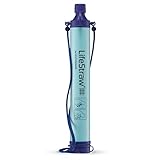
- Top Pick: LifeStraw Personal Water Filter for Hiking, Travel and Emergency, Blue, 1PK | Water Filter for Hiking, Camping, Travel, and Emergency Preparedness, Removes Bacteria and Parasites
- Best Value: Practical Survival Reusable Emergency Water Filter Straws, 5-Pack | Lightweight, High-Capacity, 1800-Gallon Lifespan, No Expiration Date. For Camping, Hiking, Travel, Biking and Survival
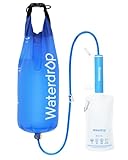
- Premium Choice: Waterdrop Gravity Water Filter Straw, Camping Water Filter, 0.1 Micron | Survival Water Purifier for Hiking, Backpacking & Emergency Preparedness, Multi-Stage Filter with 1.5 Gallon Water Bag
For most hikers and campers, a squeeze-style hollow-fiber filter such as the Sawyer Squeeze is the best all-round outdoor water filter, the Katadyn BeFree or Platypus QuickDraw suit fast and light trips, and a gravity system like the Platypus GravityWorks suits groups at a fixed camp. Which one fits depends on how long your trips run, how many people share the water, and whether the water you drink is clear or silty. This guide compares those options by stated specs and by budget tier, with no prices quoted.
- Outdoor Water Filter Picks at a Glance
- Filter or Purifier: What Your Water Source Decides
- Sawyer Squeeze: The Value Benchmark
- Katadyn BeFree: Light and Quick for Solo Trips
- Platypus QuickDraw: Speed With a Standard Thread
- Platypus GravityWorks: Water for the Whole Camp
- Budget Tiers Without Dollar Figures
- Pick X If You Need This
- Alternatives Worth Considering
- Common Mistakes to Avoid
- Frequently Asked Questions
As an Amazon Associate we earn from qualifying purchases at no extra cost to you.


Outdoor Water Filter Picks at a Glance
| Model | Type | Best for | Key stated points | Main limit |
|---|---|---|---|---|
| Sawyer Squeeze | Squeeze / inline hollow-fiber | Long trips, thru-hiking, budget to mid-range buyers | 0.1 micron hollow-fiber membrane, backflushable, threads onto common bottles, about 3 oz | Does not remove viruses; must not be allowed to freeze |
| Katadyn BeFree | Collapsible bottle with filter | Solo ultralight trips, trail running | Reviewers report about 2.3 oz and quick flow when clean | Shorter rated life; wide-mouth interface limits bottle options |
| Platypus QuickDraw | Squeeze / inline | Hikers who want speed and low weight | Reviewers report fast flow and threads that fit many bottles and bladders | Filter life lower than the Sawyer; freezing damages it |
| Platypus GravityWorks | Gravity bag system | Groups, base camps, car camping | Fills a dirty bag, filters by gravity into a clean bag | Heavier and bulkier than squeeze filters |
| Virus-capable purifiers (for example Grayl GeoPress, MSR Guardian) | Press or pump purifier | Travel abroad, areas with sewage or heavy livestock use | Makers list protection against viruses as well as bacteria and protozoa | Heavier or costlier than basic filters |
Filter or Purifier: What Your Water Source Decides
The first choice is whether you need a filter or a purifier. Most filters sold for backpacking use a membrane with pores of roughly 0.1 to 0.2 microns. That size blocks bacteria such as E. coli and protozoa such as Giardia and Cryptosporidium, which are the main concerns in North American backcountry streams and lakes. Viruses are far smaller than those pores, so a basic filter does not remove them.
The Sawyer Squeeze is a good example. Reviewers at outlets such as CleverHiker and OutdoorGearLab describe it as a hollow-fiber filter that handles bacteria and protozoa but not viruses. If you travel in regions where human sewage can reach water sources, or you camp near heavy agricultural use, a purifier or a chemical treatment step is the safer path. Makers of purifiers state which pathogens their devices are designed to remove, so read the product documentation and match it to where you will drink.
No filter makes every water source safe. Water contaminated with chemicals, fuel, mine runoff or heavy metals is not made safe by a pathogen filter. In those cases, choose another source or carry water in.
Sawyer Squeeze: The Value Benchmark
Most 2026 roundups name the Sawyer Squeeze the best overall backpacking filter. The maker lists a 0.1 micron hollow-fiber membrane, and reviewers describe a weight of about 3 oz. It is a threaded filter, so you can screw it onto compatible disposable bottles, use it inline with a hydration reservoir, or fill a pouch and squeeze water through it.
The main reasons reviewers favor it are the long track record on long-distance trails and the fact that there is no replacement cartridge to buy in the normal sense. You maintain it by backflushing, which means pushing clean water backward through the filter to clear trapped particles and restore flow. CleverHiker calls it the benchmark for long-term value.
The limits are worth knowing. Flow slows as the membrane clogs, so you need to carry the backflush syringe and use it regularly. The filter should be kept from freezing, because ice crystals can damage the hollow fibers in ways you cannot see. Sleeping with the filter inside your sleeping bag in cold weather is a common habit among cold-season hikers. Sawyer states in its guidance that a filter that may have frozen should be replaced.
Katadyn BeFree: Light and Quick for Solo Trips
The Katadyn BeFree pairs a hollow-fiber filter with a collapsible flask. Reviewers describe it as one of the lightest and fastest options for solo trips, since you scoop water into the flask and drink through the filter with no squeezing a separate pouch. It rolls up small when empty, which is why trail runners like it.
The trade-offs reported by reviewers are durability and filter life. The maker rates the cartridge for a much smaller volume than the Sawyer, so heavy users go through filters sooner. OutdoorGearLab scored the BeFree lower on durability than the Sawyer, although that test is not recent. The standard flask also has a wide mouth, so it does not thread onto every common bottle. Katadyn sells variants, including an activated-carbon version, and these can use different thread interfaces, so match the model to your bottle before relying on it.
Pick the BeFree if your trips are short or medium, you drink mostly clear water, and you value low weight and speed over longevity.
Platypus QuickDraw: Speed With a Standard Thread
Treeline Review names the Platypus QuickDraw as its top pick for 2026 and says it only just edged out the Sawyer Squeeze. Reviewers report a fast flow rate and a thread that fits many bottles and bladders. It is a squeeze or inline filter in the same family as the Sawyer, with a different membrane design and a flow-focused reputation.
Because it is newer to long-distance use than the Sawyer, its long-term record is shorter. Reviewers list a lower rated life than the Sawyer, so it sits between the BeFree and Sawyer on longevity. As with the other hollow-fiber filters, avoid freezing it and follow the maker instructions for cleaning.
Platypus GravityWorks: Water for the Whole Camp
The GravityWorks is a different tool. You fill a dirty-water bag, hang it from a branch or a tent pole, and gravity pushes the water through the filter into a clean bag. There is no pumping and little effort, which makes it practical when you are cooking for several people or filling many bottles at once.
Reviewers list the system at roughly 11.5 oz, which is heavy next to a squeeze filter, so it makes more sense for groups, family camping or basecamp trips than for ultralight solo hiking. TrailKit recommends it for making water for a group at camp. A group of four or more who share one system can split the weight, which closes the gap.
Budget Tiers Without Dollar Figures
- Budget tier: basic squeeze filters, including the Sawyer Squeeze, usually sit here. You get strong value because the filter is designed for years of use with backflushing.
- Mid-range tier: collapsible-flask designs such as the BeFree and speed-focused filters such as the QuickDraw usually sit here, along with gravity systems for groups.
- Premium tier: press and pump purifiers with virus protection sit here, because they involve heavier hardware and more complex construction.
A cheaper filter with a long life can cost less over several seasons than a mid-range filter that needs replacing sooner, so think about how many outings you plan each year.
Pick X If You Need This
| Pick this | If you want | Why |
|---|---|---|
| Sawyer Squeeze | One filter for years of trips and the best long-term value | Backflushable hollow-fiber design with a long track record |
| Katadyn BeFree | Lowest weight and a quick drink from clear streams | Collapsible flask and fast flow when clean |
| Platypus QuickDraw | Fast flow with a standard thread for bottles and bladders | Reviewers report speed and wide bottle compatibility |
| Platypus GravityWorks | Easy water for a group at camp | Gravity filtering with no pumping |
| A virus-capable purifier | Safer treatment abroad or near sewage and livestock | Makers list virus protection in addition to bacteria and protozoa |
Alternatives Worth Considering
Chemical treatment. Tablets and drops are very light and are often carried as a backup. Makers list contact times, which are longer for some pathogens and for cold water, so they suit emergencies better than daily use.
Boiling. Bringing water to a rolling boil is the traditional method and covers all pathogen types. It costs fuel and time, and it does not clear silt.
Press-style purifiers. Bottles with a built-in press filter, such as the Grayl GeoPress, are listed by the maker as purifiers. They are bulkier than a squeeze filter, but they are simple to use and can suit travel.
Common Mistakes to Avoid
- Letting a hollow-fiber filter freeze. Damage can be invisible, so replace a filter that may have frozen.
- Skipping backflushing. Flow slows over time, and many people blame the filter when a cleaning would fix it.
- Using a filter in place of a purifier abroad. A standard filter does not remove viruses.
- Forgetting a pre-filter in silty water. Let sediment settle or strain the water through a cloth before filtering, which extends filter life.
- Mixing up the clean and dirty sides. Keep the clean bottle or bag separate, and do not touch the clean outlet with dirty hands.
- Ignoring bottle compatibility. Check the thread type before buying, because not every model fits every bottle.
Frequently Asked Questions
What is the best outdoor water filter for most people?
Most 2026 roundups point to the Sawyer Squeeze for its value, light weight and long track record. If your priority is a very light carry on short trips, the Katadyn BeFree is a common alternative. Match the filter to the length of your trips rather than chasing a single winner.
Do outdoor water filters remove viruses?
Standard hollow-fiber filters with roughly 0.1 micron pores are designed for bacteria and protozoa, not viruses. If viruses are a concern in your area, use a purifier whose maker lists virus removal, or add a chemical or boiling step. When in doubt about local conditions, ask a ranger or local health authority.
How often should I backflush a squeeze filter?
Backflush when you notice flow slowing and after trips, following the maker instructions. Using clean water and the supplied syringe or adapter is the usual method. Regular cleaning keeps flow close to normal and extends the usable life of the membrane.
Can I use a water filter in freezing weather?
Hollow-fiber filters can be damaged if the water inside them freezes, and the damage may not be visible. In cold weather, many hikers keep the filter in a pocket or sleeping bag overnight. If a filter may have frozen, the maker guidance is to replace it.
Is a gravity filter better than a squeeze filter?
A gravity system is easier when you need a lot of water for several people, because there is no squeezing or pumping. A squeeze filter is lighter and more flexible for solo trips. The better option is the one that matches your group size and how much weight you want to carry.
Will a filter make any water safe to drink?
No. A pathogen filter does not remove chemicals, fuel, heavy metals or dissolved contaminants. If water looks or smells contaminated, or comes from near mines or industrial sites, choose another source or carry water in.



Write Your Review
No reviews yet. Be the first to share your experience!