
- Top Pick: The AirScent Waterless Diffuser – Cold Air Scent Diffuser Oil Machine | For Homes, Offices, Hotels and Spas – Aromatherapy Diffuser For Aesthetic Scenting – Black – 4.05 Oz – Fragrance Not Included
- Best Value: NoxLumina Waterless Diffuser Pro with 5 Scent Oils, Luxury Hotel-Class Essential Oil Diffuser Aromatherapy Machine with 1500 Sq Ft Cover, 6 Mist, 4.06Oz Diffusers for Home Large Room Hotel SPA – Black
- Premium Choice: InnoGear 400ml Aromatherapy Essential Oil Diffuser 10 Oils Gift Set, Dark | Cool Mist Humidifier, Essential Oils, Ultrasonic, 4 Timers, Run up to 12hrs, Large Room, Home, Automatic Shut-Off, Quiet
For a small to mid-size room such as a bedroom or a gaming den, a quiet ultrasonic or plug-in smart diffuser is usually the best fit, while a waterless nebulizing diffuser suits buyers who want the purest, strongest oil scent in a larger space. The right pick depends on room size, noise tolerance, how much upkeep you accept and whether pets or small children share the space.
As an Amazon Associate we earn from qualifying purchases at no extra cost to you.


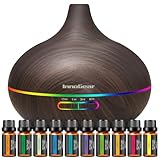
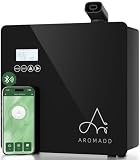
Diffuser types at a glance
| Type | Example makers and lines | Best for | Key trade-offs |
|---|---|---|---|
| Ultrasonic (water and oil) | Vitruvi Stone, many ceramic and wood-look models | Bedrooms, desks, budget to mid-range buyers | Needs refilling and regular cleaning; adds a little humidity; scent is lighter |
| Nebulizing (waterless) | Pure-oil nebulizer sets from several aromatherapy brands | Larger rooms, strong scent from small amounts of oil | Uses more oil; glass parts need cleaning; mid-range to premium |
| Plug-in smart fragrance | Pura 4 and similar app-controlled plug-ins | Living rooms, hallways, set-and-forget users | Proprietary refills; scent range is limited to what the maker sells |
| Reed diffuser | Numerous home-fragrance brands | Bathrooms, small spaces, silent use | No on/off control; slow to build scent |
| Heat-based warmers | Candle and wax warmers | Occasional use, decor | Heat source needs supervision; not suited to unattended rooms |
How to choose a home scent diffuser
Match the diffuser to the room
Makers usually state a coverage figure in square feet or a room-size class. Treat that number as an upper bound for an open room with the door closed. If a product lists coverage for a room only slightly larger than yours, the scent will be noticeable but not heavy. For a typical bedroom or gaming setup, compact ultrasonic units and plug-ins are generally enough. For open-plan living areas, a nebulizer or a plug-in with adjustable intensity gives more headroom.
Noise and light
If the diffuser sits near a desk or bed, noise matters. Ultrasonic units produce a faint hum and sometimes a bubbling sound; nebulizers add a small air-pump tone; plug-ins and reeds are essentially silent. Many ultrasonic models include a night light, which some buyers disable or avoid when they want a dark room for sleep or screen contrast.
Running time and shut-off
Look for a stated runtime per tank and an automatic shut-off when the water runs out. Intermittent modes, where the unit cycles on and off, stretch both water and oil. For electrical products, follow the manual for placement on a stable, water-safe surface and keep cords away from the water reservoir.
Materials and cleaning
Ceramic and glass look good and resist staining, but they can be fragile. Plastic tanks are lighter and cheaper but can retain scent from previous oils. Whatever the material, rinse and wipe the tank regularly according to the maker’s instructions, because residue and standing water are the main reasons a diffuser starts to smell stale.
Oils versus proprietary refills
Ultrasonic and nebulizing models accept essential oils or compatible fragrance oils, which gives freedom of choice. Plug-in smart diffusers such as the Pura 4 use the maker’s own refills, which simplifies use but ties you to one catalog. Always read the maker’s guidance on which oils are compatible, because some thick or resinous oils can clog parts.
Picks by scenario
| Pick this if… | Consider | Why |
|---|---|---|
| You want a bedroom or desk diffuser that looks good | Vitruvi Stone or a comparable ceramic ultrasonic | Design-led, simple controls, uses your own oils |
| You want scent without refilling water | A plug-in smart diffuser such as Pura 4 | App scheduling and intensity levels; no tank to clean |
| You need strong scent in a big room | A waterless nebulizing diffuser | Disperses undiluted oil as fine vapor |
| You want silence and zero electronics | A reed diffuser | No noise, no cord, no tank |
| You are on a tight budget | A basic ultrasonic unit | Lowest entry cost; accept more plastic and fewer features |
Budget tiers
Budget
Entry-level ultrasonic diffusers cover most small-room needs. Expect plastic construction, a modest tank and simple timers. Quality varies widely between listings, so look for a stated automatic shut-off and a clear cleaning instruction in the manual.
Mid-range
This tier adds ceramic or glass bodies, quieter operation, longer tanks, app control on some models and plug-in smart diffusers. For most households it is the sweet spot between design, reliability and running cost.
Premium
Premium diffusers include high-end nebulizers and design-focused ceramic units. You pay for materials, finish and sometimes larger coverage ratings rather than a dramatically different scent.
Safety and household considerations
Essential oils are concentrated and not harmless to everyone. Pets, especially cats, birds and small animals, can react badly to some oils, so ask a veterinarian before diffusing around animals. People with asthma, allergies or sensitivities, pregnant people and parents of infants should speak with a doctor before regular use, and anyone who feels headaches or irritation should stop and ventilate the room. Keep oils and refills out of reach of children, and follow the manufacturer’s manual for electrical safety. Diffusers are for pleasant ambience and are not medical devices.
Common mistakes
- Buying on coverage figures alone and ignoring ventilation, which makes the same unit seem stronger or weaker.
- Running a diffuser continuously all day instead of using intermittent or timer modes.
- Skipping cleaning, which leads to stale odors and, in tanks, mineral buildup.
- Using the wrong oil type for the diffuser design.
- Placing the unit directly on wood, electronics or near a PC, where spills or mist could cause damage. Keep it away from your gaming rig and consoles.
- Choosing a heavily scented product for a small closed room.
Alternatives worth considering
- Air purifier with a fragrance-free filter: if the goal is a fresher room rather than a specific scent, a purifier may serve better than a diffuser.
- Humidifier with a separate aroma tray: some humidifiers have an aroma compartment; follow the maker’s guidance on whether oils are permitted.
- Scented candles or warmers: good for occasional use, but they involve heat or flame and should never be left unattended.
What a gamer’s room needs from a diffuser
Long sessions in a closed room can make the air feel stale, and a diffuser tempts many buyers as a quick fix. The practical priorities are a quiet motor, a dim or switch-off light, a stable base far from the PC and a modest scent intensity that does not fatigue the nose. Heat from a PC and monitors can warm the room, so a diffuser with an intermittent mode helps avoid an overpowering scent as temperatures change through the evening. Ventilating the room between sessions matters more than any product choice.
Frequently Asked Questions
Which type of diffuser is best for a bedroom?
A quiet ultrasonic diffuser with an automatic shut-off and a switch-off light is the common choice for bedrooms. A plug-in smart diffuser is another good option because it has no water tank and runs silently. Pick the one whose controls you will actually use.
Are plug-in diffusers better than ultrasonic ones?
Neither is better in every case. Plug-ins are convenient, silent and low maintenance but rely on the maker’s refills. Ultrasonic units let you choose your own oils and add a little humidity, but need regular cleaning and refilling.
How often should I clean a diffuser?
Follow the manual, but a common routine is to empty and wipe the tank after each use or at least weekly with regular use. Descaling is sometimes needed in hard-water areas. Skipping cleaning is the usual reason a diffuser begins to smell off.
Are diffusers safe around pets?
Some essential oils can harm pets, and cats and birds are often described as particularly sensitive. Ask a veterinarian before using any diffuser around animals, keep the room ventilated and give pets a way to leave the room.
How big a room can one diffuser cover?
Makers list their own coverage figures, which are best treated as maximums under ideal conditions. For open or high-ceiling rooms, choose a model rated for a larger space or use more than one unit.
Can I use any oil in any diffuser?
No. Ultrasonic and nebulizing models have different oil requirements, and thick oils can clog parts. Plug-in smart diffusers use proprietary refills. Check the manual for approved oils and dilution guidance.


Write Your Review
No reviews yet. Be the first to share your experience!