
- Top Pick: 2026 All-New 4 in 1 Tds Meter Digital Water Tester – Accurate and Reliable TDS EC & Temp(°C,°F) Meter – 0-9999ppm – Professional Testing for Drinking Water, RO/DI System, Aquariums etc
- Best Value: Varify TDS Meter Digital Water Tester for Drinking Water Instant 4in1 Test | Extra Batteries Included, Instant Results, Aquarium Safe, Hydroponics Ready, Portable Design, Accurate PPM Readings
- Premium Choice: Digital Water Tester for Drinking Water – TDS Meter +/- 3% Readout Accuracy | Fast Reading Multi Parameter, 0-9999 PPM EC Meter, Water Hardness Test, RO/DI Tap Well Hydrophonics Aquarium Conductivity
For checking a filter or reverse osmosis system, the HM Digital TDS-3 is the budget standard that reviewers say many filter makers use as a reference; the HoneForest 3-in-1 suits buyers who also want temperature and conductivity; and the HM Digital COM-100 or Apera TDS20 suit those who need a waterproof body, better accuracy or a replaceable probe. A TDS meter is not a safety test: it shows total dissolved solids, not whether water is safe to drink.
As an Amazon Associate we earn from qualifying purchases at no extra cost to you.


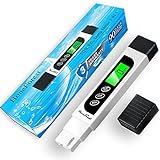
TDS Meters at a Glance
| Model | Reported specs | Best for | Limit |
|---|---|---|---|
| HM Digital TDS-3 | Plus or minus 2 percent, 0 to 9990 ppm | Low-cost filter and RO checks, aquariums | TDS only; not waterproof |
| HM Digital TDS-EZ | Plus or minus 3 percent | Budget RO membrane checks | Lower accuracy |
| HM Digital COM-100 | TDS, conductivity, salinity, temperature; IP67; three conversion factors | Overall pick in some roundups; replaceable probe | Mid-range tier |
| HoneForest 3-in-1 | TDS, EC, temperature; automatic temperature compensation; 3-year warranty | Budget buyers wanting extra readings | Basic build |
| Apera AI213 / TDS20 | Plus or minus 1 percent full scale; IP67 | RO systems and accuracy | Costs more |
| Hanna HI98301 DiST1 | 1 ppm resolution | Compact, low range readings | Narrow use |
| Bluelab Combo Meter | Multi-parameter | Hydroponics and aquaculture | Premium tier |
What a TDS Meter Actually Does
A TDS meter measures electrical conductivity and converts it to parts per million of dissolved solids. It reads dissolved minerals and salts, but it cannot detect bacteria, lead, pesticides or many other contaminants that matter for safety. Its useful jobs are comparing tap water against filtered water, checking whether an RO membrane or filter cartridge is still reducing dissolved solids, and watching water for aquariums, coffee or hydroponics. If you have a health concern about your water, use a certified lab test or contact your water supplier.
How to Choose a Digital Water Tester
Accuracy and range
Basic meters list plus or minus 2 to 3 percent; higher-end units such as the Apera are reported at plus or minus 1 percent of full scale. For household filter checks, the basic range is enough. If you are tuning an aquarium or a hydroponic reservoir, accuracy and a range suited to your readings matter more.
Temperature compensation
Conductivity changes with temperature, so automatic temperature compensation gives steadier readings. The HoneForest lists it, and temperature display helps you spot a cold or hot sample.
Calibration and probe
Cheaper meters often calibrate with a small screw; better ones offer button calibration and a replaceable electrode, which extends their life. Calibrate with the solution the maker specifies.
Waterproofing
An IP67 body, listed for the COM-100 and Apera, survives drops into water and wet kitchens. Pen-style budget meters typically should only have the probe end submerged.
Conversion factor
Meters convert conductivity to ppm using a factor. The COM-100 offers three conversion factors, which helps when comparing against other instruments. If you compare readings between devices, use the same factor.
Pick This Meter If…
| Your need | Pick |
|---|---|
| Cheap, trusted filter check | HM Digital TDS-3 |
| RO membrane check on a budget | HM Digital TDS-EZ |
| Extra readings (EC, temperature) | HoneForest 3-in-1 |
| Waterproof, replaceable probe | HM Digital COM-100 |
| Best reported accuracy | Apera AI213 or TDS20 |
| Low ranges, compact | Hanna HI98301 DiST1 |
| Hydroponics or aquaculture | Bluelab Combo Meter |
Budget Tiers
In the budget tier you find simple pen meters with one or two readings; mid-range models add waterproofing, replaceable probes and better calibration; premium units cover multi-parameter hydroponic and lab-style tools. Most households will do well with the budget tier.
Using a TDS Meter Correctly
- Rinse the probe in clean water before and after use.
- Take readings in a clean glass, not directly from a tap, and wait for the number to settle.
- Compare tap against filtered water from the same time and temperature.
- Record readings over time; a rising number from an RO unit may suggest the membrane needs attention, per the maker’s guidance.
- Replace batteries when readings drift.
Common Mistakes
- Treating a low number as safe: Low TDS does not mean free of contaminants.
- Treating a high number as dangerous: Minerals raise TDS and are often harmless.
- Skipping calibration: Readings drift.
- Ignoring temperature: Without compensation, a warm sample reads high.
- Buying on sensor count: Extra features do not help if you only need one number.
Alternatives
Test strips and lab kits check specific contaminants such as lead, nitrate or chlorine and answer safety questions a TDS meter cannot. A smart multi-parameter tester, such as the app-connected LKBird 9-in-1 described in roundups, adds logging. For a health concern, use a certified lab.
Reading Your Results in Context
A single reading means little on its own. Test your tap water first to set a baseline, then test the output of your filter or RO system. Water from different sources, such as a well, a municipal supply and bottled water, can vary a lot in dissolved minerals, and that is not automatically good or bad. Some people prefer a lower reading for coffee or aquariums, while others like the taste of mineral water. If you keep a small log with the date, temperature and both readings, you will see changes over time and can decide when to replace a cartridge according to the maker’s schedule. Remember that hardness, chlorine and specific contaminants are separate questions, and a TDS meter will not answer them. For gamers who also keep a custom water-cooling loop, note that distilled or specialty coolant is not tested the same way, and the coolant maker’s guidance should come first.
Frequently Asked Questions
What is a good TDS reading for drinking water?
There is no single safe number, and taste preference varies. Authorities set guidance values and contaminant limits, so ask your water supplier or a lab for a proper assessment.
Does a TDS meter tell me if water is safe?
No. It only measures dissolved solids and cannot detect most harmful contaminants. Use certified lab testing for safety.
How do I know if my RO membrane is failing?
Many makers suggest comparing the tap reading to the filtered reading and watching for the gap narrowing. Follow your system’s manual or contact its maker.
How often should I calibrate?
Follow the maker’s schedule; many suggest calibrating periodically or when readings seem off, using the correct standard solution.
Are cheap TDS meters accurate enough?
For comparing filter performance, basic meters at 2 to 3 percent are usually adequate. For aquariums or hydroponics, a more accurate model helps.
Can I use one in hot or cold water?
Only within the temperature range the maker lists, and temperature compensation helps. Let the reading settle before noting it.



Write Your Review
No reviews yet. Be the first to share your experience!