
- Top Pick: ASUS TUF Gaming GeForce RTX™ 4070 Ti Super BTF White OC Edition Gaming Graphics Card (PCIe 4.0, 16GB GDDR6X, Exclusive to BTF ATX Motherboards
- Best Value: ASUS SFF-Ready Prime NVIDIA GeForce RTX™ 5070 OC Edition Graphics Card (PCIe® 5.0, 12GB GDDR7, HDMI®/DP 2.1, 2.5-Slot, Axial-tech Fans, Dual BIOS), 3 Year Warranty
- Premium Choice: EVGA GeForce RTX 3090 FTW3 Ultra Gaming, 24GB GDDR6X, 10496 CUDA Cores, 1800MHz Boost Clock, 3x Fans, ARGB LED, Metal Backplate, PCIe 4, HDMI, DisplayPort, Desktop Compatible
Choosing between the RTX 4070 Ti and RTX 3090 is less about picking the newest-looking part and more about deciding what your home setup can comfortably support. The RTX 4070 Ti is smaller, cooler, and more efficient, while the RTX 3090 offers substantially more video memory for demanding creative work and large game textures. That difference affects your power bill, case size, fan noise, upgrade flexibility, and how practical the computer feels in a bedroom, office, apartment, or shared family space.
Pricing makes the decision less obvious. A used or refurbished RTX 3090 can still cost roughly $800 to $1,900 depending on the model, condition, and seller. RTX 4070 Ti cards commonly fall around $700 to $1,000, although premium variants can cost more. In 2026, both are older-generation buying options, so condition and warranty coverage matter nearly as much as raw specifications.
As an Amazon Associate we earn from qualifying purchases at no extra cost to you. Product prices and availability are accurate as of the date shown and are subject to change.


Quick Verdict
The RTX 4070 Ti is the better choice for most home PCs. It uses about 285 watts, supports newer frame-generation features, and is generally easier to cool in a compact case. It is the more sensible option for gaming at 1440p, high-refresh-rate play, and occasional 4K gaming.
The RTX 3090 is the specialist choice. Its 24GB of GDDR6X memory is a major advantage for local AI models, 3D scenes, professional video projects, and games or mods that use unusually large textures. However, it is physically larger, draws around 350 watts, produces more heat, and may be expensive when purchased refurbished.
Side by Side
| Consideration | RTX 4070 Ti | RTX 3090 |
|---|---|---|
| Comfort in a home office | Usually quieter and cooler | More heat and potential fan noise |
| Durability outlook | Newer design; warranty availability varies | Older cards need careful condition checks |
| Typical price range | About $700–$1,000 | About $800–$1,900 |
| Maintenance | Lower power and cooling burden | Inspect fans, dust, memory temperatures, and thermal pads |
| Space needed | About 305 mm long; commonly 2.5–3 slots | About 313 mm long; often a full 3 slots |
| Power supply | About 700 watts recommended | About 750 watts recommended |
| Look | More modern, with many compact or white designs | Large, substantial, and often more industrial |
| Resale prospects | Better efficiency helps appeal to mainstream buyers | 24GB memory attracts specialist buyers |
| Best for | Efficient gaming and compact home systems | Heavy content creation and memory-intensive workloads |
Where RTX 4070 Ti Wins
Efficiency is the biggest everyday advantage. The RTX 4070 Ti has a lower typical board power than the RTX 3090, which means less heat released into the room during long gaming sessions. In a small office or bedroom, that can make the computer more comfortable, especially during warmer months. It can also reduce the workload on case fans and make it easier to build a quiet system.
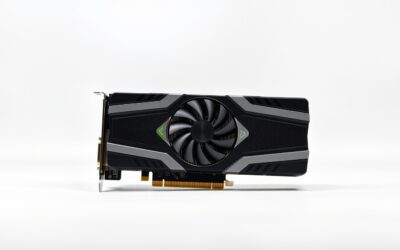
It is also a friendlier match for modern compact cases. A typical RTX 4070 Ti measures approximately 305 mm long, although partner cards can be shorter or considerably thicker. Measure the graphics-card clearance in your case, including front fans and radiator space. A 2.5-slot card may still block expansion slots or crowd a wireless card.
For gaming, the 4070 Ti benefits from newer features such as DLSS frame generation and improved ray-tracing support. Actual results depend on the game, resolution, processor, and settings, so it is not accurate to call it universally faster. In newer ray-traced titles, however, its feature set can make gameplay feel smoother than the raw rendering comparison suggests.
The 4070 Ti is also easier to recommend for a new build because it is more likely to be sold with remaining retailer or manufacturer support. Check the exact warranty rather than assuming every card has the same coverage. A white option such as the $899.95 ASUS TUF Gaming GeForce RTX 4070 Ti Super BTF White OC Edition may suit a carefully coordinated room, but it requires a compatible BTF ATX motherboard, so it is not a universal drop-in choice.
Where RTX 3090 Wins
The RTX 3090’s defining advantage is its 24GB of GDDR6X memory, compared with 12GB on a standard RTX 4070 Ti. That extra capacity can matter more than a modest difference in game performance. Large 3D projects, high-resolution video timelines, local image-generation models, scientific applications, and heavily modded games can run into memory limits before they run out of shader performance.
It is also a capable 4K card when paired with a suitably fast processor. The 3090 has 10,496 CUDA cores and a wide memory subsystem, giving it strong traditional rendering capability. Newer features can give the 4070 Ti an advantage in selected games, but the 3090 remains attractive when an application benefits from abundant VRAM.
There are tradeoffs. The Founders Edition is approximately 313 mm long, about 138 mm high, and roughly 55 mm thick, while some partner cards are even larger. At around 350 watts, it needs a solid power supply, good airflow, and enough room for heat to leave the case. Used cards deserve special scrutiny: check for noisy fans, damaged connectors, excessive dust, unstable behavior, and signs of heavy mining use.
Some listed RTX 3090 examples illustrate the pricing problem. The EVGA GeForce RTX 3090 FTW3 Ultra Gaming is listed at $1,829.97, while a renewed NVIDIA GeForce RTX 3090 Founders Edition is listed at $1,899.99. Those prices are difficult to justify for ordinary gaming when a newer, more efficient card may cost less. A 3090 becomes more compelling when its 24GB capacity directly supports your work.
Cost Over 5 Years
Purchase price is only part of ownership cost. A system using an RTX 3090 may draw roughly 65 more watts than one using an RTX 4070 Ti while the graphics card is under similar heavy load. At 15 hours of demanding use each week, that difference equals approximately 507 kilowatt-hours over five years. At an electricity rate of 16 cents per kilowatt-hour, that is about $81 in additional energy use. Your actual total will vary with gaming habits, power settings, and local rates.
Cooling can add another indirect cost. A 3090 system may benefit from additional case fans, a larger case, or a more capable power supply. It does not automatically require an expensive upgrade, but budget carefully if your existing computer has a 600-watt supply or limited airflow. The 4070 Ti generally leaves more room for a modest case and quieter cooling solution.
Maintenance is similarly practical. Clean either card periodically, keep cables away from fans, and leave clearance around the intake and exhaust areas. For a used 3090, reserve money for possible fan replacement or thermal-pad service. A cheap card that later needs repairs may not remain cheap.
Which One for Your Home
Small apartment
Choose the RTX 4070 Ti. Its lower power draw and usually smaller cooler are better suited to a compact desk, limited ventilation, and a room where fan noise is noticeable. Confirm the card length and thickness before buying, and prioritize a case with front-to-back airflow rather than an attractive but restrictive design.
Family with kids or pets
The 4070 Ti is the safer general-purpose choice because it is easier to cool and places less thermal stress on a busy household PC. Use a dust-filtered case and keep the tower off the floor if possible. If the computer is used for professional 3D or AI work and needs 24GB of memory, the RTX 3090 can still win, but schedule more frequent cleaning.
Rental
Favor the RTX 4070 Ti if you cannot easily change the room, power circuit, or furniture arrangement. Lower heat is useful in a small rental room, and lower power demand may be preferable if the computer runs for long periods. The ASUS SFF-Ready Prime NVIDIA GeForce RTX 5070 OC Edition, listed at $856.99, is another nearby price reference for shoppers considering a newer compact option, though it is a separate product rather than an RTX 4070 Ti alternative in this comparison.
Long-term home
Buy the RTX 3090 only when you can name a workload that needs its 24GB VRAM. It can extend the useful life of a workstation handling large assets, but its age, heat, and used-market pricing reduce its value as a general gaming investment. For most long-term home gaming systems, the RTX 4070 Ti offers the more balanced combination of performance, efficiency, and easier ownership.
FAQ
Is the RTX 4070 Ti faster than the RTX 3090?
Neither is always faster. The RTX 4070 Ti can perform very well in newer ray-traced games and supports newer frame-generation features, while the RTX 3090 remains strong in traditional rendering and memory-heavy workloads. Compare results for your specific games and applications.
Is 12GB enough for a home gaming PC?
It is generally suitable for 1440p gaming and many 4K setups, but demanding future games, high-resolution texture packs, and creative applications may benefit from more. If you already know you need large assets or local AI workloads, the 3090’s 24GB is the stronger fit.
Does an RTX 3090 need a bigger power supply?
Plan around a quality 750-watt power supply for a typical RTX 3090 system, with additional headroom if you use a high-power processor or many drives. An RTX 4070 Ti system is commonly planned around 700 watts, though the exact recommendation depends on the rest of the computer and the card manufacturer.
Which card should most people buy?
Choose the RTX 4070 Ti for a quieter, cooler, more efficient gaming computer. Choose the RTX 3090 when 24GB of VRAM is essential and you can verify the card’s condition at a sensible price. For everyone else, the 4070 Ti is the easier card to live with.





Write Your Review
No reviews yet. Be the first to share your experience!